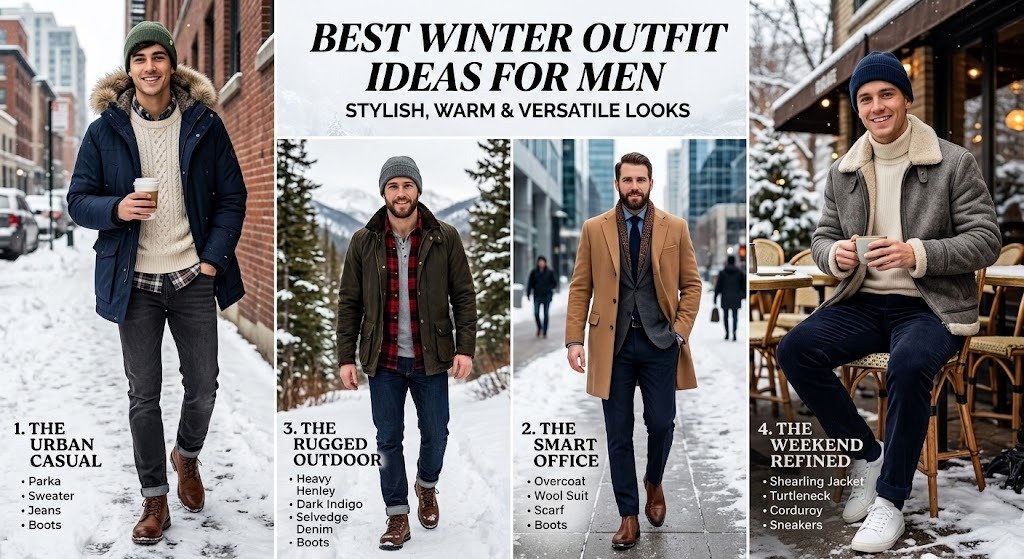
Best Winter Outfit Ideas for Men
Winter style should keep you warm without making you look bulky or uncomfortable. The right combination of layers, textures, and practical footwear can help you handle cold weather while still looking polished.
You do not need a separate coat and pair of boots for every outfit. A few dependable winter pieces can create looks for work, weekends, dates, travel, and formal events.
These best winter outfit ideas for men will show you how to layer clothes correctly, match winter colors, and dress well at different temperatures.
Key Takeaways
Build winter outfits with several manageable layers instead of one excessively bulky item.
Choose a warm base layer that fits close to your body without restricting movement.
Use wool, fleece, flannel, corduroy, denim, and suitable blends according to the weather.
Make sure your coat fits comfortably over the clothes you normally wear underneath.
Neutral colors such as navy, charcoal, brown, olive, and beige are easy to coordinate.
Match the visual weight of your boots with the shape of your trousers.
Keep winter footwear clean and treat it for rain or snow when appropriate.
Use scarves, gloves, and hats for warmth rather than treating them as decoration only.
Check the weather before choosing your coat and footwear.
Proper fit is still important, even when you are wearing several layers.
What Makes a Good Men’s Winter Outfit?
A good winter outfit should keep you comfortable, suit the occasion, and allow natural movement. It should also make it easy to remove a layer when you enter a heated building.
The best cold-weather outfits usually contain three main parts:
A breathable base layer
A warm middle layer
A protective outer layer
You may not need all three during mild weather. In very cold, windy, rainy, or snowy conditions, each layer has a clear purpose.
Your outfit should also match your normal routine. Someone commuting on foot may need more weather protection than someone moving directly from a car to an office.
How Should Men Layer Clothes in Winter?
Layering helps trap warmth while giving you control over your comfort. It is often more practical than wearing one extremely heavy sweater.
Start With a Base Layer
The base layer sits closest to your skin. It should feel comfortable and manage moisture without creating unnecessary bulk.
Possible base layers include:
Plain cotton T-shirt for mild weather
Long-sleeve T-shirt
Thermal top
Lightweight merino top
Moisture-managing undershirt
Avoid a base layer that feels restrictive around your chest, shoulders, or arms. You should be able to move normally beneath the other clothes.
Add a Middle Layer
The middle layer provides most of the insulation. Sweaters, cardigans, fleece jackets, flannel shirts, and lightweight insulated pieces can all work.
Choose a layer that fits beneath your coat without bunching. A very thick sweater may become uncomfortable under a fitted jacket.
Finish With Outerwear
Your outer layer protects you from wind, cold, and possible rain or snow. The right choice depends on the weather and the formality of your outfit.
Common winter outerwear includes:
Wool overcoat
Peacoat
Parka
Puffer jacket
Field jacket
Waxed jacket
Insulated raincoat
Shearling-style jacket
Try your coat on while wearing a typical winter outfit. A coat that fits over a T-shirt may become too tight over a sweater and blazer.
Best Fabrics for Men’s Winter Clothing
The fabric affects warmth, comfort, weight, and how easily an item can be layered.
Wool
Wool is a dependable winter material for coats, trousers, sweaters, scarves, and suits. It can provide warmth without requiring excessive thickness.
Some wool feels rough against bare skin, so check the garment before buying. A base layer can prevent direct contact if you are sensitive to the texture.
Merino Wool
Merino wool is often softer and lighter than traditional heavy wool. It can work well for base layers, sweaters, socks, and scarves.
Follow the care instructions carefully. Some merino items require gentle washing and should be dried flat.
Cotton
Cotton is comfortable and widely available. Heavy cotton works well for sweatshirts, flannel shirts, corduroy, and casual trousers.
Basic cotton does not always handle wet conditions well. It can absorb moisture and may take time to dry, so choose another option for demanding outdoor activities.
Fleece
Fleece provides warmth without much weight. It works well as a casual middle layer or beneath a weather-resistant jacket.
Choose a clean, simple design if you want to wear it beyond hiking and outdoor activities. Neutral colors are easier to combine with everyday clothes.
Corduroy
Corduroy adds texture and works naturally in autumn and winter outfits. It is commonly used for trousers, overshirts, and jackets.
Dark brown, olive, navy, burgundy, and tan are practical corduroy colors. Pair one corduroy item with simpler fabrics to keep the outfit balanced.
Flannel
Flannel shirts and trousers feel soft and suit casual cold-weather outfits. A flannel shirt can be worn alone or used as a warm layer over a T-shirt.
Choose subtle checks or solid colors for greater flexibility. Large, bright patterns can be harder to combine with jackets and scarves.
Best Winter Colors for Men
Winter wardrobes often rely on darker and earthier colors. These shades are easy to layer and can hide minor marks from wet weather.
Useful winter colors include:
Navy
Charcoal
Black
Dark brown
Camel
Olive
Forest green
Burgundy
Cream
Medium gray
Rust
Dark blue
Lighter colors can stop winter outfits from looking too heavy. A cream sweater, white shirt, beige scarf, or light gray trousers can brighten darker outerwear.
Easy Winter Color Combinations
Try:
Navy and camel
Charcoal and burgundy
Olive and cream
Black and medium gray
Brown and light blue
Navy and forest green
Beige and dark brown
Gray and rust
Dark denim and camel
Cream and olive
Use two or three main colors in one outfit. Small accessories can introduce an extra shade without making the look too busy.
1. Crew-Neck Sweater, Oxford Shirt, and Chinos
A crew-neck sweater layered over an Oxford shirt is one of the easiest winter outfits for men. It works for offices, dates, lunches, and family gatherings.
Choose a navy, charcoal, cream, dark green, or burgundy sweater. Wear it over a white or light blue shirt with beige, navy, olive, or gray chinos.
How to Style It
Let a small amount of the shirt cuff show beneath the sweater sleeves. Arrange the shirt collar neatly rather than pulling it far over the sweater neckline.
Complete the outfit with:
Brown loafers for a smart look
Derby shoes for work
Chelsea boots for cooler weather
Minimal sneakers for a relaxed setting
Add a wool coat when you go outdoors.
2. Turtleneck, Tailored Trousers, and Wool Coat
A turtleneck can create a sharp winter outfit without requiring a collared shirt or tie. It works well for dinners, dates, creative offices, and evening events.
Start with a fine or medium-weight turtleneck in black, charcoal, navy, cream, or brown. Pair it with tailored trousers and a long wool coat.
How a Turtleneck Should Fit
The neck should sit comfortably without feeling restrictive. The body should follow your shape but leave enough room for natural movement.
Avoid a thin fabric that becomes transparent or shows every line beneath it. A clean, smooth fit creates a more polished appearance.
Easy Combinations
Try:
Black turtleneck with gray trousers and a camel coat
Cream turtleneck with brown trousers and a navy coat
Navy turtleneck with charcoal trousers and black outerwear
Dark green turtleneck with beige trousers and a brown coat
Finish with Chelsea boots, loafers, or Derby shoes.
3. Hoodie, Overcoat, and Straight-Leg Jeans
A hoodie under a wool coat combines casual comfort with structured outerwear. This outfit works for travel, weekend plans, and relaxed city wear.
Choose a plain hoodie in gray, navy, black, cream, or muted green. Pair it with straight jeans and clean sneakers or casual boots.
How to Make It Look Intentional
The hoodie should fit comfortably beneath the coat without creating tightness around your shoulders. Avoid oversized graphics and extremely long drawstrings.
Choose a coat with enough room through the chest and arms. A very slim formal coat may not sit correctly over a thick hoodie.
Keep the jeans simple and free from excessive distressing. Clean denim creates a better balance with the structured coat.
4. Flannel Shirt, T-Shirt, and Dark Jeans
A flannel shirt makes a practical casual layer during mild winter weather. It can also sit beneath a jacket when temperatures fall.
Wear a check or solid flannel shirt over a plain T-shirt. Add dark jeans and boots or sneakers.
Choosing the Right Flannel
Navy, green, burgundy, brown, gray, and cream combinations are easy to style. Avoid wearing several strong patterns in the same outfit.
The shirt should leave enough room for the T-shirt beneath it. If it pulls across your chest when buttoned, try a larger size or different cut.
Footwear Options
Complete the look with:
Brown work boots
Suede chukka boots
White or off-white sneakers
Dark leather sneakers
Add a field jacket, puffer vest, or parka depending on the weather.
5. Puffer Jacket, Sweater, and Relaxed Trousers
A puffer jacket is useful for cold, windy conditions. Modern versions can work in everyday outfits without looking like specialized outdoor equipment.
Choose black, navy, olive, charcoal, brown, or beige. Pair it with a sweater and straight or relaxed trousers.
How to Control the Bulk
If the jacket is thick, keep the middle layer manageable. A lightweight sweater or thermal top may provide enough warmth without restricting movement.
The trousers should have enough visual weight to balance the jacket. Straight jeans, relaxed chinos, and practical cargo trousers can all work.
Finish with sturdy sneakers, hiking-inspired casual shoes, or weather-resistant boots.
6. Peacoat, Knitwear, and Dark Denim
A peacoat offers more structure than a puffer jacket but feels less formal than a long overcoat. It works well with jeans, chinos, sweaters, and collared shirts.
Navy is the classic choice. Charcoal, black, and dark brown can also fit easily into a winter wardrobe.
A Dependable Outfit
Wear:
Light blue Oxford shirt
Gray crew-neck sweater
Dark blue jeans
Navy peacoat
Brown Chelsea boots
This combination works for dates, dinners, casual offices, and weekend gatherings.
Make sure the coat closes comfortably over your sweater. The sleeves should cover your shirt and sweater cuffs without extending over your hands.
7. Parka, Knit Sweater, and Boots
A parka is designed for practical warmth and weather protection. It is ideal for cold commutes, outdoor events, travel, and areas with frequent wind or snow.
Choose a parka in olive, navy, black, charcoal, or brown. Wear it with a simple sweater, straight jeans, and weather-resistant boots.
Keep the Outfit Balanced
A parka already has a strong casual character. Keep the clothes underneath clean and simple.
Try:
Cream sweater with dark denim
Charcoal sweater with olive chinos
Navy sweater with beige trousers
Flannel shirt with black jeans
Avoid wearing a bulky parka over a very formal suit unless the coat has enough length and a clean design.
8. Corduroy Trousers, Oxford Shirt, and Cardigan
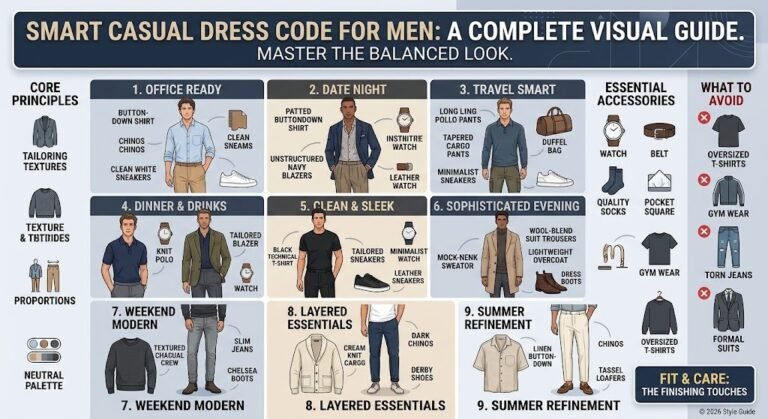
Corduroy trousers provide warmth and texture without requiring a bold pattern. They can work for smart-casual offices, dinners, and weekend events.
Start with brown, olive, navy, charcoal, or burgundy corduroy. Add an Oxford shirt and a crew-neck cardigan.
Color Combinations
Try:
Brown corduroy with a light blue shirt and navy cardigan
Olive corduroy with a white shirt and charcoal cardigan
Navy corduroy with a pale gray shirt and cream knitwear
Burgundy corduroy with a white shirt and navy sweater
Finish with suede loafers, Derby shoes, or Chelsea boots. A wool overcoat can add the final outdoor layer.
9. Denim Jacket, Hoodie, and Chinos
A denim jacket can remain useful during winter when it is layered properly. Wear it over a hoodie or thick shirt during mild weather.
Choose a dark or medium wash with limited distressing. Pair it with beige, olive, gray, or black chinos to avoid an overly matched denim look.
How to Add Warmth
Layer:
Long-sleeve T-shirt or thermal top
Plain hoodie
Denim jacket
Scarf if needed
This outfit may not provide enough protection during severe cold. Add a larger coat over the denim jacket only if the layers remain comfortable.
Complete the look with boots or sturdy sneakers.
10. All-Black Winter Outfit
An all-black outfit is easy to coordinate and works particularly well during winter evenings. Texture is important because it keeps the clothing from looking flat.
Combine a black sweater, black jeans or trousers, and black boots. Add a black wool coat, leather jacket, or puffer jacket.
Mix Different Textures
Try combining:
Wool coat with denim jeans
Knitted sweater with smooth trousers
Suede boots with cotton chinos
Leather jacket with a soft turtleneck
The black pieces do not need to be identical, but faded fabric can look disconnected next to deep new black. Replace or separate pieces when the difference appears accidental.
A silver watch or gray scarf can provide a small amount of contrast.
11. Neutral Layered Outfit
Cream, beige, camel, stone, and brown can create a softer alternative to dark winter clothing. These colors look particularly effective when combined through several textures.
Wear a cream sweater with beige trousers and a camel coat. Add dark brown boots to create contrast.
How to Avoid Looking Washed Out
Use clearly different shades rather than trying to match every item perfectly. A light sweater, medium trousers, and darker coat will give the outfit more depth.
You can also add navy, olive, or charcoal through a scarf or footwear. This creates a clear visual anchor.
Light colors show dirt easily, so check the weather before wearing pale trousers or coats.
12. Leather Jacket, Turtleneck, and Black Jeans
A leather jacket can create a sharp cold-weather outfit for mild winter days. Pair it with a fine turtleneck, black jeans, and boots.
Black and dark brown jackets are the easiest to combine. A clean, simple design will remain useful longer than a heavily decorated version.
How to Style It
Try:
Black jacket, gray turtleneck, and black jeans
Brown jacket, cream sweater, and dark denim
Black jacket, burgundy knitwear, and charcoal trousers
Dark brown jacket, navy sweater, and beige chinos
Wear a warm coat over the leather jacket if the temperature drops significantly. Make sure the outer coat has enough room for the extra layer.
13. Workwear Jacket, Flannel Shirt, and Boots
A chore jacket, field jacket, or lined workwear coat can create a practical casual winter outfit. These jackets pair naturally with denim, corduroy, and rugged footwear.
Choose olive, tan, navy, brown, or charcoal. Add a flannel or denim shirt and straight-leg jeans.
Keep It Modern
Use one or two workwear elements rather than dressing entirely in matching rugged pieces. A chore jacket and boots are enough to give the outfit character.
Keep your shirt simple and trousers clean. This prevents the combination from looking like a costume.
A cream beanie or gray scarf can add a lighter color near your face.
14. Blazer, Fine-Knit Sweater, and Tailored Trousers
A blazer layered over fine knitwear creates a polished outfit for offices, dinners, dates, and seasonal parties. It also provides more warmth than wearing a shirt alone.
Choose a thin crew-neck sweater, turtleneck, or knitted polo. Make sure it sits comfortably beneath the blazer.
Smart Winter Combinations
Try:
Navy blazer, gray sweater, and charcoal trousers
Brown blazer, cream turtleneck, and navy trousers
Charcoal blazer, burgundy sweater, and gray trousers
Olive blazer, light blue shirt, and brown trousers
Add an overcoat outdoors. Loafers may work in mild weather, while Derby shoes or Chelsea boots offer more coverage.
15. Winter Suit With an Overcoat
Formal and business occasions continue during cold weather. A wool or wool-blend suit can help you stay comfortable while maintaining a polished appearance.
Navy and charcoal are dependable suit colors. Wear the suit with a white or light blue shirt and dark leather shoes.
Choosing the Overcoat
Your overcoat should be long enough to cover the suit jacket. It should also have room through the shoulders and chest.
Useful overcoat colors include:
Navy
Charcoal
Black
Camel
Dark brown
Try the coat over your complete suit before buying it. A coat that fits perfectly over a shirt may become too tight over tailoring.
Formal Winter Footwear
Choose:
Black Oxford shoes
Dark brown Derby shoes
Chelsea boots with a clean shape
Weather-resistant dress boots
Check the forecast before wearing smooth-soled shoes. Icy or wet conditions may require footwear with better grip.
16. Quilted Jacket, Oxford Shirt, and Chinos
A quilted jacket is a useful option for mild or changeable winter weather. It provides warmth without the bulk of a heavy puffer.
Wear a navy, olive, brown, or charcoal jacket over an Oxford shirt and lightweight sweater. Add chinos and casual leather shoes.
This combination suits:
Casual offices
Weekend lunches
Travel
School or university
Daytime social events
Choose a simple design with limited shiny material. A cleaner finish makes the jacket easier to wear with smart-casual clothing.
17. Fleece Jacket, Cargo Trousers, and Sneakers
Fleece is practical for relaxed winter outfits and outdoor activities. Pair it with straight cargo trousers or technical pants and sturdy sneakers.
Neutral shades such as cream, olive, brown, black, navy, and gray work well. Use one brighter color only if you want the fleece to become the main focus.
Avoid an Overly Technical Look
If you are not hiking or exercising, balance the fleece with simple everyday clothing. Straight jeans and clean sneakers can make it feel less like sportswear.
Avoid combining several large logos and bright technical materials. One outdoor-inspired piece is often enough.
18. Puffer Vest, Sweatshirt, and Jeans
A puffer vest provides extra warmth around your body while leaving your arms unrestricted. It is useful for driving, mild winter days, and outdoor errands.
Wear it over a sweatshirt, sweater, flannel shirt, or hoodie. Add jeans or chinos and practical footwear.
Best Color Combinations
Try:
Navy vest with gray sweatshirt and beige chinos
Olive vest with cream sweater and dark jeans
Black vest with charcoal hoodie and black jeans
Brown vest with light blue shirt and navy trousers
Make sure the vest closes comfortably without pulling across your chest. The arm openings should not feel tight over your middle layer.
19. Shacket, Turtleneck, and Relaxed Trousers
A shacket combines the shape of a shirt with the weight of a light jacket. It works as outerwear in mild weather or as a middle layer beneath a heavier coat.
Choose wool-blend, flannel, corduroy, or quilted versions. Navy, olive, brown, beige, and charcoal are easy to style.
Wear it with a fine turtleneck and relaxed trousers. Complete the outfit with boots or minimal sneakers.
Avoid using an extremely thick shacket beneath a fitted coat. The combination may restrict your shoulders and arms.
20. Monochrome Gray Winter Outfit
A gray outfit creates a softer alternative to all black. Use different shades to separate each layer.
Start with a light gray sweater, medium gray trousers, and charcoal outerwear. Add black or dark brown boots.
You can introduce a small amount of color with:
Burgundy scarf
Navy beanie
Dark green sweater
Brown leather gloves
White Oxford shirt
Using several gray textures will keep the outfit visually interesting.
How to Choose the Right Winter Coat
Your winter coat may be the most expensive and visible piece in your seasonal wardrobe. Choose it according to your climate and normal clothing rather than appearance alone.
Consider the Temperature
A wool coat may be enough for mild city winters. Severe cold may require an insulated parka or puffer jacket.
Check how the coat blocks wind as well as how warm it feels. Wind can make moderate temperatures feel much colder.
Consider Rain and Snow
Wool can handle light moisture, but it is not always the best option for prolonged rain. A weather-resistant shell or insulated raincoat may be more practical.
If your area receives snow, choose a coat with enough length and a protective hood. Check that the pockets can securely hold gloves and other essentials.
Consider Your Daily Clothing
If you regularly wear suits or blazers, choose an overcoat with enough length and room. Short casual jackets may leave the bottom of your suit jacket exposed.
If your wardrobe is mostly casual, a parka, puffer, peacoat, or field jacket may provide more value.
Check the Fit With Layers
Wear a sweater or blazer when trying on the coat. Button or zip it fully and move your arms.
Look for:
Correct shoulder fit
Comfortable chest
Enough sleeve length
Easy arm movement
Space around the neck
A hem suited to your needs
Do not depend on the coat stretching over time.
Essential Winter Footwear for Men
Winter shoes should provide comfort, grip, and protection. The right choice depends on your climate and the formality of your outfit.
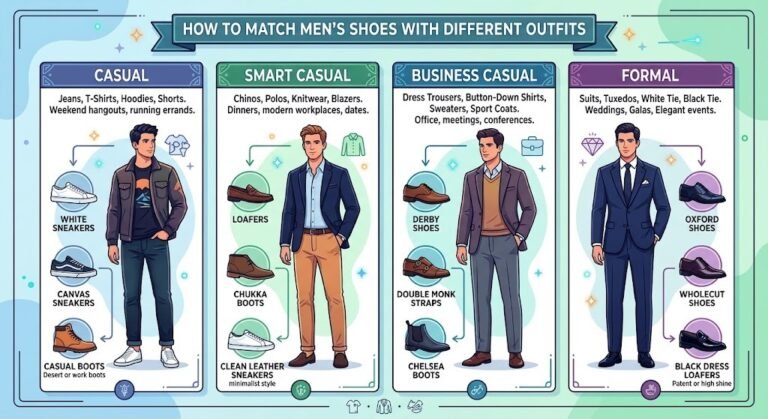
Chelsea Boots
Chelsea boots work with jeans, chinos, tailored trousers, and some suits. Black leather looks sharp, while brown suede feels more casual.
Suede may require extra protection in wet conditions. Apply a suitable protector according to the manufacturer’s directions.
Lace-Up Leather Boots
Simple lace-up boots are useful for casual and smart-casual outfits. Dark brown, black, and burgundy are versatile colors.
Wear them with jeans, corduroy, chinos, and wool trousers. Choose a streamlined design if you plan to wear them with tailoring.
Weather-Resistant Boots
Frequent snow and heavy rain may require insulated or waterproof footwear. Prioritize traction and warmth over a thin formal shape.
Change into office shoes indoors if necessary. Carrying a second pair can be more practical than damaging dress shoes outside.
Minimal Leather Sneakers
Leather sneakers can work during dry, mild winter weather. They are easier to clean than some canvas options.
Wear them with jeans, chinos, wool trousers, and casual coats. Avoid relying on flat, smooth soles in icy conditions.
Winter Accessories Every Man Should Consider
Accessories can make a major difference to your comfort. Choose practical pieces that coordinate with several coats.
Scarf
A wool or soft blended scarf protects your neck and adds color near your face. Navy, gray, camel, burgundy, olive, and cream are easy choices.
Your scarf does not need to match your coat exactly. A controlled contrast often looks better.
Gloves
Leather gloves work well with business and smart-casual outfits. Knitted or insulated gloves are better for relaxed clothing and very cold weather.
Make sure you can comfortably use your phone, keys, and bag. Gloves that are too tight may reduce movement and warmth.
Beanie
A simple beanie works with puffers, parkas, workwear jackets, and casual overcoats. Choose a clean shape without excessive logos.
Neutral colors are easy to repeat. A burgundy, green, or rust beanie can also add personality to dark outerwear.
Winter Socks
Choose socks that provide warmth without making your shoes too tight. Wool-blend socks can work well, but the correct thickness depends on your footwear.
Avoid wearing thick socks in closely fitted dress shoes. Restricted circulation can make your feet less comfortable.
How to Dress for Different Winter Temperatures
Winter weather can range from slightly cool to dangerously cold. Adjust your layers rather than using one outfit for every temperature.
Mild Winter Weather
Try:
Long-sleeve T-shirt
Overshirt or sweater
Chinos or jeans
Sneakers or loafers
Lightweight jacket
Carry a scarf if temperatures may fall in the evening.
Cold Winter Weather
Wear:
Base layer
Wool sweater or fleece
Overcoat, peacoat, or puffer
Wool trousers or heavy denim
Leather boots
Scarf and gloves
Choose socks that suit the shoes without creating tightness.
Very Cold or Snowy Weather
Use:
Thermal base layer
Insulating middle layer
Weather-resistant insulated coat
Warm trousers or thermal leggings beneath pants
Insulated boots with grip
Hat, scarf, and gloves
Safety should take priority over formal appearance in severe conditions. Change into smarter shoes or remove technical layers after reaching your destination.
Common Men’s Winter Style Mistakes
Wearing Too Many Bulky Layers
Several thick layers can restrict movement and make your outfit appear oversized. Use a warm base layer and a manageable middle layer beneath your coat.
Test the full combination before leaving home.
Buying a Coat That Is Too Small
A fitted coat may look sharp over a T-shirt but become uncomfortable over winter clothing. Try coats with your usual sweater or blazer.
Make sure you can button or zip the coat and move your arms naturally.
Ignoring the Weather Forecast
Suede shoes and a wool coat may not be the best choices during heavy rain or snow. Check temperature, wind, and precipitation before getting dressed.
Carry an umbrella or choose protective outerwear when needed.
Wearing the Wrong Trouser Length With Boots
Trousers should sit cleanly over or meet your boots. Excess fabric can gather around the ankle, while very narrow trousers may catch on the boot shaft.
Try the trousers and boots together before wearing the outfit.
Neglecting Shoe Care
Salt, mud, and moisture can damage winter footwear. Wipe your shoes after wearing them and allow them to dry naturally.
Avoid placing wet leather directly beside strong heat. Follow the maker’s care instructions.
Using Too Many Dark Colors Without Texture
An entirely dark outfit can look flat when every item has a similar surface. Mix wool, denim, leather, suede, corduroy, and knitwear.
You can also add a lighter shirt, scarf, or sweater.
Forgetting Indoor Temperatures
Heated offices and restaurants can become uncomfortable if you cannot remove a layer. Build outfits that still look complete after taking off your coat.
A shirt and sweater combination works better indoors than a thermal top worn as the only visible layer.
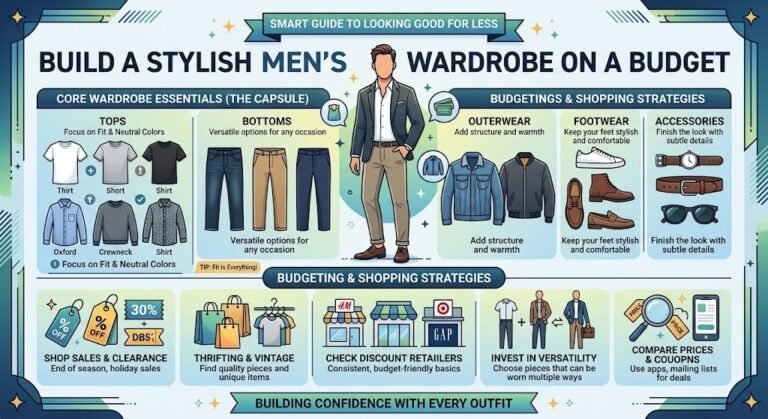
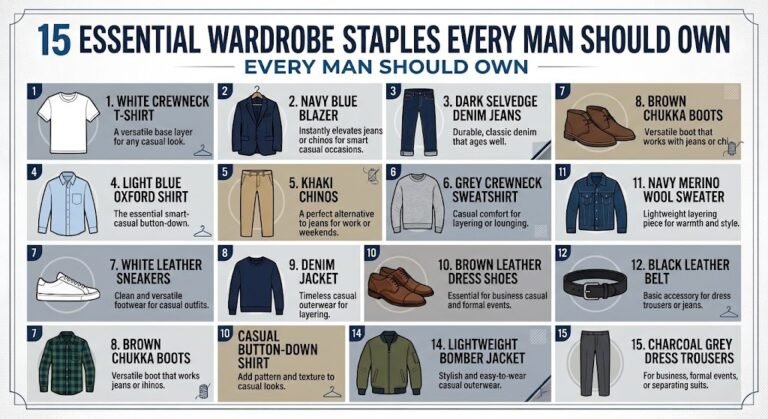
How to Build a Winter Capsule Wardrobe
A winter capsule wardrobe uses a small collection of coordinated pieces to create many outfits.
Tops
Consider:
Three long-sleeve T-shirts
Two Oxford shirts
One flannel shirt
Three sweaters
One hoodie
One turtleneck
Trousers
Start with:
One pair of dark jeans
One pair of black or gray jeans
Two pairs of chinos
One pair of wool trousers
One pair of corduroy trousers
Outerwear
Choose according to your climate:
One smart overcoat
One practical parka or puffer
One casual jacket or overshirt
You may not need all three if your winter is mild.
Shoes and Accessories
Consider:
Leather or weather-resistant boots
Smart Chelsea or Derby boots
Minimal sneakers
Scarf
Gloves
Beanie
Warm socks
Build the collection slowly and prioritize items you will wear several times each week.
Frequently Asked Questions
What should men wear during winter?
Men should wear breathable base layers, warm middle layers, and suitable outerwear. Sweaters, Oxford shirts, jeans, chinos, wool trousers, coats, and boots can form a practical winter wardrobe.
Choose the exact layers according to the weather and your daily activities.
How can a man look stylish in winter?
Use coordinated colors, well-fitting layers, clean footwear, and a coat that suits the outfit. Mix textures such as wool, denim, suede, leather, and knitwear.
Avoid adding so many thick layers that you cannot move comfortably.
What are the best winter colors for men?
Navy, charcoal, black, brown, camel, olive, burgundy, cream, and gray are dependable winter colors. They work together and suit many casual and formal settings.
Use a lighter sweater, shirt, or scarf to add contrast to dark outerwear.
How many winter coats does a man need?
Many men can manage with one practical casual coat and one smarter overcoat. The exact number depends on the climate, work dress code, and outdoor routine.
In mild weather, one versatile coat may be enough. Severe winters may require separate options for formal clothing and heavy snow.
Can men wear sneakers in winter?
Yes, sneakers can work during dry and mild winter weather. Leather or weather-resistant sneakers are often easier to maintain than thin canvas shoes.
Avoid smooth soles during icy conditions. Choose footwear with better grip and protection when the weather becomes severe.
What trousers should men wear in winter?
Dark jeans, heavy chinos, corduroy trousers, and wool trousers are useful options. Thermal leggings can add warmth beneath trousers during very cold weather.
Make sure the final combination still allows comfortable movement.
Can men wear a hoodie under an overcoat?
Yes. A plain hoodie beneath an overcoat creates a balanced casual outfit.
Choose a hoodie that fits comfortably under the coat and avoid excessive graphics. Pair the combination with straight jeans or chinos and clean footwear.
How should a winter coat fit?
A winter coat should fit over your normal layers without pulling across your chest or shoulders. The sleeves should cover the clothes beneath them and stop around your wrists or slightly beyond, depending on the coat.
Try the coat with a sweater or blazer before buying it.
What shoes work best with a men’s winter coat?
Chelsea boots, Derby boots, lace-up leather boots, and weather-resistant footwear work well. The best choice depends on the coat’s formality and the weather.
Wear streamlined boots with tailored coats and sturdier boots with parkas or puffers.
How can men stay warm without looking bulky?
Use a fitted thermal base layer, a warm but manageable sweater, and protective outerwear. Several thin, effective layers can provide more control than multiple bulky garments.
Make sure each layer fits beneath the next without bunching around your shoulders, waist, or arms.