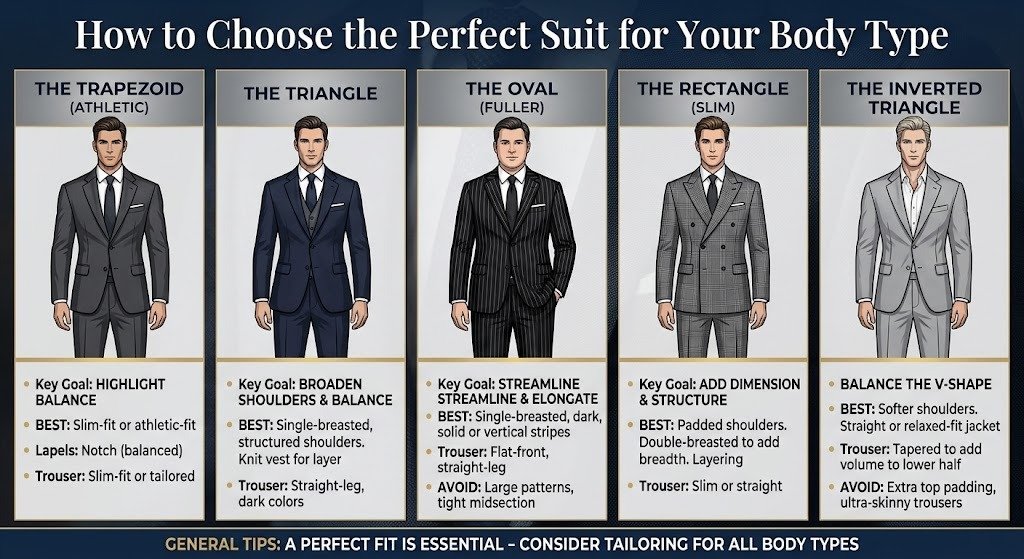
How to Choose the Perfect Suit for Your Body Type
A good suit should make you feel comfortable, confident, and prepared. It should not squeeze your body, hide your shape, or force you to stand unnaturally.
The label, price, and current trend matter far less than fit. An affordable suit with the right proportions and a few alterations can look better than an expensive suit in the wrong size.
This guide explains how to choose the perfect suit for your body type without confusing tailoring language. You will learn what to check, which cuts may suit your proportions, and when to ask a tailor for help.
Key Takeaways
Your suit should fit your current body rather than a future size.
Jacket shoulders are the most important area to get right.
A suit should follow your shape without squeezing or hiding it.
Your body’s proportions matter more than general labels such as short, tall, slim, or broad.
Single-breasted, two-button jackets work well for many men.
Mid-rise trousers are comfortable and can create a balanced silhouette.
Dark solid colors are the safest choice for a first suit.
Vertical details can create a longer visual line.
Small alterations can make an affordable suit look much better.
Always try a suit with the shirt and shoes you plan to wear.
Comfort and natural movement are essential signs of correct fit.
Your personal preference should guide the final choice.
What Does “Body Type” Mean When Buying a Suit?
Body type refers to the overall relationship between your shoulders, chest, waist, hips, legs, and height. It is not a judgment about whether your body is good or bad.
Two men with the same height and weight may need very different suits. One may have broad shoulders and a narrow waist, while the other may carry more width through the middle or hips.
Use body-type advice as a starting point rather than a strict rule. The goal is to create comfortable proportions, not to force everyone into the same appearance.
Your posture also affects suit fit. Sloping shoulders, a forward stance, or one shoulder sitting slightly lower can change how a jacket hangs.
Start With the Occasion
Before thinking about cut or body shape, decide where you will wear the suit. A business suit, wedding suit, and casual summer suit may need different fabrics, colors, and details.
Ask yourself:
Is this my first or only suit?
Will I wear it to work?
Is it for interviews?
Do I need it for a wedding?
Will I wear it during the day or evening?
What is the local climate?
How often will I use it?
Does the event have a specific dress code?
Your first suit should usually be simple and versatile. Navy and charcoal are dependable colors because they work for business, weddings, dinners, and other formal occasions.
The Most Important Suit Fit Rule: Get the Shoulders Right
The jacket shoulders create the foundation of the suit. They are also difficult and expensive to alter.
The shoulder seam should end close to your natural shoulder. The fabric should sit smoothly without dents, pulling, or excessive overhang.
Signs the Jacket Shoulders Are Too Small
Watch for:
The upper sleeves pulling outward
Wrinkles across your upper back
Tightness when you move your arms
Your shoulders pushing past the jacket structure
The lapels lifting away from your chest
Try the next size or a different jacket cut. Do not depend on the fabric stretching after repeated wear.
Signs the Jacket Shoulders Are Too Large
The shoulders may be too large if:
The jacket extends past your natural shoulders.
The sleeve heads collapse or form dents.
The jacket makes your upper body appear wider than it is.
Extra fabric gathers around your back.
The shoulder line looks soft and unsupported.
A tailor can fix minor issues, but large shoulder changes are rarely cost-effective. Find another size or brand with a more suitable shape.
How Should a Suit Jacket Fit?
Once the shoulders are correct, check the chest, waist, sleeves, collar, and length.
Chest Fit
The jacket should close comfortably without pulling across your chest. You should be able to slide a flat hand between the jacket and your shirt.
A large gap may mean the jacket is too loose. Strong pulling lines or limited breathing room indicate that it is too tight.
Waist Fit
A suit jacket should have some shape around your waist. It should not hang like a box or grip your stomach.
When buttoned, the front should remain smooth. A strong “X” shape around the button is a common sign of tightness.
Jacket Collar
The jacket collar should sit close to your shirt collar. A large gap behind your neck can make the suit look poorly fitted.
Wrinkles below the collar may come from posture, shoulder shape, or the jacket’s cut. A tailor can assess whether the issue is adjustable.
Sleeve Length
Your shirt cuff should show slightly beneath the jacket sleeve. Around a quarter to half an inch is a useful starting point.
Both sleeves should appear balanced. Many people have small arm or shoulder differences, so separate sleeve adjustments may be helpful.
Jacket Length
A traditional suit jacket should cover most of your seat. It should also create balanced proportions between your upper and lower body.
Very short jackets may make your torso look smaller and your legs longer. Longer jackets can add coverage but may overwhelm a shorter frame if the proportions are wrong.
Look at the jacket from the front, side, and back. The correct length should feel balanced rather than following a rigid measurement.
How Should Suit Trousers Fit?
Suit trousers should sit comfortably and fall cleanly. They should not require a tightly fastened belt to remain in place.
Waist and Rise
The rise is the distance between the waistband and the crotch. It affects comfort and how your torso and legs appear.
Mid-rise trousers work well for many body shapes. They usually sit closer to the natural waist and can provide a smoother line beneath the jacket.
Low-rise trousers may make the torso appear longer and can cause the shirt to come untucked. A higher rise may lengthen the appearance of your legs and offer more support around the waist.
Seat and Hips
The fabric should sit smoothly around your seat without pulling or sagging. Horizontal lines can indicate tightness, while folds beneath the seat may signal excess fabric.
The side pockets should remain flat. If they open outward, the trousers may be too tight across the hips.
Thighs and Legs
You should be able to sit and walk comfortably. The trousers can follow your legs, but they should not grip your thighs or calves.
Straight and gently tapered cuts suit many men. Extremely narrow trousers can create pulling and may look unbalanced with a broader jacket.
Trouser Length
The hem should meet your shoes cleanly. A slight break is a safe option for most business and formal suits.
A no-break hem can look sharp with narrower trousers. A fuller break may suit wider traditional cuts but should not create excessive fabric around the ankles.
Try the trousers with your intended dress shoes before having them shortened.
Single-Breasted vs. Double-Breasted Suits
Single-breasted jackets have one row of buttons and a narrower overlap at the front. They are versatile, familiar, and easy for beginners to wear.
A two-button, single-breasted jacket works well for many body types. It can be worn for business, weddings, interviews, dinners, and formal events.
Double-breasted jackets have a wider overlap and two visible rows of buttons. They create a strong chest and shoulder line.
Modern double-breasted suits can work on many bodies when fitted correctly. They do not have to be reserved for tall or slim men, but the button position, jacket length, and waist shape require careful attention.
If you are buying your first suit, a single-breasted design usually offers more flexibility.
How to Choose a Suit for a Slim Body Type
Men with a slim frame may have narrow shoulders, a smaller chest, and less difference between the chest and waist. The goal is not to hide the body but to create a balanced, clean shape.
A structured shoulder can add gentle definition. Light padding may work, but excessive padding can look disconnected from the rest of your body.
Good Options for a Slim Frame
Consider:
Single-breasted two-button jacket
Lightly structured shoulders
Moderate-width lapels
Straight or gently tapered trousers
Textured fabrics
Subtle checks
Double vents
Mid-rise trousers
A double-breasted jacket can also add visual width across the chest. Make sure the jacket is shaped through the waist so it does not appear boxy.
Patterns and Colors
Medium checks, textured weaves, and lighter colors can add visual interest. Navy, medium gray, brown, and blue patterns are useful choices.
Vertical pinstripes can make the body appear even longer and narrower. If you already have a very slim, tall frame, a subtle check or solid texture may create more balance.
What to Avoid
Be cautious with:
Extremely skinny lapels
Very narrow trousers
Oversized shoulders
Jackets that hang straight without waist shape
Suits that are several sizes too large
Very short jackets
A loose suit does not automatically make a slim body look larger. It often makes the wearer appear overwhelmed by the fabric.
How to Choose a Suit for a Tall Body Type
Tall men often need extra attention around jacket length, sleeve length, trouser rise, and overall proportions. Standard sizes may fit the chest but leave the sleeves or body too short.
Look for long sizing when available. A longer jacket and sleeves can maintain the intended proportions.
Good Options for Tall Men
Consider:
Properly proportioned long sizes
Medium or wider lapels
A jacket that covers the seat
Mid-rise or higher-rise trousers
Straight or gently tapered legs
Two-button or double-breasted jackets
Checks and textured fabrics
Cuffs on trousers, if preferred
A double-breasted suit can work particularly well on a tall frame. Its wider front and button arrangement can break up a long vertical line.
Patterns and Colors
Checks, windowpanes, and subtle textures can add horizontal interest. Two-piece and three-piece suits can both work if the proportions are correct.
You can also use contrast through your shirt, tie, and pocket square. A single dark color from head to toe may make the body look even longer.
What to Avoid
Watch for:
Jacket sleeves that expose too much shirt cuff
Jackets that fail to cover the seat
Low-rise trousers that make the torso look unusually long
Trousers without enough length
Lapels that look too narrow for your frame
Button positions that sit too high
Do not accept short sleeves or trousers simply because the chest fits. Try long sizing or explore brands designed for taller proportions.
How to Choose a Suit for a Shorter Body Type
Shorter men may want to create a clean vertical line without allowing the suit to overwhelm their frame. Correct jacket length and trouser proportions are especially important.
The goal is not to make your body appear like someone else’s. It is to keep each part of the suit in proportion to your height.
Good Options for Shorter Men
Consider:
Single-breasted two-button jacket
Moderate or slightly narrower lapels
Clean shoulder structure
Mid-rise or slightly higher-rise trousers
Little or no trouser break
Simple solid colors
Subtle vertical patterns
Jacket details scaled to your frame
A well-placed jacket button can help create a longer lower-body line. Avoid a button position that sits extremely low.
Jacket Length
Do not automatically choose the shortest jacket available. A jacket that is too short can look unbalanced and may fail to cover your seat.
Choose a length that respects traditional proportions without extending too far down your thighs. Short sizing can provide better sleeve and jacket proportions than simply sizing down.
Trouser Details
A higher rise can make the legs appear longer. Keeping the shirt and trousers close in color may also create a continuous line.
Avoid excessive fabric around the ankles. A clean hem helps maintain the vertical shape.
What to Avoid
Be cautious with:
Oversized checks
Very wide lapels
Long jackets designed for taller frames
Low-rise trousers
Heavy trouser breaks
Large patch pockets
Extremely baggy cuts
Smaller details often suit a shorter frame better, but comfort should remain the priority.
How to Choose a Suit for a Broad or Stocky Body Type
A broad or stocky frame may include a wide chest, shoulders, waist, or a combination of these areas. The suit should follow your body without squeezing it.
Avoid buying a jacket that fits the waist but feels tight across the chest and shoulders. Start with the hardest area to fit, then use alterations elsewhere.
Good Options for Broad Men
Consider:
Single-breasted two-button jacket
Clean, natural shoulder line
Medium-width lapels
Dark solid colors
Subtle vertical patterns
Mid-rise trousers
Straight or gently tapered legs
Side adjusters instead of a tight belt
Double vents for comfortable movement
A jacket with some waist shape can prevent the body from looking boxy. It should still close smoothly without creating pulling lines.
Lapel Width
Very narrow lapels may look out of proportion on a broad chest. Medium or slightly wider lapels often create better balance.
The tie should relate to the lapel width. A very thin tie may appear too small against a broad jacket front.
Trouser Fit
Avoid trousers that narrow sharply below the knee. A straight or moderate taper can balance the upper body more effectively.
Make sure the waistband and seat remain comfortable when you sit. Side pockets should lie flat.
What to Avoid
Be cautious with:
Jackets that pull at the button
Very narrow lapels
Extremely skinny trousers
Large, high-contrast checks
Thick layers beneath a fitted jacket
Low-rise trousers that sit beneath the natural waist
Excessively padded shoulders
A suit should create structure, not add unnecessary bulk.
How to Choose a Suit for a Muscular Body Type
A muscular frame may include broad shoulders, a developed chest, larger arms, and strong thighs. Finding a jacket that fits both the shoulders and waist can be challenging.
Athletic-fit suits are designed with more room in the chest and thighs while remaining shaped through the waist and lower legs. The exact fit varies by brand, so always try the suit on.
Good Options for Muscular Men
Look for:
Natural or lightly structured shoulders
Enough room through the upper arms
A jacket that follows the waist
Medium or wider lapels
Trousers with extra thigh room
Stretch only when it improves comfort
Mid-rise trousers
A moderate leg taper
The jacket lapels should lie flat against your chest. If they lift or bend, the chest may be too tight.
Sleeve Fit
Suit sleeves should not grip your biceps. Tight sleeves can pull the entire jacket and limit movement.
Sizing up may fix the arms but create extra fabric around the waist. A tailor can often shape the body of a larger jacket, provided the shoulders fit correctly.
Trouser Fit
Choose trousers with enough room in the seat and thighs. A sharp taper can catch on the calves and prevent the trousers from falling cleanly.
Look at the trousers from every angle. Pulling lines across the thighs or open side pockets are signs that you need more room.
What to Avoid
Watch for:
Excessively padded shoulders
Tight upper sleeves
Narrow armholes that restrict movement
Very skinny trousers
Jackets sized only for the waist
Stretch fabric used to disguise an incorrect size
Comfortable movement is more important than forcing your body into a slim-cut suit.
How to Choose a Suit for a Larger Midsection
If you carry more width around your waist or stomach, choose a suit that provides comfort and a clean vertical line. Avoid both tight clothing and extremely loose jackets.
A jacket that is too tight will pull at the button. A jacket that is too large may add volume and hide the natural structure of your shoulders.
Good Options
Consider:
Single-breasted two-button jacket
Medium-width lapels
A comfortable jacket waist
Dark solid colors
Subtle vertical stripes
Mid-rise or higher-rise trousers
Side adjusters or braces
Flat-front or single-pleat trousers
Double vents
A slightly higher trouser rise can create a smoother transition beneath the jacket. It may also feel more secure than trousers worn low under the stomach.
Jacket Button Position
The main button should close without strain. It should not sit so high that it emphasizes the upper stomach or so low that the jacket front opens widely.
Try several jacket cuts. Small differences in button placement can significantly affect comfort and appearance.
Trouser Choices
Pleats can provide useful room when properly designed. They are not automatically unflattering.
Choose trousers that sit at a comfortable natural position. Avoid using an extremely tight belt, which can create pressure and cause the waistband to fold.
What to Avoid
Be careful with:
Jackets that create a strong “X” when buttoned
Very short jackets
Low-rise trousers
Extremely narrow lapels
Skinny trousers
Thick, stiff fabric
Large, high-contrast patterns
Oversized jackets without shape
A smooth fit is more flattering and comfortable than trying to make the suit as tight as possible.
How to Choose a Suit for Wider Hips or Thighs
Some men have hips or thighs that are wider in relation to their shoulders or waist. The main goal is to find trousers with enough room and a jacket that creates balanced upper-body structure.
Do not size trousers based only on the waist. Check the seat, hips, and thighs while standing and sitting.
Good Options
Consider:
Lightly structured jacket shoulders
Medium-width lapels
Double vents
Mid-rise trousers
Single pleats when extra room is needed
Straight or gently tapered legs
Dark solid colors
Jackets with a clean waist shape
A jacket with natural shoulder definition can balance the lower body. Avoid excessive padding that makes the shoulders look artificial.
Trouser Fit
Side pockets should lie flat, and the fabric should not pull across the front. You should be able to sit without the waistband or thighs feeling restrictive.
Choose the size that fits your widest area. A tailor may be able to adjust the waist afterward.
What to Avoid
Be cautious with:
Very low-rise trousers
Tight flat-front pants
Extreme tapers
Jackets that end at the widest part of the hips
Side vents that pull open
Large trouser pockets
Thin fabric that clings
Comfortable thigh room will help the trousers hang correctly.
How to Choose a Suit for Sloping Shoulders
Sloping shoulders angle downward more noticeably from the neck. A jacket may show wrinkles or a soft line if it does not provide enough support.
A lightly structured shoulder can create a cleaner outline. The padding should be subtle enough to look natural.
What to Check
Look for:
A smooth jacket collar
Clean fabric beneath the back of the neck
Sleeves that hang evenly
Shoulder seams that sit correctly
Lapels that lie flat
Avoid excessive padding. The aim is to support the jacket rather than create an exaggerated shoulder shape.
A skilled tailor can sometimes adjust minor shoulder-balance issues. Significant changes may require a different jacket cut.
How to Choose a Suit for Square Shoulders
Square shoulders sit more horizontally and may already create a strong upper-body line. Heavy padding can add unnecessary height or stiffness.
Natural or softly structured shoulders are often more comfortable. The jacket should follow your existing shape without pushing upward at the sleeve heads.
Check for wrinkles beneath the collar or along the upper back. These may indicate that the jacket was designed for a more sloping shoulder.
What Is the Best Suit Style for Most Men?
A single-breasted, two-button jacket with medium-width lapels works for many body types. Pair it with mid-rise, straight or gently tapered trousers.
This is only a starting point. Shoulder shape, height, chest size, waist, and posture can change what looks and feels best.
For a first suit, consider:
Navy or charcoal color
Solid or very subtle pattern
Two-button jacket
Notch lapels
Double vents
Matching flat-front or single-pleat trousers
Medium-weight fabric
Enough room for alterations
Simple details make the suit easier to wear across several occasions.
How to Choose the Right Suit Color
Color affects versatility and how formal the suit appears.
Navy Suit
Navy is one of the best choices for a first suit. It works for interviews, business meetings, weddings, dinners, and many formal events.
Wear it with white, light blue, pale pink, or striped shirts. Black, dark brown, and burgundy shoes can all work depending on the setting.
Charcoal Suit
Charcoal has a serious, formal appearance. It is particularly useful for business, interviews, evening events, and occasions where you want to look conservative.
Black shoes are the safest option. Dark brown and burgundy may also work in less traditional settings.
Medium Gray Suit
Medium gray is flexible and slightly softer than charcoal. It can work throughout much of the year.
Pair it with black, brown, burgundy, or tan shoes. The time of day and formality should guide the footwear.
Black Suit
Black suits are useful for funerals, some evening events, and specific formal settings. They are less flexible for daily business wear than navy or charcoal.
If you are buying one suit for several purposes, navy may offer more combinations.
Brown or Beige Suit
Brown, tan, and beige suits can work well for daytime events, summer weddings, and relaxed offices. They usually feel less formal than dark navy or charcoal.
Combine them with white, cream, light blue, or soft pink shirts. Brown loafers, suede shoes, and dark leather footwear can all work.
How Suit Patterns Affect Your Appearance
Patterns can change how people see your proportions. They can also make a suit less versatile.
Solid Suits
Solid navy, charcoal, and gray suits are easiest to combine. They are dependable choices for a first suit.
A textured solid fabric can add interest without limiting your shirt and tie options.
Pinstripes
Vertical stripes can create a longer visual line. They may suit shorter or broader men who enjoy that effect.
Strong pinstripes can feel business-focused. They may not be the most flexible choice for weddings and social events.
Checks
Checks add width and visual interest. They can work well on tall or slim frames, but the pattern scale should match your proportions.
Large, high-contrast checks attract attention. Subtle checks are easier to wear and combine.
Herringbone and Textured Weaves
Small woven patterns add character without dominating the outfit. They can be useful for winter suits, sport coats, and smart-casual tailoring.
Check the suit from a distance. A versatile texture should often appear almost solid until viewed closely.
How to Choose the Right Lapel Width
Lapels should relate to your shoulders, chest, tie, and overall proportions.
Narrow lapels can suit smaller frames, but extremely thin versions may feel trend-focused. Wide lapels can balance a broad or tall body but may overwhelm a smaller frame.
Medium-width lapels are the safest option for a first suit. They work with many body types and standard tie widths.
Notch Lapels
Notch lapels have a small opening where the collar and lapel meet. They are common on business and everyday suits.
This is the most versatile choice for beginners.
Peak Lapels
Peak lapels point upward toward the shoulders. They create a stronger and more formal upper-body line.
They are common on double-breasted jackets and formal suits. They can also add visual width to the chest and shoulders.
Shawl Collars
Shawl collars have a smooth, rounded line without a notch. They are most common on dinner jackets and tuxedos.
They are not usually the best choice for an everyday business suit.
Should You Choose Pleated or Flat-Front Trousers?
Flat-front trousers have a clean, modern appearance. They work well when there is enough room through the hips and thighs.
Pleated trousers provide extra fabric and can improve comfort for men with larger thighs, hips, or a wider midsection. They also suit classic and higher-rise tailoring.
A pleat should lie flat when you stand. If it opens constantly, the trousers may be too tight.
Choose the style based on comfort and fit rather than assuming one option is suitable for every body type.
How to Choose the Right Suit Fabric
Fabric weight and structure affect comfort, fit, and seasonality.
Worsted Wool
Worsted wool is a practical choice for business and year-round suits. It has a smooth appearance and usually drapes well.
A medium-weight version can work in many climates. Your local temperature and indoor heating should guide the exact choice.
Linen
Linen is breathable and suitable for hot-weather events. It wrinkles easily and creates a relaxed appearance.
A linen suit is better for summer weddings and daytime events than conservative business meetings.
Cotton
Cotton suits feel casual and work well in spring or summer. They can pair with shirts, polos, loafers, and clean sneakers.
Cotton wrinkles more visibly than many wool fabrics. It is best for relaxed tailoring.
Flannel
Wool flannel is warm and has a soft texture. It suits cooler weather, winter offices, and seasonal events.
Gray and navy flannel suits are dependable choices. The fabric can feel too warm in hot climates.
Blended Fabrics
Blends may improve durability, stretch, or wrinkle resistance. Check how the fabric feels and hangs rather than judging it only by the fiber list.
Too much stretch cannot fix an incorrect size. The suit should fit comfortably before the fabric expands.
Off-the-Rack, Made-to-Measure, or Bespoke?
The best option depends on your budget, body proportions, and how often you wear suits.
Off-the-Rack Suits
Off-the-rack suits are produced in standard sizes and can be purchased immediately. They are usually the most affordable option.
Choose one that fits the shoulders and your widest areas. Use alterations to improve sleeves, waist shape, and trouser length.
Made-to-Measure Suits
Made-to-measure suits begin with an existing pattern that is adjusted using your measurements. They offer more choices and may help men who struggle with standard sizing.
Results depend heavily on the company’s process and fitting skill. Ask what adjustments and follow-up fittings are included.
Bespoke Suits
A bespoke suit is created from a pattern made specifically for the wearer. It usually involves several fittings and a much higher price.
Bespoke may be worthwhile if you wear suits frequently, have difficult-to-fit proportions, or value extensive customization. It is not necessary for looking well dressed.
A correctly altered off-the-rack suit can serve most men very well.
Essential Suit Alterations
Most ready-made suits need at least one small adjustment. Budget for tailoring when comparing prices.
Common alterations include:
Shortening jacket sleeves
Adjusting sleeve balance
Shaping the jacket waist
Shortening trousers
Adjusting the trouser waist
Tapering trouser legs
Refining the trouser seat
Shortening the jacket in limited cases
Shoulder changes and major jacket-length adjustments can be expensive. Start with the closest possible fit in those areas.
What to Take to a Fitting
Bring:
The dress shirt you plan to wear
Your intended shoes
Your usual belt or braces
Any waistcoat included with the suit
The tie, if proportions need checking
Stand naturally during the fitting. Do not pull your shoulders back or hold your stomach in, as this can affect the tailor’s assessment.
Common Suit-Buying Mistakes
Buying a Suit That Is Too Tight
A suit should follow your body, not restrict it. Pulling at the button, lifting lapels, and tight sleeves are signs that you need more room.
Do not depend on stretch fabric to compensate for the wrong size.
Buying a Suit That Is Too Large
Extra fabric does not automatically hide body shape. It can make the suit look borrowed and create folds around the shoulders, back, and trousers.
Choose the size that fits your shoulders and widest areas, then use alterations.
Ignoring Comfort While Sitting
Many suits feel acceptable while standing but become restrictive in a chair. Sit down, cross your legs, and move your arms during the fitting.
The waistband, thighs, chest, and shoulders should remain comfortable.
Choosing Trends Over Proportion
Extremely short jackets, narrow lapels, or skinny trousers may not suit every frame. They may also date quickly.
Choose moderate proportions for a versatile first suit.
Forgetting the Shirt and Shoes
A suit cannot be judged properly with a bulky casual shirt or athletic shoes. Try it with clothing similar to what you will wear at the event.
This will help you assess the cuffs, trouser length, collar, and overall formality.
Skipping Alterations
A suit may be the correct size but still need sleeve or trouser adjustments. Small changes often make the biggest visible difference.
Include alteration costs in your original budget.
Suit Fitting Checklist
Before buying, check the suit from the front, side, and back.
Jacket Checklist
Do the shoulders end in the correct place?
Does the collar sit against the shirt?
Do the lapels lie flat?
Can the jacket button without pulling?
Is there enough room through the chest?
Does the waist have a clean shape?
Can you move your arms?
Is the jacket long enough to cover most of your seat?
Does a small amount of shirt cuff show?
Do the vents remain closed while standing?
Trouser Checklist
Does the waistband stay in place comfortably?
Can you sit without pressure?
Do the pockets remain flat?
Is there enough room through the seat and thighs?
Do the trouser legs fall cleanly?
Is the taper balanced with the jacket?
Does the hem work with your shoes?
Is the rise comfortable?
Does the shirt stay tucked in?
Are there any strong pulling lines?
Take photographs from several angles if the store allows it. Photos can reveal fit issues that are difficult to notice in a mirror.
Frequently Asked Questions
What suit style looks good on most body types?
A single-breasted, two-button suit with medium-width notch lapels works well for many men. Pair it with mid-rise, straight or gently tapered trousers.
The shoulders, chest, waist, and length still need to match your individual proportions.
How do I know my body type for a suit?
Compare the width of your shoulders, chest, waist, hips, and thighs. Also consider your height, posture, and where ready-made clothes usually feel tight or loose.
You do not need a perfect body-type label. Use your proportions and fit problems to guide your choices.
Should a suit jacket feel tight when buttoned?
No. It should close comfortably and remain smooth across the front.
A strong “X” shape around the button, lifting lapels, or restricted breathing means the jacket is too tight or the cut is unsuitable.
What is the best suit for a shorter man?
A properly proportioned short-size jacket, mid-rise trousers, moderate lapels, and a clean trouser hem can work well. Solid colors and subtle vertical patterns may create a longer line.
Avoid choosing a jacket that is so short it fails to cover your seat.
What is the best suit for a tall man?
Look for long sizing, correct sleeve length, a full jacket length, and mid-rise or higher-rise trousers. Medium or wider lapels can balance a tall frame.
Checks, texture, and double-breasted jackets can also break up a long vertical line.
What suit works best for a man with a larger stomach?
Choose a jacket that closes smoothly, mid-rise or higher-rise trousers, and a straight or gently tapered leg. Dark solid colors and subtle vertical details can create a clean line.
Avoid tight jackets, low-rise trousers, and oversized clothing without shape.
Should muscular men buy a larger suit?
Muscular men may need a larger jacket to fit the shoulders, chest, and arms. A tailor can often shape the waist afterward.
Choose trousers with enough room through the seat and thighs rather than forcing an extreme slim fit.
Is a slim-fit suit suitable for every body type?
No single cut suits everyone. “Slim fit” also means different things across brands.
Choose the cut that follows your body comfortably. Straight, tailored, athletic, and classic fits may work better depending on your proportions.
What color should my first suit be?
Navy is one of the most versatile choices for a first suit. Charcoal is another dependable option for business and formal occasions.
Choose a solid color or a very subtle pattern so you can wear the suit with several shirts, ties, and shoes.
How much should I budget for suit alterations?
Alteration prices depend on your location and the amount of work required. Simple trouser hems and sleeve adjustments usually cost less than major jacket changes.
Ask for an estimate before purchasing the suit. Include that amount in your total budget rather than treating tailoring as an unexpected expense.