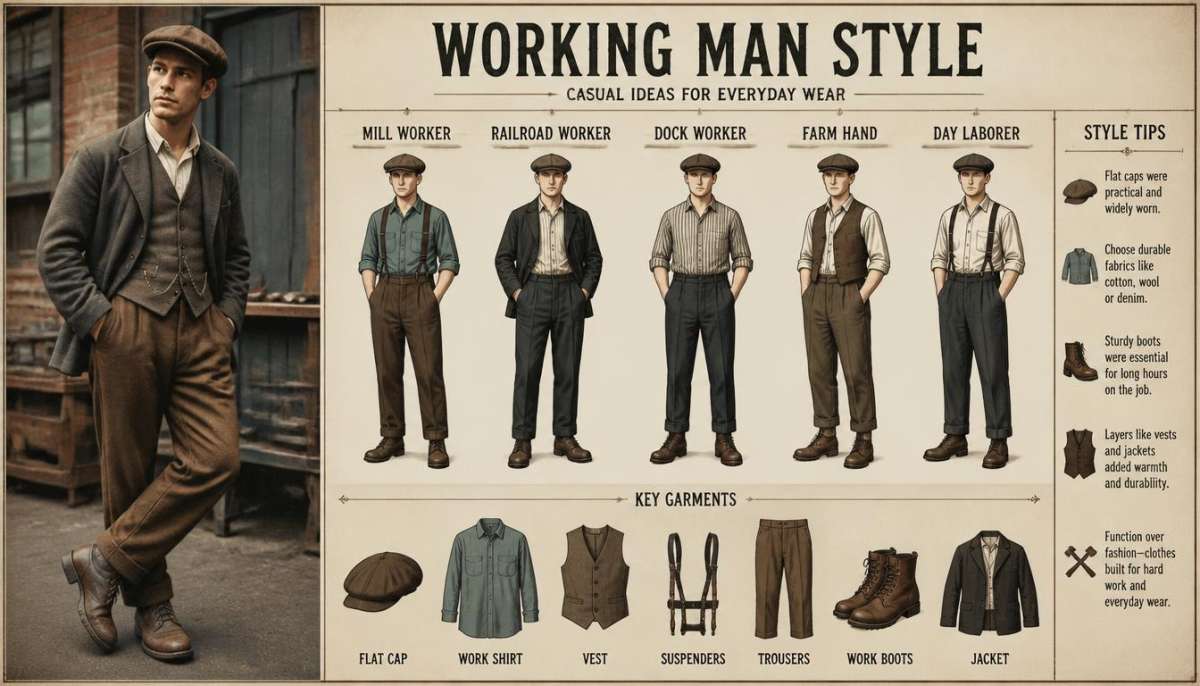
Working Class 1920s Men’s Fashion Casual: Clothes & Outfit Ideas
When people picture men’s fashion in the 1920s, they often think of sharp suits, polished shoes, and glamorous evening clothes. But that was only one side of the decade.
For working-class men, everyday clothing was much more practical. Clothes needed to handle long workdays, outdoor conditions, factory floors, farms, railways, workshops, and other physically demanding jobs. That meant sturdy fabrics, comfortable cuts, simple shirts, durable trousers, practical jackets, and reliable footwear.
A typical casual working-class look could include a high-waisted pair of trousers, a sturdy shirt, suspenders, a flat cap, and leather boots. For heavier work, denim overalls or coveralls were useful choices.
If you want to understand working class 1920s mens fashion casual, the key is to think useful first, stylish second. The clothes were not designed to be disposable. They were made to be worn, worked in, repaired, and worn again.
What Did Working-Class Men Wear in the 1920s?
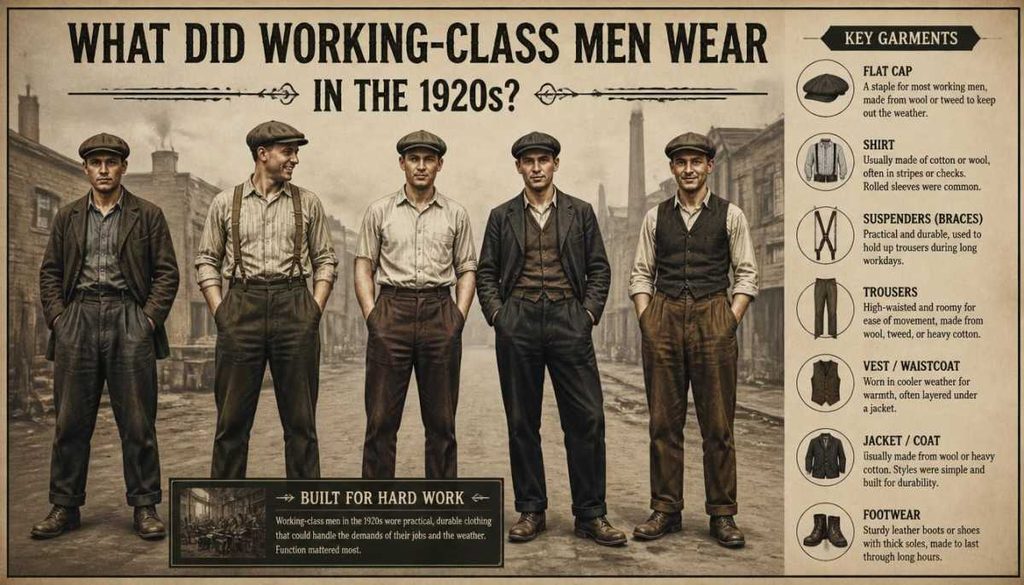
Working-class clothing varied depending on the job, location, weather, and social setting, but several pieces appeared again and again.
A practical wardrobe could include:
- Heavy cotton or wool work shirts
- High-waisted trousers
- Suspenders or leather belts
- Denim overalls
- Canvas work jackets
- Wool or tweed jackets
- Plaid or flannel shirts
- Flat caps and newsboy-style caps
- Leather work boots
- Heavy oxfords or brogues
The overall appearance was generally straightforward. There was less emphasis on decorative details and more attention to durability and comfort.
A man working outdoors might need heavier layers than someone working inside a shop or factory. Someone who spent Sunday away from work could also dress slightly more neatly while still keeping the practical character of working-class clothing.
1920s Working-Class Shirts
The shirt was one of the most useful pieces in a working man’s wardrobe.
Work shirts were generally simple and made to withstand regular use. Heavy cotton and wool were practical choices, particularly when clothing had to deal with rough work or colder conditions.
Work Shirts
A typical work shirt could have a relatively simple shape with reinforced construction.
Rather than elaborate decoration, the focus was on making the garment useful and long-lasting. Strong seams and sturdy materials made sense for men who spent their days doing physical work.
Some shirts were designed to be pulled over the head, while others had button fronts or longer openings at the neck.
Wool and Heavy Cotton Shirts
The fabric depended partly on the season and working environment.
Heavy cotton could work well for everyday labor, while wool offered more warmth during colder weather.
These materials also fit the broader working-class preference for clothing that could withstand repeated wear.
Collars and Front Openings
Work shirts could feature soft collars or detachable collars, depending on the garment and occasion.
A simpler work shirt could have a practical front opening rather than the more formal appearance associated with dress shirts.
Rolled-Up Sleeves
When a man needed freedom of movement during physical work, sleeves could be rolled upward.
This was less about creating a particular fashion statement and more about keeping clothing out of the way while working.
1920s Working-Class Trousers and Overalls
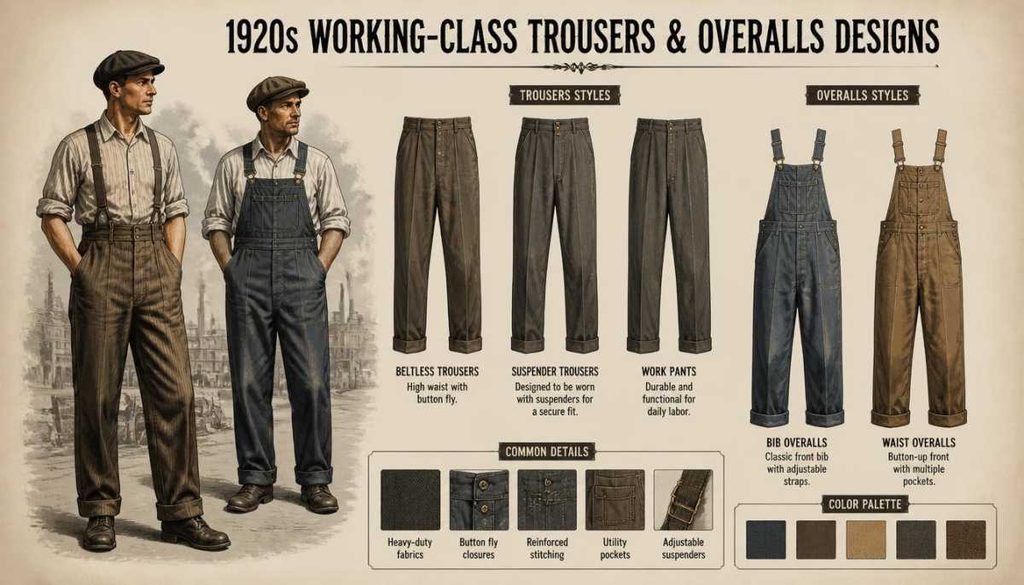
Trousers were an important part of the working man’s everyday wardrobe.
Compared with many modern trousers, 1920s styles generally sat higher on the waist and had a roomier appearance.
High-Waisted Trousers
High-waisted trousers were common during the period.
A higher rise helped create the characteristic silhouette of the decade, while a relatively generous cut allowed room for movement.
For a casual working-class outfit, trousers could be made from sturdy wool or other hard-wearing materials.
Suspenders and Belts
Suspenders, also called braces, were particularly useful with high-waisted trousers.
They helped hold trousers in position without requiring a tight belt around the waist.
A simple leather belt could also be used depending on the garment and situation.
Denim Overalls
For particularly dirty or physical jobs, denim overalls were practical.
Bib overalls provided another layer of protection between the worker and the environment. Their durable construction made them useful for mechanics, laborers, agricultural workers, and other manual occupations.
Dark blue denim became closely associated with practical workwear.
One-Piece Workwear
One-piece coveralls offered even more coverage for demanding work.
They were useful where clothing could become dirty or exposed to grease, dust, and other materials.
The purpose was simple: protect the clothing underneath and make working easier.
Jackets and Coats for Working Men
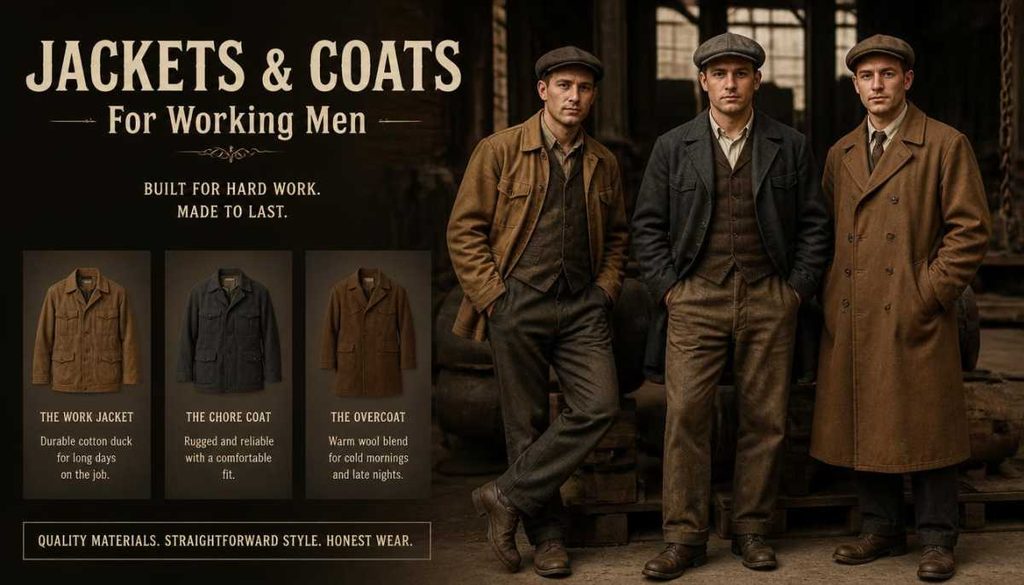
A working man needed outerwear that could deal with changing weather and regular use.
The right jacket depended heavily on the season and type of work.
Wool and Tweed Jackets
Wool and tweed offered warmth and durability.
A simple wool or tweed jacket could be worn when a man wanted something more presentable than work overalls while still keeping a practical appearance.
Herringbone and other textured wool fabrics also fit naturally into this type of wardrobe.
Canvas Work Jackets
Canvas was useful for work because of its sturdy nature.
A canvas jacket could provide an additional protective layer without the formality of a traditional suit jacket.
Chore Coats
A simple chore-style coat was another practical option.
Its purpose was to provide coverage and useful storage while allowing the wearer to move around comfortably.
Plaid and Flannel Layers
Plaid and flannel could add warmth to an everyday working outfit.
A flannel layer underneath a heavier jacket made sense for outdoor work and colder conditions.
The result was practical rather than overly polished.
1920s Working-Class Hats and Caps
Headwear was a normal part of everyday men’s clothing during the period.
For working-class men, caps were especially useful because they were practical, relatively simple, and suited casual clothing.
Flat Caps
The flat cap is one of the easiest pieces to associate with a working-class 1920s look.
It could be worn with trousers, a work shirt, jacket, and sturdy shoes without making the outfit look overly formal.
Newsboy Caps
Newsboy-style caps provided another casual option.
Their fuller shape gave them a recognizable period appearance and worked naturally with working-class clothing.
Baker Boy Caps
The baker boy style has a fuller crown than a traditional flat cap.
For someone recreating a 1920s working outfit today, this type of cap can immediately give the outfit a stronger vintage character.
1920s Working-Class Shoes and Boots
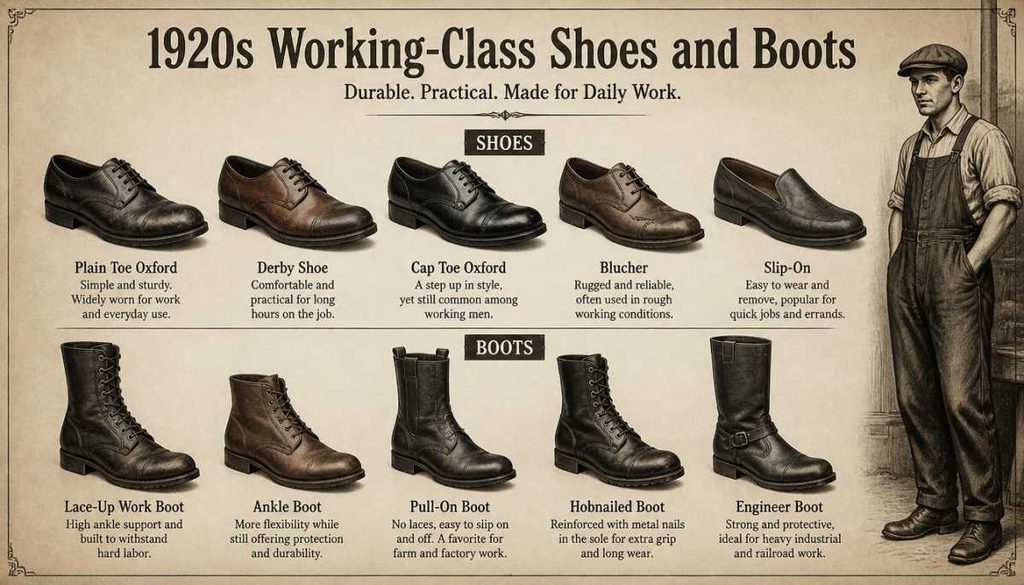
Footwear had to be practical.
A man spending hours on a factory floor, railway, construction site, farm, or workshop needed shoes that could tolerate repeated use.
Leather Work Boots
Sturdy leather boots were useful for outdoor and physically demanding work.
They offered protection and durability while fitting naturally with heavy trousers and workwear.
Heavy Oxfords
Oxfords could work for less rugged environments or situations where a man wanted something slightly neater.
A heavier construction suited the practical character of working-class clothing.
Brogues
Brogues could add some visual interest while still maintaining a sturdy appearance.
For a casual outfit away from heavy manual labor, they could bridge the gap between workwear and smarter everyday clothing.
What Fabrics Were Used in Working-Class 1920s Clothing?
Fabric choice mattered because clothing had to survive regular use.
Wool
Wool was useful for warmth and was commonly associated with trousers, jackets, and other heavier garments.
Tweed
Tweed offered durability and warmth while giving clothing a textured appearance.
Herringbone
Herringbone fabrics added visual texture without relying on decorative details.
They were well suited to practical jackets and trousers.
Heavy Cotton
Heavy cotton was useful for work shirts and other everyday garments.
It offered a balance of comfort and durability.
Denim
Denim was especially practical for demanding work.
Its association with overalls and other work garments makes it one of the easiest fabrics to use when recreating a working-class workwear look.
Canvas
Canvas could handle rough conditions and was therefore useful for work jackets and protective clothing.
Flannel
Flannel provided warmth and could be used as a casual layer in cooler weather.
Leather
Leather was particularly useful for footwear and other items that needed to withstand repeated wear.
How to Create a Casual 1920s Working-Class Outfit Today
You don’t need an entire historical wardrobe to capture the look.
The easiest approach is to combine a few recognizable pieces and keep the outfit practical.
Simple Factory Worker Outfit
Try:
- High-waisted dark trousers
- Plain heavy cotton work shirt
- Suspenders
- Flat cap
- Dark leather boots
Keep the colors muted and avoid modern logos or obvious contemporary details.
1920s Laborer Outfit
For a more rugged appearance:
- Dark denim bib overalls
- Heavy work shirt
- Leather work boots
- Flat or newsboy cap
- Canvas jacket for colder weather
This creates a stronger workwear appearance without needing complicated styling.
Casual Outdoor Work Outfit
For an outdoor-inspired look:
- High-waisted wool or sturdy trousers
- Plaid or flannel shirt
- Canvas jacket
- Leather boots
- Flat cap
This works particularly well for a cooler-weather vintage outfit.
Cooler Weather Outfit
Layering can make the outfit feel more authentic and practical.
Start with a heavy shirt, add a wool or tweed jacket, and finish with sturdy trousers, boots, and a cap.
The key is to make the layers look useful rather than overly styled.
Working-Class vs. Wealthy 1920s Men’s Fashion
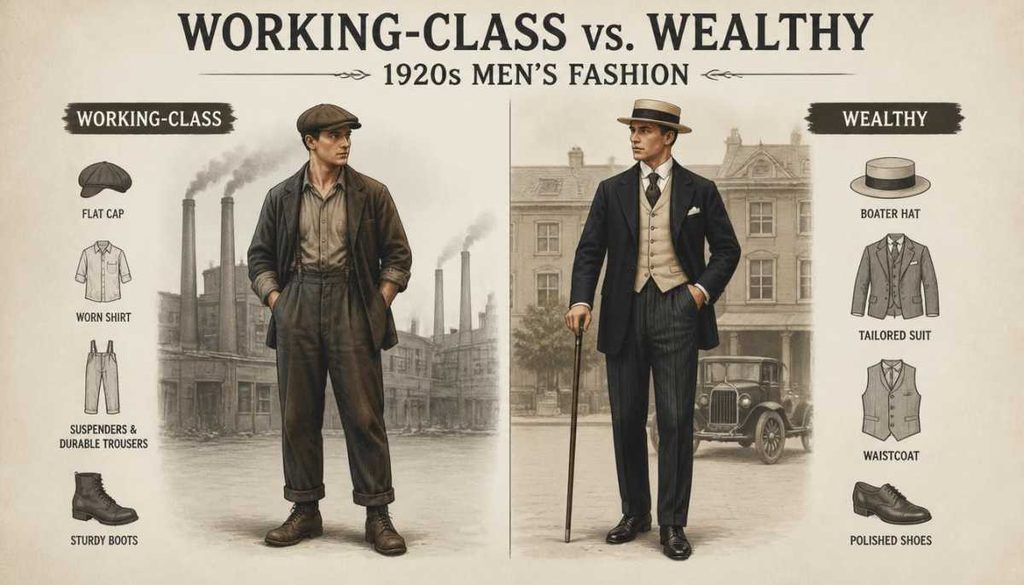
The biggest difference was not simply whether an outfit looked fashionable.
It was about purpose and access.
Wealthier men could have wardrobes built around tailored suits, finer fabrics, formal accessories, and clothing for specific social occasions.
Working-class men generally needed clothing that could serve practical purposes.
Their wardrobes were more likely to emphasize:
- Durability
- Simple construction
- Hard-wearing fabrics
- Comfortable movement
- Repeated use
- Protection from weather and work conditions
That doesn’t mean working-class men didn’t care about appearance.
A man could still dress neatly and take pride in his clothing. The difference was that practical clothing had to fit into everyday life and work.
Common Questions About Working-Class 1920s Men’s Fashion
What did working-class men wear in the 1920s?
Working-class men commonly wore practical shirts, high-waisted trousers, suspenders, sturdy jackets, work boots, and caps. Men doing manual labor could also wear denim overalls or coveralls.
What did working men wear in the 1920s?
Their clothing depended on their occupation, but durable shirts, trousers, boots, caps, and work jackets were common choices. Outdoor and manual workers often needed heavier clothing and protective workwear.
What did poor men wear in the 1920s?
Men with limited clothing budgets generally relied on practical garments that could be worn repeatedly and repaired when necessary. Simple shirts, trousers, caps, boots, and workwear were more useful than highly decorative clothing.
What pants did men wear in the 1920s?
Men commonly wore high-waisted trousers with relatively roomy legs. Working men could also wear sturdy work trousers, denim overalls, or other practical garments suited to their jobs.
What were 1920s work clothes made of?
Common practical materials included wool, tweed, herringbone, heavy cotton, denim, canvas, flannel, and leather.
Did working-class men wear suits in the 1920s?
A working-class man could own or wear a suit for appropriate occasions, but everyday work clothing was generally more practical. Work shirts, trousers, jackets, boots, and overalls were better suited to physical labor.
What shoes did working men wear in the 1920s?
Sturdy leather work boots were useful for demanding jobs. Heavier oxfords and brogues could also be worn when a somewhat smarter appearance was appropriate.
Building the 1920s Working-Class Look
The appeal of working class 1920s mens fashion casual is that it doesn’t require an overly complicated outfit.
Start with a sturdy shirt, high-waisted trousers or denim overalls, and practical leather footwear. Add suspenders, a flat cap, and a durable jacket when you want more of the period character.
The most convincing outfits are usually the ones that look like they could actually have been worn for a day’s work. Keep the fabrics substantial, the colors grounded, and the accessories useful.
That practical attitude is what gives 1920s working-class menswear its distinctive character.