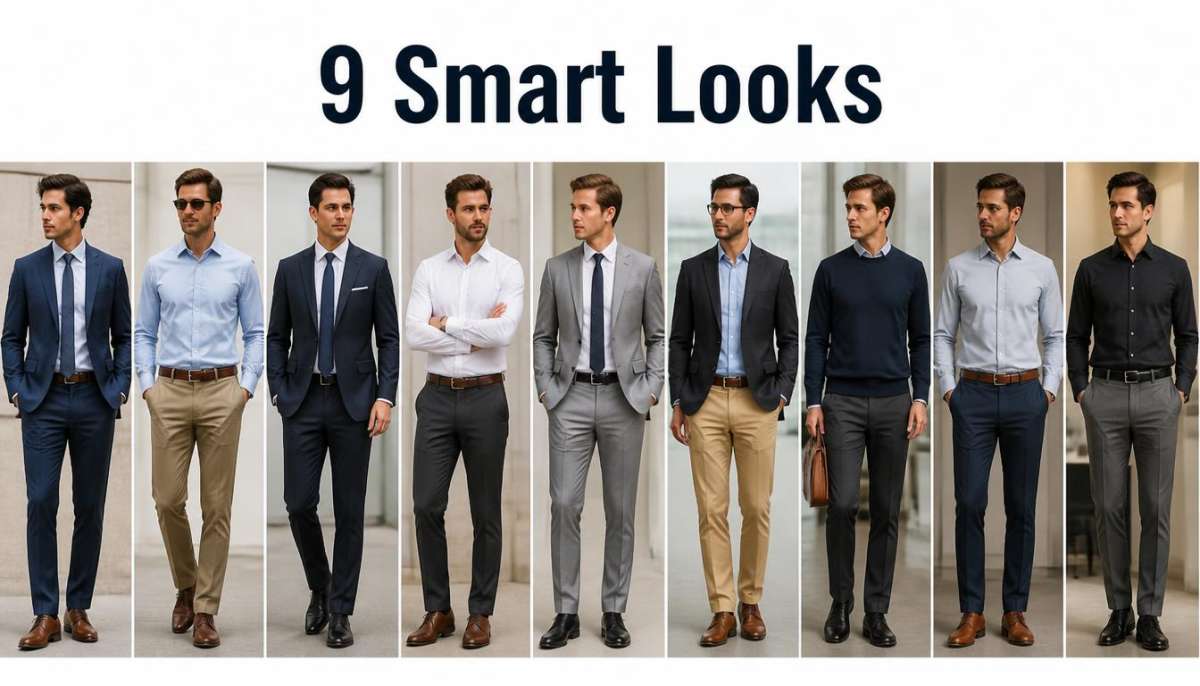
Men’s Outfit Ideas for a First Day at a New Job: 9 Smart Looks
Starting a new job is an exciting step, and choosing the right outfit can help you feel comfortable and prepared for your first day. The best men’s outfit ideas for a first day at a new job combine a neat appearance, comfortable clothing, and a style that suits the workplace.
You do not always need an expensive suit to look professional. A crisp button-down shirt, well-fitted trousers, clean shoes, and a simple jacket can create a polished outfit for many office environments. The key is to understand the dress code and choose clothes that make sense for your role.
Whether you are joining a corporate office, a creative company, a tech startup, or a relaxed workplace, these outfit combinations will help you plan your first-day look without overcomplicating your wardrobe.
1. Classic White Shirt and Navy Trousers
A white button-down shirt paired with navy tailored trousers is one of the most dependable outfits for a first day at work. This combination looks clean, professional, and appropriate for many office settings.
Choose a white shirt made from comfortable cotton and trousers that allow you to sit, walk, and move easily. A brown or black leather belt and matching dress shoes can complete the look.
How to style it:
- White button-down shirt
- Navy tailored trousers
- Brown or black leather belt
- Black Derby shoes or brown leather loafers
- Simple watch, if you like wearing one
Best for: Corporate offices, administrative roles, client meetings, and workplaces with a business-casual dress code.
2. Navy Blazer With a Light Blue Shirt
If you want to look a little more formal without wearing a complete suit, combine a navy blazer with a light blue shirt and neutral trousers. The blazer adds structure, while the lighter shirt keeps the outfit approachable.
Grey or beige trousers work particularly well with navy. For footwear, choose clean leather loafers or Derby shoes, depending on how formal your workplace is.
Make sure the blazer fits comfortably across the shoulders and does not restrict your movement. You can leave the tie at home if your workplace does not expect traditional business attire.
Best for: Office presentations, meetings, professional services, and workplaces where smart-casual clothing is expected.
3. Business-Casual Outfit With Chinos
Not every new job requires formal trousers or a suit. In a relaxed office, chinos paired with a button-down shirt offer a practical balance between casual and professional clothing.
Beige chinos with a light blue shirt create a classic combination. You can also choose navy chinos with a white or light grey shirt for a slightly darker look.
Keep the shirt neatly tucked in if the office is more formal. In a relaxed workplace, an appropriate untucked shirt may also work, provided its length and design suit that style.
How to style it:
- Beige, navy, or charcoal chinos
- White, light blue, or pale grey shirt
- Brown loafers or clean leather sneakers
- Matching belt when wearing one
For more inspiration, explore our guide to French fashion for men, which covers versatile shirts, tailored trousers, neutral colors, and smart-casual combinations.
Best for: Marketing teams, office administration, startups, and casual business environments.
4. Smart Polo Shirt and Tailored Trousers
A polo shirt can be a good option when the workplace is relaxed but you still want to look presentable. Unlike a graphic T-shirt, a simple polo has a collar that gives the outfit a slightly more polished appearance.
Choose a plain polo in navy, white, grey, or muted green. Pair it with tailored trousers or chinos and finish with clean loafers or understated sneakers.
Avoid heavily branded polos or athletic designs if you are unsure about the office dress code. If the workplace is formal, a button-down shirt is a safer choice.
Best for: Casual offices, certain tech companies, creative workplaces, and roles with limited formal meetings.
5. Grey Sweater With a Collared Shirt
For cooler weather or an air-conditioned office, a lightweight crew-neck sweater layered over a collared shirt creates a refined outfit without feeling overly formal.
A grey sweater with a white or light blue shirt and navy trousers is an easy combination. Let the shirt collar sit neatly above the sweater, and choose a knit that is comfortable enough to wear throughout the day.
You can finish the outfit with brown leather shoes or simple loafers. If you need an extra layer outdoors, add a clean, understated jacket.
Best for: Autumn and winter workdays, business-casual offices, and workplaces where layering is practical.
6. Dark Jeans With a Structured Jacket
Some workplaces allow dark jeans, particularly in creative, digital, and technology-related roles. If jeans are acceptable, choose a clean, dark-wash pair without prominent rips, heavy distressing, or distracting details.
Pair them with a white or light blue shirt and a structured blazer or simple jacket. Leather Chelsea boots or minimal sneakers can finish the outfit, depending on the office culture.
The important distinction is that dark jeans should look intentional rather than like weekend clothing. If you are uncertain whether denim is allowed, choose chinos or tailored trousers for your first day instead.
Best for: Creative agencies, design studios, selected tech offices, and relaxed professional environments.
7. A Complete Suit for a Formal Workplace
Some jobs require a more traditional professional appearance. If you are starting at a law firm, a formal financial office, or another workplace with a strict dress code, a well-fitting suit may be the most appropriate option.
A navy or charcoal suit with a white shirt is a reliable starting point. Add a conservative tie if required and finish with clean black or dark brown leather dress shoes.
Your suit does not need to be expensive. Focus on comfortable tailoring, clean fabric, appropriate trouser length, and a shirt that sits neatly beneath the jacket.
Best for: Formal corporate offices, client-facing professional roles, and workplaces that specifically require business attire.
8. Lightweight Shirt and Chinos for Warm Weather
Hot weather can make dressing for work more challenging, particularly when commuting or walking outdoors. Breathable fabrics and lightweight layers can help you remain comfortable while maintaining a professional appearance.
Try a light blue or white cotton shirt with beige chinos and brown loafers. Linen or linen-blend shirts can also work in relaxed offices, provided they are neat and appropriate for the dress code.
Avoid wearing beach sandals, gym shorts, or visibly athletic clothing to an office unless your workplace specifically allows them.
For more warm-weather combinations, check out our guide to summer wardrobe essentials for stylish men.
Best for: Warm climates, summer commutes, and casual or business-casual offices.
9. Minimalist Outfit With Neutral Colors
If you prefer simple clothing, a minimalist outfit can be an excellent choice for your first day at a new job. Neutral colors are easy to coordinate, and you can create a polished look without adding many accessories.
For example, wear a light grey shirt with charcoal trousers and black shoes. Another option is a cream shirt with navy chinos and brown loafers.
Keep patterns subtle and avoid combining too many competing colors. A simple belt and a clean bag can finish the outfit without making it look busy.
Best for: Men who prefer understated style, modern offices, and workplaces with a smart-casual dress code.
How to Choose the Right First-Day Outfit
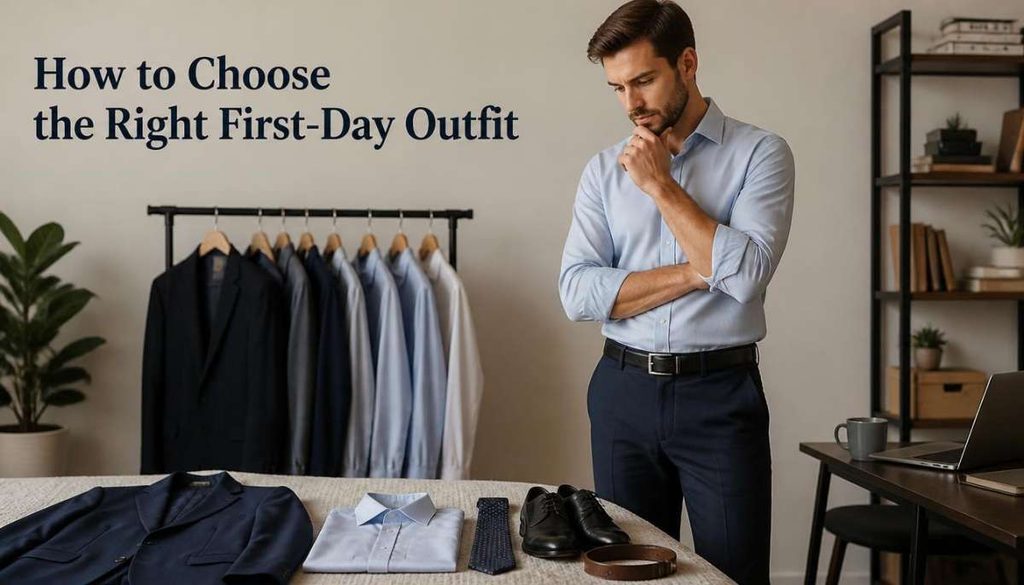
Before selecting your clothes, consider the type of workplace, the expectations of your role, and the weather. An outfit that works for a creative studio might not be appropriate for a formal client meeting.
Use these practical guidelines to make your decision easier.
Check the Workplace Dress Code
If your employer has provided a dress code, follow it. If not, look at the company’s website or professional photos to get a general sense of how employees dress.
You can also ask your manager or HR contact whether the office expects formal business attire, business casual, or casual clothing.
When the dress code is unclear, a neat shirt with tailored trousers and clean leather shoes is a sensible starting point.
Choose Comfortable, Well-Fitting Clothes
Your first day may involve introductions, training, meetings, and moving between different areas of the workplace. Your clothing should allow you to do all these things comfortably.
Check that your shirt does not pull at the buttons, your trousers allow easy movement, and your shoes are comfortable enough for the day. Avoid wearing a brand-new pair of shoes for the first time if you have not checked how they feel.
For additional guidance, read our article on how to find your personal fashion style.
Keep Colors Easy to Coordinate
Navy, white, grey, beige, charcoal, and brown are useful starting colors for workwear. They can be combined in several ways without making outfit planning complicated.
For example, a navy blazer can work with grey trousers, beige chinos, or dark denim when the workplace allows it. A white or light blue shirt can also pair with most of these options.
You do not need to avoid every bright color or pattern. Simply keep the overall outfit balanced and appropriate for the environment.
Pay Attention to Shoes and Grooming
Shoes are an important part of a professional outfit. Clean loafers, Derby shoes, or suitable minimalist sneakers can complete different workplace looks.
Before leaving home, check that your clothes are clean and wrinkle-free, your shoes are presentable, and your hair is neat. Keep fragrances subtle, and carry your essentials in a practical work bag.
These small details help your outfit look finished without requiring an expensive wardrobe.
What Should Men Avoid Wearing on Their First Day at Work?
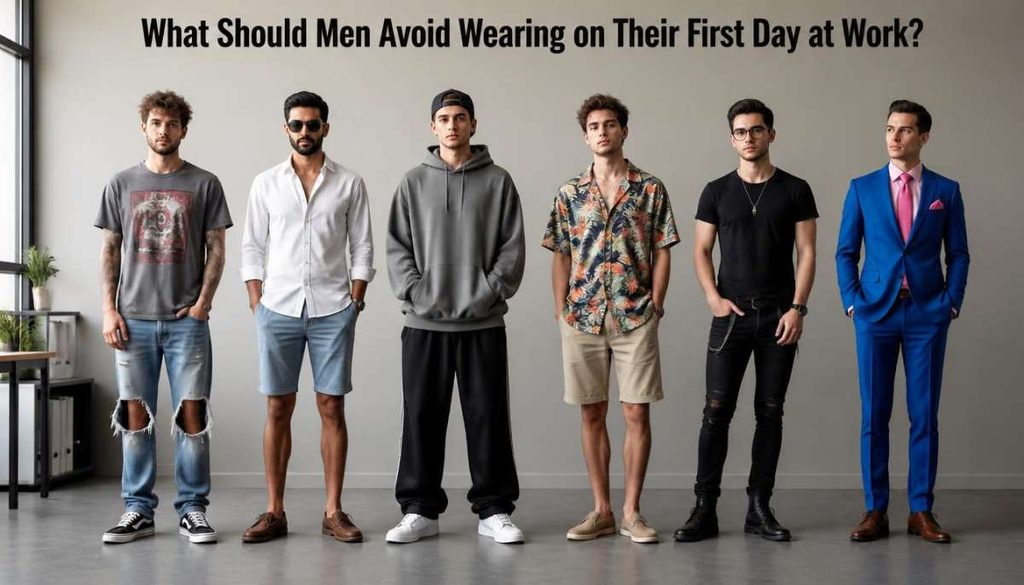
The right outfit depends on the workplace, but a few common mistakes are worth avoiding when you do not yet know the dress code.
- Overly casual clothing: Hoodies, gym shorts, and graphic T-shirts may be unsuitable for many professional environments.
- Wrinkled shirts: Prepare your outfit the night before and iron or steam it when necessary.
- Uncomfortable shoes: Avoid footwear that makes walking or standing difficult.
- Too many accessories: Keep watches, belts, jewelry, and other details simple.
- Clothes that restrict movement: Choose garments that allow you to sit, stand, and work comfortably.
- Ignoring workplace requirements: A relaxed outfit is not appropriate if your employer expects formal business attire.
You do not have to dress in a way that feels completely different from your personality. Instead, adapt your usual style to the expectations of your new workplace.
Frequently Asked Questions
What should a man wear on his first day at a new job?
A white or light blue button-down shirt, navy or charcoal trousers, and clean leather shoes are reliable choices for many professional offices. Adjust the outfit to match your employer’s dress code.
Can I wear jeans on my first day at work?
Yes, if your workplace allows jeans. Choose a clean, dark-wash pair and combine it with a neat shirt and suitable shoes. If you are unsure, wear chinos or tailored trousers instead.
Should men wear a suit on their first day at a new job?
A suit is appropriate when the workplace expects formal business attire. In many business-casual offices, tailored trousers, a button-down shirt, and an optional blazer are sufficient.
What colors are best for a first-day work outfit?
Navy, white, light blue, grey, beige, charcoal, and brown are versatile choices. They are easy to combine and suitable for a range of professional settings.
How can I look professional without buying new clothes?
Start with clean, well-maintained clothes you already own. Combine a neat shirt with suitable trousers, coordinate your shoes and belt, and make sure the outfit fits comfortably. Small adjustments can make an existing wardrobe more useful.
What shoes should men wear to a new office job?
Leather Derby shoes and loafers work well in many business settings. Clean, understated sneakers may be acceptable in casual workplaces, while formal offices may require traditional dress shoes.
Final Thoughts
Choosing what to wear on your first day at a new job does not have to be complicated. Start by understanding the dress code, select clothes that fit comfortably, and build your outfit around a few reliable pieces such as a button-down shirt, tailored trousers, and suitable shoes.
A navy blazer, smart chinos, a lightweight sweater, or dark jeans can offer additional options depending on your workplace. You do not need to buy an entirely new wardrobe to make a good impression.
The best outfit is one that suits your role, feels comfortable throughout the day, and allows you to focus on settling into your new job.