15 Essential Wardrobe Staples Every Man Should Own
Getting dressed should not feel like solving a puzzle every morning. When your wardrobe contains the right basics, you can put together a clean, confident outfit in minutes.
The good news is that you do not need a closet packed with expensive clothes. You need a small collection of versatile pieces that fit well, work together, and suit your actual lifestyle.
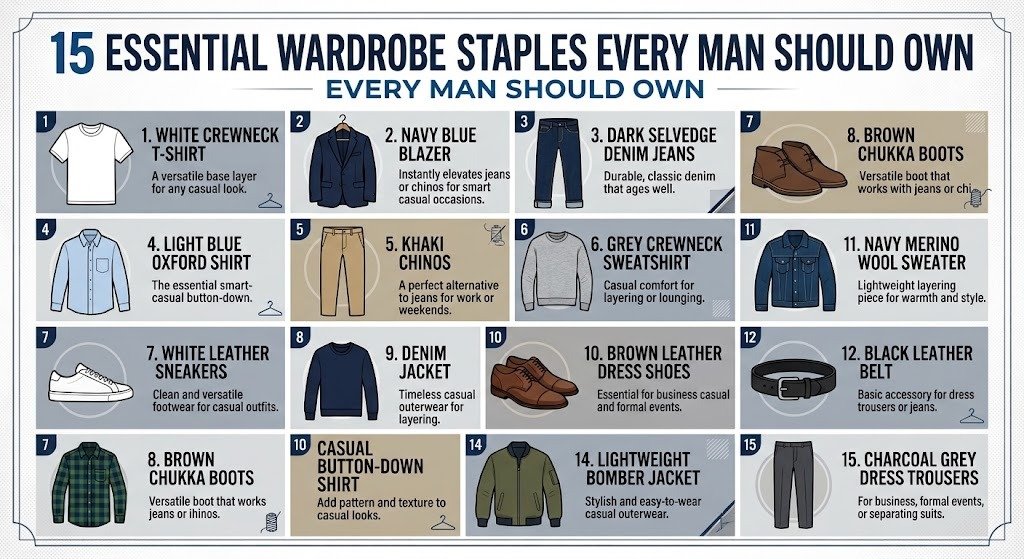
These 15 essential wardrobe staples every man should own will give you a strong starting point. Whether you are rebuilding your style or buying clothes for the first time, this guide will help you spend wisely and avoid common mistakes.
Key Takeaways
Prioritize fit before brand names, trends, or price tags.
Start with neutral colors such as navy, white, gray, black, olive, and beige.
Buy versatile clothes that can work in several different outfits.
Build your wardrobe slowly instead of buying everything at once.
Choose fabrics and weights that match your local climate.
Own at least one outfit suitable for a job interview, wedding, or formal dinner.
Take proper care of your clothes so they last longer and look better.
Replace worn-out basics before spending money on statement pieces.
Use accessories to add personality without making an outfit feel too busy.
Focus on clothes you will genuinely wear, not pieces that only look good online.
What Makes a Good Wardrobe Staple?
A wardrobe staple is a reliable piece of clothing that you can wear regularly and combine with several other items. It should make getting dressed easier rather than creating more outfit problems.
The best men’s wardrobe essentials usually have three qualities:
They fit your body properly.
They work with several colors and outfits.
They can be worn across different settings or seasons.
A plain white T-shirt is a good example. You can wear it with jeans for a casual afternoon, under an overshirt for dinner, or beneath a jacket for a smarter look.
A bright shirt with a large graphic may be fun, but it is not as flexible. Build your foundation first, then add more personal or trend-focused pieces later.
How Should You Choose Your Wardrobe Basics?
Before buying anything, think about how you spend a normal week. Your ideal wardrobe should reflect your daily routine.
Someone working in an office may need more button-down shirts and tailored trousers. Someone working from home may get more value from quality T-shirts, jeans, chinos, and comfortable layers.
Ask yourself these questions:
Where do I spend most of my time?
Do I need business, smart-casual, or mostly casual clothes?
What is the weather like where I live?
Which colors do I already wear often?
Which items in my closet fit me well?
What important situations am I currently unprepared for?
Your answers will help you decide which wardrobe basics for men deserve your money first.
1. A Well-Fitting White T-Shirt
A clean white T-shirt is one of the simplest and most useful items you can own. It works by itself, under a jacket, beneath a sweater, or as a base layer under an open shirt.
Fit makes all the difference. The shoulder seams should sit close to the edge of your shoulders, and the sleeves should gently follow your arms without squeezing them.
The body should skim your torso rather than cling to it. It should also be long enough to cover your waistband when you move, but not so long that it looks like an undershirt.
How to Wear It
Try your white T-shirt with:
Dark blue jeans and white sneakers
Beige chinos and loafers
An open overshirt and casual boots
A navy blazer and tailored trousers
Shorts and simple canvas sneakers
White fabric can become transparent under bright light, so check it before buying. A medium-weight cotton T-shirt usually gives you better coverage and holds its shape longer.
Because white T-shirts show stains quickly, having two or three is practical. Wash them according to the care label and treat marks before they set.
2. A Versatile Navy or Black T-Shirt
A dark T-shirt gives you an easy alternative when white feels too bright or casual. Navy is slightly softer and pairs well with blue, gray, khaki, olive, and white.
Black creates a sharper look, especially for evenings. It works well with gray trousers, black jeans, blue denim, or a lightweight jacket.
Choose whichever color fits the rest of your wardrobe. If you own many blue and brown pieces, navy may be easier to combine.
What to Avoid
Skip T-shirts with large logos if you want maximum versatility. A small, subtle design can work, but a plain shirt will give you more outfit options.
Also watch for collars that become loose after a few washes. A clean neckline helps even an inexpensive T-shirt look presentable.
3. A Crisp White Button-Down Shirt
A white button-down shirt can take you from a job interview to a dinner date. It is one of the most important essential clothing items for men because it can look formal, smart-casual, or relaxed depending on how you style it.
For formal situations, tuck it into tailored trousers and add a belt. For a casual outfit, wear it open over a T-shirt or roll the sleeves and pair it with chinos.
The shirt should close comfortably without pulling across your chest. You should also be able to move your arms without the fabric feeling tight across your back.
Choosing the Right Style
A plain white shirt with a simple collar is the safest choice. Avoid shiny fabric, extreme collar shapes, or decorative stitching when buying your first one.
If you plan to wear it with a tie, check that the collar fits comfortably when fully buttoned. If you mainly want smart-casual outfits, a softer Oxford-style shirt is usually easier to dress down.
Iron or steam the shirt before wearing it. Wrinkles can make an otherwise polished outfit look unfinished.
4. A Light Blue Oxford Shirt
A light blue Oxford shirt is slightly more relaxed than a crisp white dress shirt. It is ideal for offices, lunches, dates, family events, and weekends when a T-shirt feels too casual.
Blue also pairs naturally with most neutral colors. You can wear it with navy trousers, beige chinos, gray pants, olive trousers, or dark denim.
An Oxford shirt looks good tucked in or left untucked. If you plan to wear it untucked, make sure the hem does not fall too far below your trouser pockets.
Easy Outfit Ideas
Wear your light blue shirt with:
Beige chinos and brown loafers
Dark jeans and white sneakers
Gray trousers and a navy blazer
Olive chinos and casual boots
Navy shorts and canvas shoes
Roll the sleeves neatly when you want a relaxed look. Two or three even folds usually look better than pushing the sleeves up randomly.
5. Dark Blue Jeans
Dark blue jeans are among the most dependable pieces in a capsule wardrobe for men. They are casual enough for everyday wear but clean enough for many smart-casual settings.
Choose a pair with minimal fading, no large rips, and little or no decorative stitching. A simple design will stay useful even when denim trends change.
A straight or slim-straight fit works for many body types. Your jeans should follow the shape of your legs without gripping your thighs or calves.
How Should Jeans Fit?
The waistband should stay in place without requiring a tightly fastened belt. You should be able to sit comfortably and place a finger or two inside the waistband.
Pay attention to length as well. A small break where the fabric meets your shoes looks clean, while heavy bunching around the ankles can make the jeans appear too large.
If the waist fits but the length does not, have the jeans shortened. A basic alteration can make an affordable pair look much better.
6. Neutral Chinos
Chinos sit between jeans and formal trousers, which makes them incredibly useful. They can work for an office, a dinner, a casual wedding, or a relaxed weekend.
Start with beige, navy, olive, or medium gray. Beige is a classic first choice because it pairs easily with white, blue, navy, brown, black, and green.
Choose a pair with a clean front and a comfortable rise. Extremely low-rise trousers can feel restrictive and may cause your shirt to come untucked.
How to Style Chinos
For a casual look, wear chinos with a plain T-shirt and sneakers. For a smarter outfit, add an Oxford shirt, leather belt, and loafers.
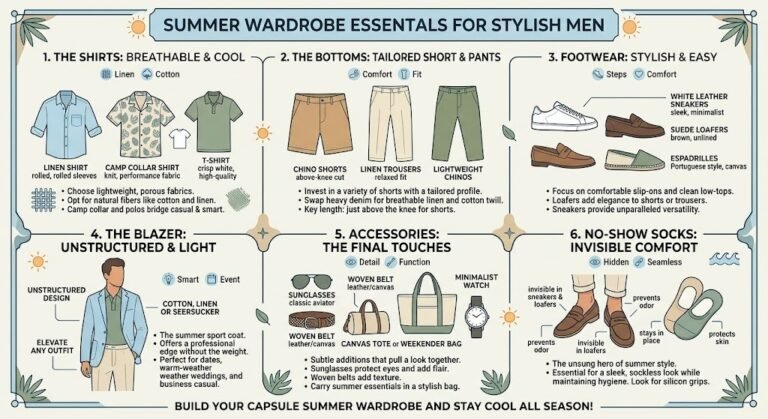
You can also wear them with a polo shirt during warm weather. Add a sweater or casual jacket when the temperature drops.
Avoid choosing chinos that look painted onto your legs. Slight room through the seat and thighs will feel better and create a cleaner shape.
7. Tailored Trousers
Every man should own at least one pair of trousers that looks smarter than denim or chinos. Charcoal gray and navy are both reliable choices.
Tailored trousers are useful for interviews, presentations, dinners, weddings, and formal family events. They also work with a dress shirt, knitwear, a polo, or a simple T-shirt under a blazer.
“Tailed” does not have to mean custom-made. It simply means the trousers fit cleanly at the waist, seat, thighs, and hem.
The Most Important Fit Checks
When trying on trousers, look for:
A waistband that sits securely without pinching
A smooth front without pulling lines
Enough room to sit comfortably
A clean line through the legs
Little or no fabric gathering at the shoes
Pockets that lie flat instead of opening outward
If the pockets flare, the trousers may be too tight across your hips. Try a larger size or a different cut rather than assuming the problem will disappear after wearing them.
8. A Navy Blazer
A navy blazer can instantly make basic clothes look more polished. It works with gray trousers, beige chinos, dark denim, and even a plain T-shirt.
Unlike a full suit jacket, a blazer is designed to be worn with different trousers. Look for one with a simple texture and limited padding if you want it to work in both smart and relaxed outfits.
The shoulders are the most important area to get right. Altering sleeve length is usually straightforward, but fixing badly fitting shoulders can be difficult and expensive.
How to Know If a Blazer Fits
The shoulder seam should end close to your natural shoulder. The jacket should button without creating a large “X” shape across the front.
Your shirt cuff should show slightly below the jacket sleeve. The jacket length should generally cover most of your seat without looking unusually long.
For an easy smart-casual outfit, combine a navy blazer with a white T-shirt, gray trousers, and clean sneakers. For a more formal look, switch to a button-down shirt and leather shoes.
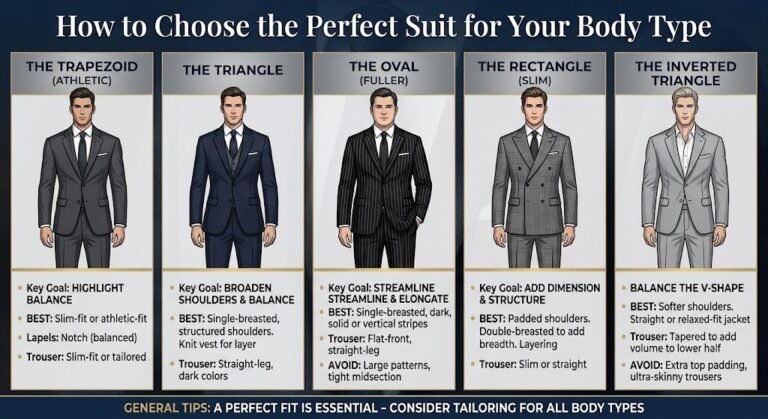
9. A Dark, Well-Fitting Suit
Even if you rarely dress formally, you should have one dependable suit. Weddings, funerals, interviews, business events, and important dinners can appear with little notice.
Navy and charcoal are the safest colors for a first suit. Both are more flexible than pure black and can be worn during the day or evening.
Choose a simple single-breasted jacket with matching trousers. Avoid bold patterns until you already own a solid, versatile option.
Why Alterations Matter
An affordable suit that has been adjusted to your body often looks better than an expensive suit in the wrong size. Sleeve length, trouser length, and waist shape can usually be refined by a good tailor.
Wear the shirt and shoes you plan to use when checking the fit. This makes it easier to judge sleeve exposure and trouser length correctly.
Do not wait until the day before an event to buy your suit. Give yourself enough time to compare sizes and complete any needed alterations.
10. A Lightweight Sweater
A simple sweater adds warmth without making an outfit bulky. It also helps you create more combinations from the shirts and trousers you already own.
A crew-neck sweater is easy to wear over a T-shirt or button-down shirt. A V-neck can work well over a collared shirt, though a deep V-neck may look dated.
Start with navy, charcoal, medium gray, or dark green. These colors can fit into most collections of timeless men’s clothing.
Choosing a Practical Sweater
Your sweater should fit comfortably over a shirt without pulling around your chest or underarms. The hem should sit around your waistband rather than hanging far below it.
Check the care instructions before buying. If you prefer easy maintenance, avoid an item that requires special cleaning after every few wears.
Fold sweaters instead of hanging them for long periods. Hangers can stretch the shoulders and leave marks in the fabric.
11. A Casual Overshirt
An overshirt gives you an easy extra layer when a blazer feels too formal. It looks like a shirt but is usually made from slightly heavier fabric.
You can wear it open over a T-shirt or button it like a light jacket. Olive, navy, beige, brown, and charcoal are versatile starting colors.
An overshirt is especially useful during mild weather. It also helps add depth to simple outfits without requiring bright colors or bold patterns.
Simple Ways to Wear It
Try these combinations:
Olive overshirt, white T-shirt, and dark jeans
Navy overshirt, gray T-shirt, and beige chinos
Beige overshirt, black T-shirt, and black jeans
Charcoal overshirt, blue Oxford shirt, and navy chinos
Leave enough room for a light layer underneath. If it fits exactly like a tight dress shirt, it may restrict movement and lose its purpose.
12. A Weather-Appropriate Jacket
Your outerwear is often the first thing people notice, so it should fit well and suit your climate. The right choice depends on where you live and how much time you spend outdoors.
A lightweight bomber, Harrington-style jacket, or simple field jacket works well in mild weather. For colder areas, a clean wool coat or insulated jacket may be more practical.
Keep your first jacket simple and neutral. Navy, olive, charcoal, tan, or black will work with most wardrobe basics for men.
Match the Jacket to Your Lifestyle
If you commute in formal clothes, choose outerwear that fits comfortably over a blazer. If you dress casually, a shorter jacket may work better with jeans and chinos.
Consider rain, wind, and temperature rather than choosing based only on appearance. A stylish jacket that cannot handle your local weather will spend most of its life in the closet.
Check sleeve length while wearing your usual layers. A jacket may fit over a T-shirt but feel too tight when worn over a sweater.
13. Clean White Sneakers
Simple white sneakers can be worn with jeans, chinos, shorts, and some relaxed tailored outfits. They make casual clothes look fresh without demanding much attention.
Choose a low-profile design with limited branding. The simpler the shoe, the easier it will be to combine with different outfits.
White sneakers only work well when they are reasonably clean. They do not need to look brand new, but heavy stains and dirty laces can weaken your entire outfit.
How to Keep Them Looking Good
Wipe small marks soon after wearing the shoes. Dirt is easier to remove before it settles into the material.
Clean the laces separately when needed. Replacing worn or permanently stained laces is an inexpensive way to refresh the shoes.
Rotate your sneakers rather than wearing them every single day. Giving shoes time to air out can help them stay comfortable and last longer.
14. Brown or Black Leather Shoes
A smart pair of leather shoes prepares you for formal and business occasions. Derby shoes, simple Oxfords, or loafers can all work depending on your lifestyle.
Dark brown is often the most versatile choice because it pairs with navy, gray, beige, olive, and many shades of blue. Black is best when you frequently wear black, charcoal, or very formal clothing.
Your shoes and belt do not need to match perfectly. They should simply belong to the same general color family.
Which Style Should You Buy First?
Choose based on how you expect to wear the shoes:
Derby shoes: Flexible for business and smart-casual outfits
Oxford shoes: Best for formal clothing and suits
Loafers: Useful for offices, dinners, and warm-weather events
Leather boots: Practical for cold weather and rugged casual outfits
Comfort matters as much as appearance. Walk around indoors before deciding to keep a new pair, and do not assume severe discomfort is part of breaking in leather shoes.
Use shoe trees if you own them, or allow the shoes to rest between wears. Clean and condition the material according to the manufacturer’s instructions.
15. A Matching Belt and Simple Accessories
Accessories may be small, but they can make your clothes feel intentional. Start with a leather belt that works with your smart shoes and a casual belt for jeans or chinos if needed.
A simple watch can also complete an outfit. You do not need an expensive model; a clean design that fits your wrist is enough.
Your socks deserve attention too. Own dress socks in navy, charcoal, or black, plus comfortable everyday pairs that stay up and cover your ankle when you sit.
Useful Accessories to Consider
A practical accessory collection may include:
A dark brown or black leather belt
A simple everyday watch
Navy, gray, and black dress socks
A neutral scarf for cold weather
A compact umbrella
A clean backpack, briefcase, or messenger bag
A pair of sunglasses that fits your face comfortably
One understated tie for formal occasions
Avoid wearing too many attention-grabbing accessories at once. One or two personal details usually look more confident than several competing pieces.
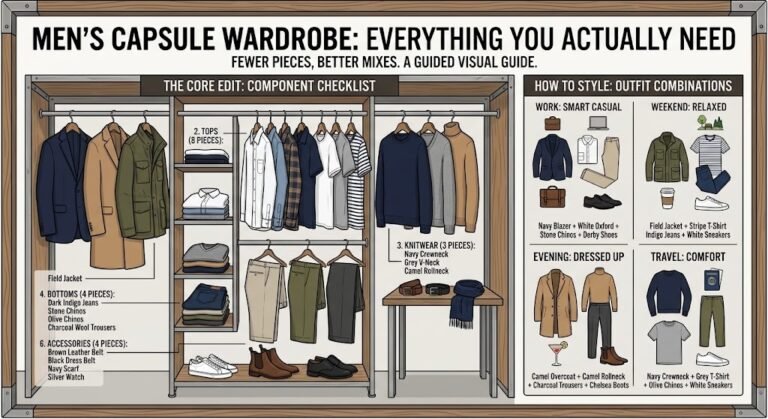
How to Make These 15 Essentials Work Together
The real value of these 15 essential wardrobe staples every man should own is that they can be mixed and matched. You are not buying 15 isolated items; you are building an outfit system.
For example, your white T-shirt can work with dark jeans, chinos, tailored trousers, an overshirt, a blazer, or a jacket. One basic item can support several different looks.
Easy Casual Outfit
Wear:
White T-shirt
Dark blue jeans
Clean white sneakers
Olive or navy overshirt
This outfit works for errands, coffee, travel, and relaxed social plans.
Smart-Casual Outfit
Wear:
Light blue Oxford shirt
Beige chinos
Brown loafers
Navy blazer
This combination suits a dinner date, casual office, birthday gathering, or family event.
Business Outfit
Wear:
White button-down shirt
Charcoal tailored trousers
Navy blazer
Brown leather shoes
Matching leather belt
Add a tie if the setting calls for one.
Formal Outfit
Wear:
Navy or charcoal suit
White dress shirt
Leather Oxford or Derby shoes
Matching belt
Dark dress socks
Simple tie
Keeping the colors classic makes the outfit suitable for many formal occasions.
How Many Clothes Does a Man Actually Need?
There is no perfect number because laundry habits, climate, work, and lifestyle vary. A practical starter wardrobe might contain several T-shirts and shirts but only one blazer and one suit.
You can use this basic quantity guide:
Three to five plain T-shirts
Two to four button-down shirts
One or two pairs of jeans
Two or three pairs of chinos
One or two pairs of tailored trousers
Two lightweight sweaters
One or two overshirts
One blazer
One suit
One weather-appropriate jacket
One pair of white sneakers
One pair of smart leather shoes
Treat these numbers as a starting point, not a strict rule. Buy enough to handle your normal week without filling your wardrobe with duplicates you rarely wear.
Which Wardrobe Staples Should You Buy First?
If your budget is limited, focus on the clothes needed for your most common activities. There is no reason to buy a suit first if you urgently need reliable everyday outfits.
A sensible buying order for many men is:
A white T-shirt
A dark T-shirt
Dark blue jeans
Neutral chinos
Clean white sneakers
A light blue Oxford shirt
A white button-down shirt
A casual overshirt
A lightweight sweater
A weather-appropriate jacket
Tailored trousers
Leather shoes and a belt
A navy blazer
A dark suit
Simple accessories
Change this order to match your life. If you have an interview or wedding soon, formal clothing should move to the top of your list.
Common Wardrobe-Building Mistakes to Avoid
Buying for an Imaginary Lifestyle
Do not fill your closet with suits if you mostly wear casual clothes. Your wardrobe should serve your real schedule.
Buy for the life you have now. You can always add new items when your work, location, or routine changes.
Ignoring Fit
A high price does not fix poor fit. Check the shoulders, chest, waistband, seat, sleeve length, and trouser length before looking at the label.
Try multiple sizes when possible. Clothing sizes are not consistent across brands, so the number on the tag should never control your decision.
Choosing Trends Over Versatility
Trendy pieces can be enjoyable, but they should not form the foundation of your closet. Start with simple cuts and neutral colors that will remain wearable.
Once your basics are covered, add patterns, brighter colors, or unusual shapes that reflect your personality.
Buying Everything in Black
Black is useful, but an all-black wardrobe can limit your options. Navy, gray, olive, beige, white, and brown are just as practical and often easier to combine.
Build a balanced color palette so your outfits do not all look identical.
Keeping Worn-Out Basics Too Long
A wardrobe essential stops being useful when it is permanently stained, stretched, faded, or damaged. Inspect the clothes you wear most often every few months.
Repair small problems early. Replace items that can no longer be cleaned or fixed.
Shopping Without an Outfit Plan
Before buying something, think of at least three ways you can wear it with clothes you already own. If you cannot create three outfits, the item may not be a smart purchase.
Taking quick photos of your wardrobe can help when shopping in person. You can compare colors and avoid buying unnecessary duplicates.
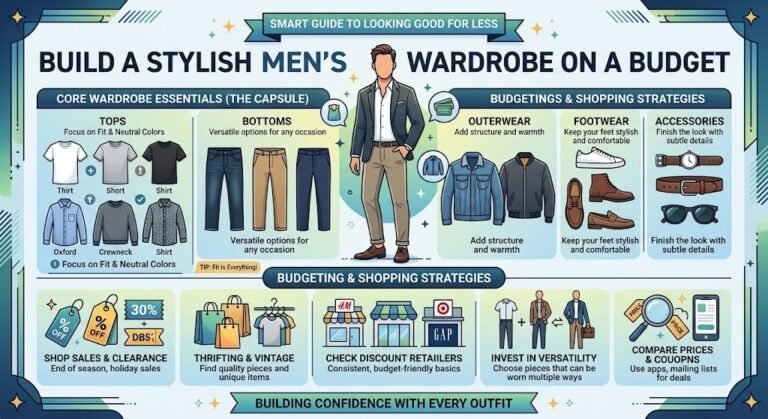
How to Build a Better Wardrobe on a Budget
You do not need to buy all 15 staples in one shopping trip. A slower approach usually leads to better decisions.
Set a monthly clothing budget and focus on your biggest gap first. You may discover that one pair of well-fitting chinos improves your wardrobe more than five discounted shirts.
Try these money-saving habits:
Make a list before shopping.
Compare fit rather than chasing brand names.
Wait for seasonal sales on planned purchases.
Check return policies before ordering online.
Use alterations to improve clothes you already own.
Repair loose buttons and small tears.
Buy fewer pieces in colors that work together.
Avoid buying an item only because it is heavily discounted.
Cost per wear is a useful way to judge value. A $70 jacket worn 100 times offers better value than a $25 shirt worn once.
Frequently Asked Questions
What are the most important wardrobe essentials for men?
The most important pieces are a plain T-shirt, dark jeans, neutral chinos, a button-down shirt, clean sneakers, and a practical jacket. These items can create enough combinations for most everyday situations.
After covering casual needs, add tailored trousers, leather shoes, a blazer, and a dark suit. Those pieces will prepare you for business and formal events.
What colors should a man’s basic wardrobe include?
Start with navy, white, gray, beige, olive, brown, and black. These neutral colors are easy to mix and reduce the risk of buying clothes that do not work together.
You can add brighter colors after building the foundation. Muted blue, burgundy, rust, and dark green are easy ways to introduce more personality.
How can I tell if my clothes fit correctly?
Clothes should follow your shape without squeezing, pulling, or hanging excessively. Shoulder seams, sleeve length, waistband comfort, and trouser length are the first areas to check.
Move around while trying clothes on. Sit, raise your arms, and walk to make sure the item remains comfortable during normal use.
Can I build a good wardrobe on a small budget?
Yes. Start with versatile pieces and buy them one at a time based on your actual needs.
Focus on fit, color, and how often you will wear each item. Affordable clothes can look polished when they fit correctly and are kept clean.
How often should I replace my wardrobe basics?
There is no fixed schedule. Replace an item when it is permanently stained, badly faded, stretched out, damaged, or no longer fits.
You can extend the life of your clothes by following care labels, treating stains quickly, rotating footwear, and avoiding unnecessary washing.
Do I need both a blazer and a suit?
They serve different purposes. A blazer can be worn with jeans, chinos, or separate trousers, while a suit jacket is designed to match its suit trousers.
If you attend formal events, own a suit. If your routine is mostly smart-casual, a navy blazer may get more regular use.
Are white sneakers appropriate with smart-casual clothes?
Clean, simple white sneakers can work with chinos, Oxford shirts, knitwear, and relaxed blazers. They are best for modern smart-casual settings rather than traditional formal occasions.
For interviews, conservative offices, and formal events, leather shoes are usually the safer choice.
How do I add personality to a basic wardrobe?
Use color, texture, accessories, and layering. A patterned shirt, textured sweater, distinctive watch, or rich-colored overshirt can make a basic outfit feel personal.
Add one noticeable element at a time. This keeps the outfit balanced and allows your personal choice to stand out.
Should all my clothes be neutral colors?
No, but neutral colors should form the base of your wardrobe. They help your clothes work together and make daily outfit planning easier.
Once you have the essentials, add colors and patterns you enjoy. Choose additions that work with at least two or three neutral pieces you already own.
What is the best first item for a capsule wardrobe for men?
Start with a well-fitting white or navy T-shirt if your lifestyle is casual. Pair it with dark jeans, chinos, and clean sneakers to create several simple outfits.
If you work in an office, begin with a light blue Oxford shirt and navy or gray trousers. The best first item is always the one that solves your most frequent clothing need.