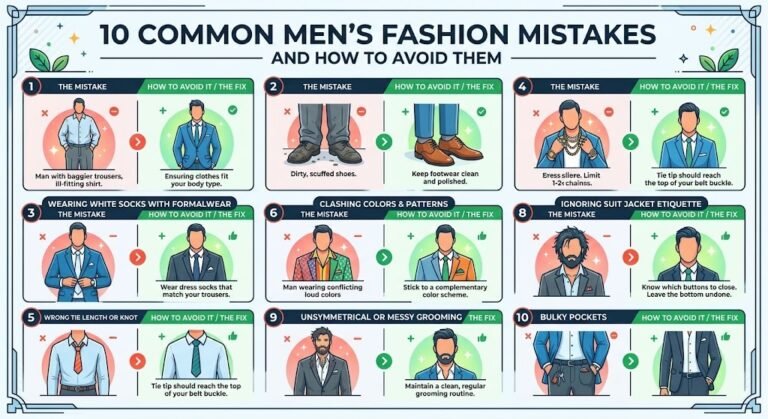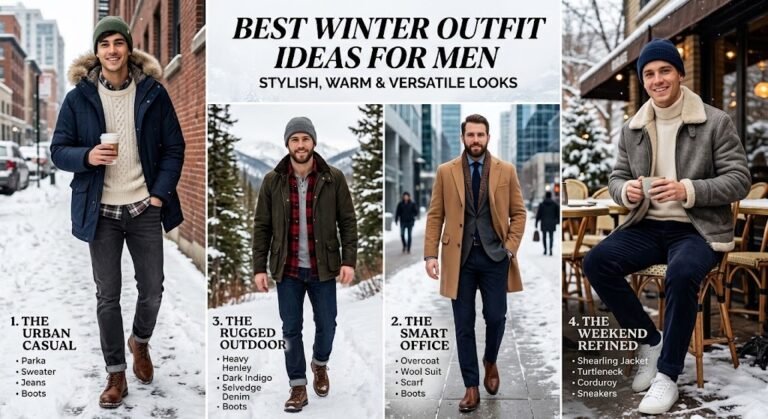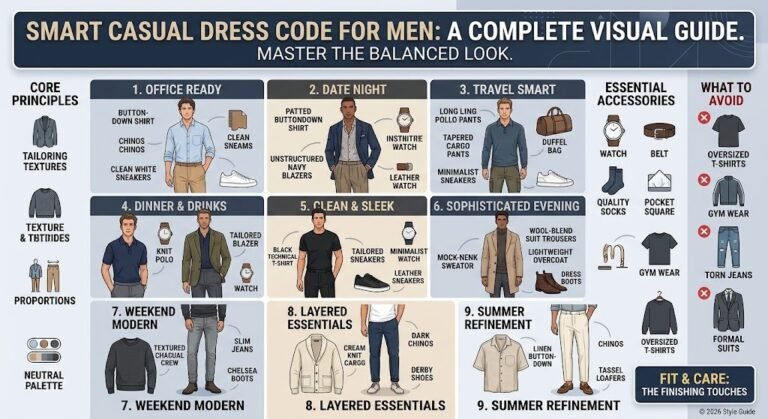
Looking stylish does not require designer labels, a huge closet, or a large shopping budget. You can build a sharp and practical wardrobe with a few well-chosen clothes that fit properly and work together.
The real secret is not buying more. It is buying smarter.
This guide explains how to build a stylish men’s wardrobe on a budget, step by step. You will learn what to buy first, where to save money, which mistakes to avoid, and how to create more outfits with fewer clothes.
Key Takeaways
Check your existing clothes before buying anything new.
Build your wardrobe around neutral colors that are easy to combine.
Prioritize fit over brands, trends, and expensive materials.
Buy clothes for your real lifestyle, not an imaginary one.
Start with versatile basics such as T-shirts, jeans, chinos, and button-down shirts.
Create a shopping list and set a clear monthly budget.
Use alterations to improve affordable clothing.
Shop sales, outlet stores, and secondhand platforms carefully.
Avoid buying clothes simply because they are discounted.
Take care of your clothes to reduce replacement costs.
Can You Build a Stylish Wardrobe on a Small Budget?
Yes, you can create a stylish men’s wardrobe without spending a fortune. Style depends more on fit, coordination, cleanliness, and confidence than on the name printed inside your clothes.
A simple $20 shirt that fits correctly can look better than a $150 shirt with poor proportions. Clean shoes and well-fitted trousers can also improve your appearance more than an expensive watch or designer belt.
Your goal should be to own clothes that:
Fit your body comfortably
Match several other items
Suit your daily routine
Can be worn in different settings
Are easy to maintain
Make you feel confident
A budget wardrobe should be small but flexible. Each new item needs to earn its place by supporting several outfits.
Step 1: Understand Your Lifestyle Before Shopping
The best wardrobe is the one that matches your actual life. Before spending money, think about where you go and what you wear during a normal week.
If you work in a casual office, you may need chinos, Oxford shirts, polos, and clean sneakers. If your workplace has a formal dress code, tailored trousers and dress shirts should move higher on your list.
Someone who works from home may get more use from comfortable T-shirts, jeans, overshirts, and knitwear. A wardrobe built for frequent business meetings would look very different.
Ask Yourself These Questions
Write down honest answers to the following:
What do I wear to work?
How often do I attend formal events?
What do I wear on weekends?
Do I need clothes for dates or social gatherings?
What is the weather like where I live?
Do I walk or commute regularly?
Which clothes make me feel most comfortable?
Which occasions currently leave me without a suitable outfit?
These answers will protect you from buying clothes that look attractive in a shop but have no place in your routine.
Step 2: Audit the Clothes You Already Own
Do not start your budget wardrobe by going shopping. Begin by checking every item you already own.
Take your clothes out of the closet and divide them into clear groups:
Keep
Repair or alter
Donate or sell
Replace soon
Unsure
Try on anything you have not worn recently. Check the fit, condition, comfort, and whether it works with the image you want to create.
Keep Clothes That Meet These Standards
Keep an item if it:
Fits you comfortably
Is in good condition
Works with at least two other pieces
Suits your current lifestyle
Has been worn during the past year
Makes you feel confident
Do not keep uncomfortable clothes just because they were expensive. Money already spent should not force you to wear something that does not work.
Repair Before You Replace
Some clothes may only need a small improvement. A missing button, loose seam, long trouser hem, or slightly wide shirt can often be fixed affordably.
Basic alterations can make budget clothing look much more polished. Before replacing an item, ask a tailor whether it can be improved for less than the price of buying something new.
Step 3: Set a Realistic Clothing Budget
A budget gives you control over your spending and helps prevent impulse purchases. Decide how much you can comfortably spend without affecting essential expenses.
You can use a monthly, seasonal, or yearly clothing budget. A monthly amount is often easier to manage because it encourages you to build your wardrobe slowly.
For example, you might set aside:
$25 to $50 per month for a very limited budget
$50 to $100 per month for a moderate budget
A fixed seasonal amount for larger purchases
A separate emergency amount for work or formal clothing
Your exact number is less important than your consistency. Even a small monthly budget can build a strong wardrobe over time.
Spend According to Your Priorities
Do not divide your money equally across every category. Spend more on items you wear often and less on clothes used occasionally.
A practical budget might prioritize:
Everyday shoes
Jeans or chinos
Plain shirts and T-shirts
A weather-appropriate jacket
Workwear
Formal clothing
Accessories
If you wear sneakers five days a week, they deserve more of your budget than a tie worn twice a year.
Step 4: Choose a Simple Color Palette
A planned color palette makes a small wardrobe feel larger. When your clothes share compatible colors, you can create more combinations without buying more pieces.
Start with two or three core neutral colors. Good options include:
Navy
Charcoal
Medium gray
Black
Beige
Olive
White
Brown
You do not have to wear only neutral colors. They simply create a dependable base for brighter shirts, patterned accessories, or statement pieces.
An Easy Beginner Color Palette
Try this combination:
Main colors: Navy and gray
Light neutral: White or beige
Accent color: Olive, burgundy, rust, or light blue
Leather color: Dark brown
This palette allows most shirts, trousers, jackets, and shoes to work together.
Use the Three-Outfit Rule
Before buying anything, imagine at least three outfits you can create with it using clothes you already own. If you cannot think of three, leave the item behind.
A navy sweater, for example, may work with:
A white T-shirt and jeans
A light blue shirt and beige chinos
A white shirt and gray trousers
An Oxford shirt and olive chinos
That flexibility makes it a better budget purchase than a bright patterned sweater that only matches one pair of trousers.
Step 5: Prioritize Fit Over Brand Names
Good fit is the fastest way to make affordable clothes look stylish. Poor fit can make even expensive clothing appear careless.
You do not need extremely tight clothing. Your clothes should follow your body’s shape while allowing you to sit, walk, reach, and move comfortably.
How Should a T-Shirt Fit?
A well-fitting T-shirt should have:
Shoulder seams near the edge of your shoulders
Sleeves that sit around the middle of your upper arm
Enough room across the chest
A body that does not cling or hang excessively
A hem that falls around the middle of your trouser fly
Check the shirt from the side as well as the front. It should not pull across your stomach or create large folds around your lower back.
How Should a Shirt Fit?
Your button-down shirt should close without gaps between the buttons. The collar should feel comfortable when fastened, especially if you plan to wear a tie.
The shoulder seams should sit close to your natural shoulders. The sleeves should reach around the base of your wrist.
How Should Trousers Fit?
Trousers should sit securely at your waist without requiring an extremely tight belt. The pockets should lie flat rather than opening outward.
You should be able to sit without discomfort. The fabric should fall cleanly over your shoes without heavy bunching.
Use Affordable Alterations
Trouser hems and shirt sleeves can often be adjusted at a reasonable cost. Waist suppression can also improve a loose shirt or jacket.
Shoulders are harder and more expensive to alter. Make sure shirts, blazers, and jackets fit correctly across the shoulders before buying them.
Step 6: Build Your Wardrobe Around Versatile Basics
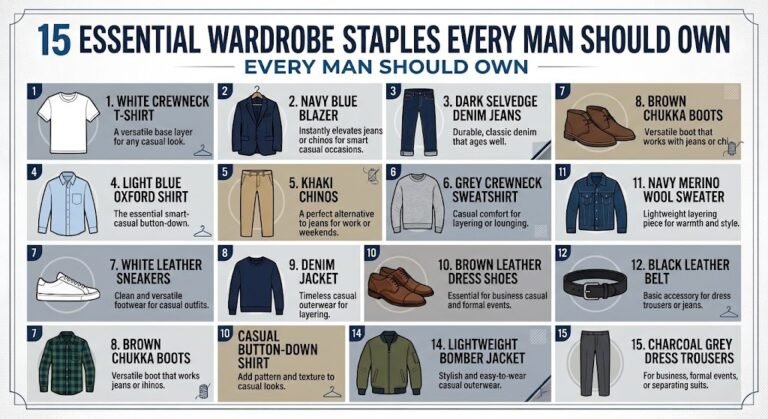
When learning how to build a stylish men’s wardrobe on a budget, begin with clothes you can wear repeatedly. These basics should support casual, smart-casual, and slightly dressier outfits.
You do not need to purchase everything at once. Start with the pieces that solve your biggest clothing problems.
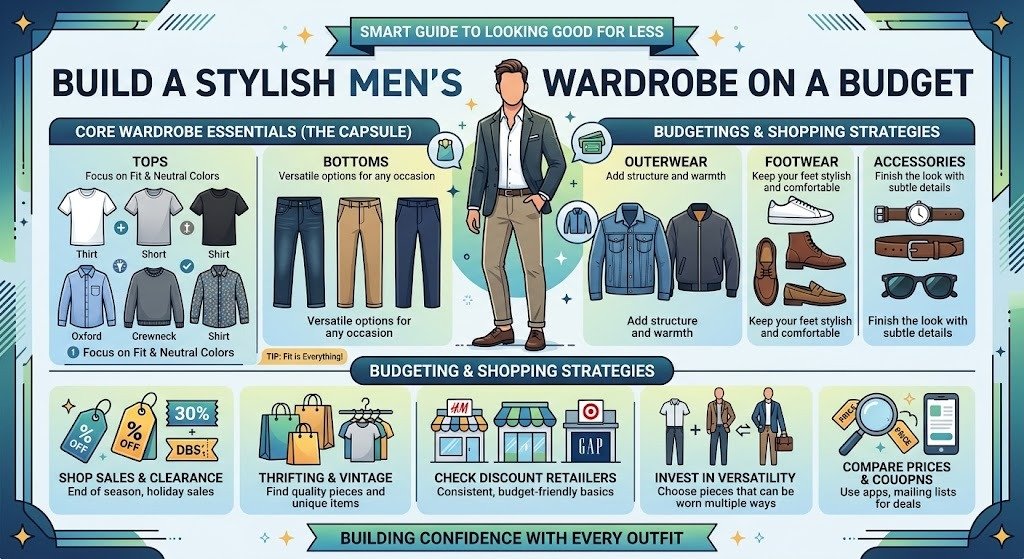
The Essential Budget Wardrobe Checklist
1. Two or Three Plain T-Shirts
Start with white, navy, gray, or black. Plain T-shirts are easy to wear alone and can also sit under shirts, sweaters, jackets, and overshirts.
Look for medium-weight fabric that is not transparent. Check the collar because a stretched neckline can make a basic outfit look worn out.
You do not need a visible logo. Simple T-shirts are easier to combine and usually remain useful for longer.
2. One White Button-Down Shirt
A white shirt prepares you for interviews, formal dinners, work events, and family gatherings. It can also be worn casually with jeans and rolled sleeves.
Choose a simple collar and avoid shiny fabric. The shirt should feel comfortable across your chest, shoulders, and back.
Keep it clean and ironed. A neat, affordable shirt can look much better than an expensive but wrinkled one.
3. One Light Blue Oxford Shirt
A light blue Oxford shirt is useful for smart-casual outfits. It works with jeans, navy chinos, beige trousers, gray pants, and shorts.
You can wear it tucked in for a polished look or untucked for a relaxed outfit. Make sure the hem is not excessively long if you plan to wear it untucked.
Light blue also adds color without becoming difficult to match.
4. One Pair of Dark Blue Jeans
Dark denim is easier to dress up than heavily faded or ripped jeans. It works with T-shirts, shirts, sweaters, blazers, and several types of footwear.
Choose a straight or slim-straight cut that gives you room to move. Avoid buying jeans that feel painfully tight and hoping they will stretch enough later.
Minimal detailing offers the most flexibility. Large logos and heavy distressing can limit where you can wear the jeans.
5. One Pair of Neutral Chinos
Beige, navy, gray, or olive chinos can handle work, weekends, dates, and casual events. They fill the gap between jeans and formal trousers.
Beige is a practical first color because it works with white, blue, navy, green, black, and brown. Navy is also easy to wear but may overlap with dark jeans.
Check the waistband, thighs, seat, and length. A clean fit will make basic chinos look far more expensive.
6. One Pair of Smart Trousers
Charcoal or navy trousers will prepare you for dressier situations. You can wear them with a white shirt, Oxford shirt, sweater, polo, or blazer.
Look for a simple front and limited decorative details. The trousers should create a clean line from your waist to your shoes.
Buy a pair that can work without its matching suit jacket. This gives you more outfit options.
7. One Neutral Sweater
A crew-neck sweater in navy, charcoal, gray, or dark green can be worn over a T-shirt or collared shirt. It adds warmth while keeping your outfit clean.
Choose a thickness that suits your climate. A lightweight sweater is often more flexible because it can be layered under a jacket.
Fold your sweater instead of leaving it on a hanger for months. This helps prevent stretched shoulders.
8. One Casual Layer
An overshirt, bomber jacket, or simple Harrington-style jacket can improve basic outfits immediately. It adds shape, color, and visual interest without requiring expensive accessories.
Olive, navy, beige, and charcoal are practical choices. Pick a color that contrasts gently with your most frequently worn trousers.
Make sure you can wear a T-shirt or light sweater underneath without feeling restricted.
9. One Weather-Appropriate Jacket
Choose outerwear based on your local climate, not just appearance. A lightweight rain-resistant jacket may be more useful than a heavy wool coat in a warm or wet area.
If your winters are cold, invest in a warm coat that fits over your normal layers. If the climate is mild, a versatile midweight jacket may be enough.
Your jacket is highly visible and worn often, so save part of your budget for a reliable one.
10. One Pair of Clean Sneakers
Simple sneakers in white, off-white, gray, black, or navy can work with jeans and chinos. Some minimal designs can also work with relaxed tailored trousers.
Look for comfort, a clean shape, and limited branding. Avoid choosing a shoe that only matches one outfit.
Keep the sneakers clean and replace worn laces when needed. Basic shoe care can extend their useful life.
11. One Pair of Smart Shoes
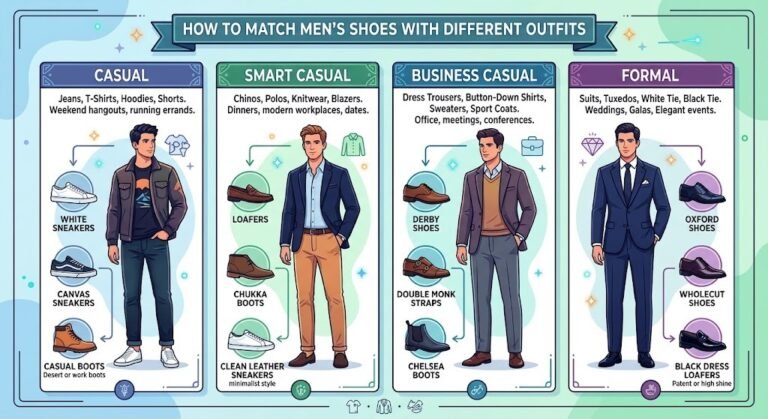
Dark brown Derby shoes or loafers are flexible choices for many men. They work with navy, gray, beige, and olive clothing.
Black shoes may be a better option if you regularly attend formal events or wear black and charcoal trousers. Choose the color that matches your lifestyle.
Do not buy uncomfortable shoes only because they are discounted. If you avoid wearing them, they are not a bargain.
12. One Matching Leather Belt
Your belt does not need to match your shoes perfectly. It should simply be close enough in color to create a coordinated appearance.
Choose a simple buckle and avoid oversized logos. A reversible belt may appear economical, but check the mechanism and material carefully because some wear out quickly.
If you mostly wear casual outfits, a woven or canvas belt can also be useful.
Step 7: Know Where to Save and Where to Spend
Not every wardrobe item deserves the same investment. Knowing where to save can help you stay within budget without sacrificing your overall appearance.
Items You Can Usually Save On
You can often spend less on:
Plain T-shirts
Casual shirts
Ties
Socks
Trend-focused accessories
Seasonal colors
Occasional event clothing
Basic gym or home clothing
Inspect construction and fit, but do not assume a higher price guarantees better quality.
Items Worth a Larger Share of Your Budget
Consider spending more on:
Everyday shoes
A daily jacket or coat
Jeans or trousers worn several times a week
A work bag used every day
A suit for important events
Comfortable underwear
Climate-specific outerwear
These items face regular use, so comfort and durability matter.
Spending more does not mean buying the most expensive option. It means choosing the best option you can reasonably afford after comparing fit, quality, and expected use.
Step 8: Shop Sales Without Wasting Money
Sales can help you build a stylish wardrobe on a budget, but they can also encourage unnecessary purchases. A discounted item is only a good deal if you need it and will wear it.
Create your wardrobe list before checking sales. This keeps your attention on genuine gaps rather than random bargains.
Follow These Sale-Shopping Rules
Buy from your list first.
Confirm that your correct size is available.
Check whether sale items can be returned.
Inspect the item for damage.
Compare the sale price with other retailers.
Avoid buying a second-choice color simply because it is cheaper.
Do not buy clothes that require unrealistic weight changes.
Apply the three-outfit rule before paying.
Ignore the size printed on the tag if the item does not fit. A heavily discounted shirt that pulls across your chest is still a poor purchase.
Step 9: Consider Secondhand Clothing
Secondhand shops and resale platforms can offer excellent value. Blazers, coats, denim, leather shoes, and quality sweaters are often available for much less than their original prices.
Search by measurements rather than relying only on labeled sizes. Sizing can vary between brands and may also change over time.
Check These Details Before Buying Used Clothes
Inspect or ask about:
Stains
Unusual odors
Missing buttons
Broken zippers
Frayed cuffs
Worn collars
Thinning fabric
Damage around pockets
Cracks in leather
Alterations made by a previous owner
Ask for clear photos in natural light when shopping online. Include cleaning and alteration costs when deciding whether the item is genuinely affordable.
Avoid used items that are difficult to clean for hygiene reasons. Underwear, heavily worn gym clothing, and damaged shoes are rarely worth the risk.
Step 10: Learn Basic Clothing Care
Making your clothes last longer is one of the easiest ways to save money. Frequent replacement becomes expensive even when each individual item is cheap.
Always read the care label before washing. Different fabrics may require different temperatures, cycles, and drying methods.
Simple Habits That Extend Clothing Life
Treat stains as quickly as possible.
Wash dark clothes inside out.
Avoid using more detergent than necessary.
Do not wash clothes after every short wear unless needed.
Air-dry delicate clothes when possible.
Fold sweaters to prevent stretched shoulders.
Use proper hangers for shirts and jackets.
Empty pockets before washing.
Close zippers before placing clothes in the machine.
Rotate shoes and allow them to air out.
Polish or condition leather when needed.
Repair loose buttons before they disappear.
Overwashing can fade colors and weaken fabric. If an item is clean and odor-free, airing it out may be enough.
Step 11: Use Accessories Carefully
Accessories can make simple clothing feel more personal, but you do not need many of them. A few practical choices are enough.
Start with:
A clean everyday watch
A leather belt
Neutral dress socks
A simple pair of sunglasses
A practical bag
One understated tie
A scarf if your climate requires it
Choose accessories that work with several outfits. Avoid spending most of your budget on watches, jewelry, or bags while your everyday clothes still need attention.
You can add personality through one detail at a time. A textured belt, patterned socks, or a simple watch can make an outfit feel complete without looking busy.
Step 12: Create Outfits Before Buying More Clothes
Once you have your basics, spend time combining them. You may already own more usable outfits than you realize.
Lay your clothes on a bed or try them on in front of a mirror. Take photos of combinations you like and save them in an outfit folder on your phone.
Budget Casual Outfit
Combine:
Plain white T-shirt
Dark blue jeans
Clean sneakers
Olive overshirt
This outfit works for weekends, travel, errands, and casual gatherings.
Warm-Weather Outfit
Combine:
Navy T-shirt or polo
Beige chinos
White sneakers
Simple watch
You can replace the chinos with tailored shorts when the weather is very hot.
Smart-Casual Outfit
Combine:
Light blue Oxford shirt
Beige chinos
Brown loafers
Navy sweater or blazer
This is suitable for dates, dinners, casual offices, and family events.
Affordable Office Outfit
Combine:
White button-down shirt
Charcoal trousers
Brown leather shoes
Matching belt
Add a navy sweater or blazer when you need another layer.
Evening Outfit
Combine:
Black or navy T-shirt
Dark jeans
Casual jacket
Clean leather sneakers or boots
The darker colors create a sharper appearance without requiring formal clothes.
Common Budget Wardrobe Mistakes
Buying Too Much Too Quickly
Building your entire wardrobe in one weekend can lead to rushed choices. Your preferences may also change as you learn which fits and colors suit you.
Buy one or two important items at a time. Wear them regularly before deciding what you need next.
Chasing Every Fashion Trend
Trends can make your wardrobe feel current, but they change quickly. Spending heavily on them can leave you with clothes that feel outdated after a short period.
Keep most of your wardrobe simple. Use lower-cost accessories or one seasonal item when you want to experiment.
Choosing Low Prices Over Good Value
The cheapest item is not always the most affordable in the long term. A poorly made pair of shoes that needs replacing after a few months may cost more than a stronger pair.
Look at expected use, comfort, care needs, and construction. Buy the best value within your budget rather than automatically choosing the lowest price.
Ignoring Comfort
You will not wear clothes that pinch, scratch, overheat, or restrict movement. Even a stylish item becomes wasted money when it stays in your closet.
Walk, sit, bend, and raise your arms when trying clothes on. Think about how the item will feel after several hours.
Buying Clothes That Do Not Match
A shirt may look good by itself but offer little value if it clashes with all your trousers. This is why a planned color palette matters.
Check your existing wardrobe before purchasing a new color or pattern. Make sure the item supports at least three realistic outfits.
Keeping Clothes “For Someday”
Do not buy clothing for a future body size or an imaginary lifestyle. Focus on clothes that fit and serve you today.
If your circumstances change later, you can adjust your wardrobe at that time.
A Sample Budget Shopping Plan
Building gradually can make the cost easier to manage. The following plan can be adjusted according to what you already own.
Month 1: Fix the Foundation
Buy or replace:
Two plain T-shirts
One pair of dark jeans
One pair of everyday sneakers
Choose colors that work together. Make sure everything fits before removing tags.
Month 2: Add Smart-Casual Options
Buy:
One light blue Oxford shirt
One pair of neutral chinos
One leather or woven belt
These pieces will create several outfits without replacing your casual basics.
Month 3: Prepare for Dressier Situations
Buy:
One white button-down shirt
One pair of charcoal or navy trousers
One pair of leather shoes
You will now have a simple outfit for interviews, dinners, and family events.
Month 4: Add Layers
Buy:
One neutral sweater
One overshirt or casual jacket
Choose layers that work with your T-shirts, shirts, jeans, and chinos.
Month 5 and Beyond: Fill Real Gaps
Consider:
A blazer
A dark suit
Better outerwear
A practical bag
Additional shirts
Seasonal clothing
Personal accessories
Only add items that solve a clear problem or expand your existing outfit options.
Frequently Asked Questions
How much money do I need to build a stylish men’s wardrobe?
There is no fixed amount. You can start with a small monthly budget and buy one useful item at a time.
The final cost depends on your location, lifestyle, climate, and what you already own. Prioritize fit and versatility instead of trying to reach a specific spending target.
What should a man buy first when building a wardrobe?
Start with the clothes you need most often. For many men, that means plain T-shirts, dark jeans, neutral chinos, an Oxford shirt, and clean sneakers.
If you work in a formal office, begin with dress shirts, smart trousers, leather shoes, and a blazer instead.
How many outfits can I make from a small wardrobe?
A small collection of coordinated basics can create dozens of combinations. Three shirts, three pairs of trousers, two layers, and two pairs of shoes can already support many different outfits.
Your color palette is the key. The more items that work together, the more combinations you can create.
How can I make cheap clothes look expensive?
Choose clothes that fit properly, keep them clean, remove wrinkles, and care for your shoes. Simple neutral colors also tend to look more polished than busy designs.
Small alterations can improve affordable clothes significantly. Correct trouser length and sleeve length make a noticeable difference.
Is it better to buy expensive clothes or more affordable clothes?
Price alone does not guarantee quality or style. Compare fit, comfort, construction, care requirements, and how often you expect to wear the item.
Spend more on heavily used pieces when possible. Save on occasional items and trend-focused clothing.
Are secondhand clothes good for a budget wardrobe?
Yes, especially for coats, jackets, denim, knitwear, and formal clothing. Secondhand shopping can give you access to better-quality pieces at lower prices.
Inspect condition carefully and include alteration or cleaning costs in the total price.
What are the best colors for a budget wardrobe?
Navy, gray, white, beige, olive, brown, and black are dependable choices. These colors are easy to mix and work across many settings.
Choose two or three main neutrals, then add one or two accent colors that suit your preferences.
How do I stop making impulse clothing purchases?
Shop with a written list and a fixed budget. Before buying, ask whether the item fits, matches three existing outfits, and serves a real need.
You can also wait 24 to 48 hours before making a non-essential purchase. If you still want it and it meets your rules, it may be worth considering.
How often should I add new clothes to my wardrobe?
Add clothes when you identify a genuine gap, replace a worn-out item, or experience a lifestyle change. You do not need to shop every month if your wardrobe already serves you well.
Regularly wearing and reviewing your existing clothes will show you what is truly missing.
Do I need designer brands to look stylish?
No. Brand names matter far less than fit, color coordination, cleanliness, and appropriate clothing for the occasion.
A simple, well-maintained outfit built from affordable basics can look confident and polished without any visible designer labels.