How to Match Men’s Shoes With Different Outfits
The wrong shoes can make a good outfit feel disconnected. The right pair can make simple jeans and a shirt look polished without any extra effort.
Learning how to match men’s shoes with different outfits does not require complicated fashion rules. You only need to understand color, formality, trouser style, and the occasion.
This guide will help you confidently match sneakers, loafers, boots, dress shoes, and other footwear with the clothes in your wardrobe.
Key Takeaways
Match the formality of your shoes to the formality of your outfit.
Black shoes work best with black, charcoal, and formal clothing.
Brown shoes pair well with navy, blue, gray, beige, and olive.
White sneakers are easiest to wear with casual and relaxed smart-casual outfits.
Your belt and shoes should belong to the same general color family.
Clean, minimal footwear is more versatile than heavily decorated designs.
Straight and wide trousers usually look better with slightly heavier shoes.
Slim trousers work naturally with low-profile footwear.
Athletic shoes should usually stay with sportswear and very casual clothes.
Shoe condition and trouser length can affect your outfit as much as color.
Why Are Shoes So Important in a Man’s Outfit?
Shoes sit at the bottom of your outfit, but they often determine how the whole look feels. A pair of leather loafers can make chinos look smarter, while running shoes can make the same trousers feel more casual.
Your footwear also communicates whether you understand the setting. Clean Derby shoes may suit a business meeting, while sneakers may be better for a casual lunch.
The price or brand is not the most important factor. Your shoes should be clean, comfortable, appropriate, and visually connected to the rest of your clothes.
The Four Basic Rules for Matching Men’s Shoes
Before looking at individual shoe styles, learn these four simple rules. They will help you make better decisions with almost any outfit.
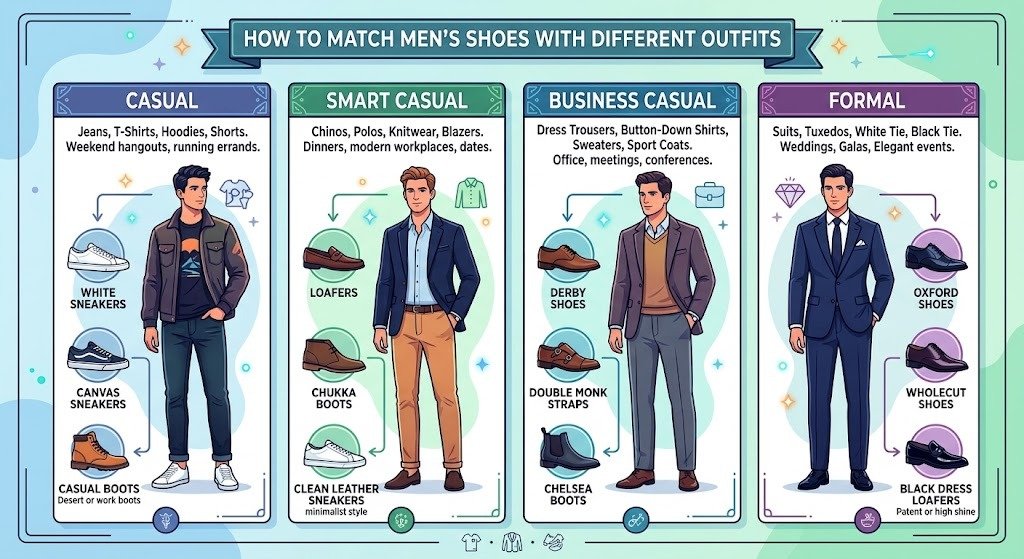
1. Match the Level of Formality
Formal clothing usually needs formal footwear. Casual clothing works best with shoes that have a relaxed shape or material.
For example:
Suit with Oxford or Derby shoes
Tailored trousers with loafers
Chinos with loafers, sneakers, or boots
Jeans with sneakers, boots, or casual leather shoes
Shorts with sneakers, loafers, sandals, or espadrilles
Sportswear with athletic shoes
You can mix formal and casual items, but the difference should not feel extreme. A business suit with colorful running shoes is difficult to balance in most situations.
2. Coordinate the Colors
Your shoes do not need to match your trousers exactly. They should create a clean contrast or belong to a compatible color group.
Brown footwear is highly versatile because it works with blue, navy, beige, olive, and many shades of gray. Black shoes are especially useful with black, charcoal, and formal outfits.
White and off-white sneakers work with almost every casual trouser color. Burgundy and dark red shoes can add interest while remaining easy to combine with navy, gray, or brown clothing.
3. Balance the Visual Weight
Visual weight refers to how heavy or light a shoe appears. Thick soles, wide shapes, and rugged materials make footwear look heavier.
Chunky sneakers and boots often work well with straight or wide trousers. Narrow loafers and low-profile sneakers usually look better with slim or gently tapered pants.
This is not a strict rule, but it creates balance. A very heavy boot under extremely narrow trousers can make your feet appear unusually large.
4. Dress for the Occasion
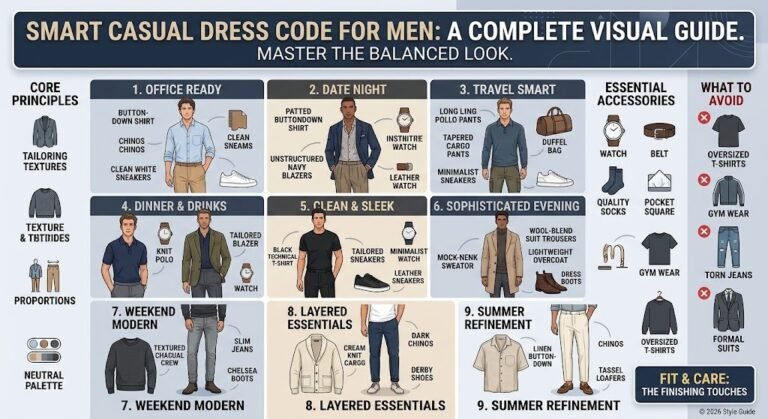
The same trousers can require different shoes depending on where you are going. Chinos with sneakers may work for coffee, while chinos with loafers may be better for a dinner.
Before choosing footwear, ask:
Is the event casual, professional, or formal?
Will I spend a lot of time walking?
Is the event indoors or outdoors?
What will the weather be like?
Does the venue have a dress code?
Will I need to stand for several hours?
Style matters, but comfort and practicality should also guide your choice.
How to Match Shoe Colors With Men’s Outfits
Understanding basic shoe colors makes daily dressing much easier. Start with neutral footwear before buying brighter or more unusual options.
How to Wear Black Shoes
Black shoes create a clean and formal appearance. They are a safe choice for business events, interviews, formal dinners, and evening occasions.
Black shoes work well with:
Black trousers
Charcoal trousers
Medium gray trousers
Black jeans
Navy suits
Charcoal suits
Dark blue denim
Monochrome outfits
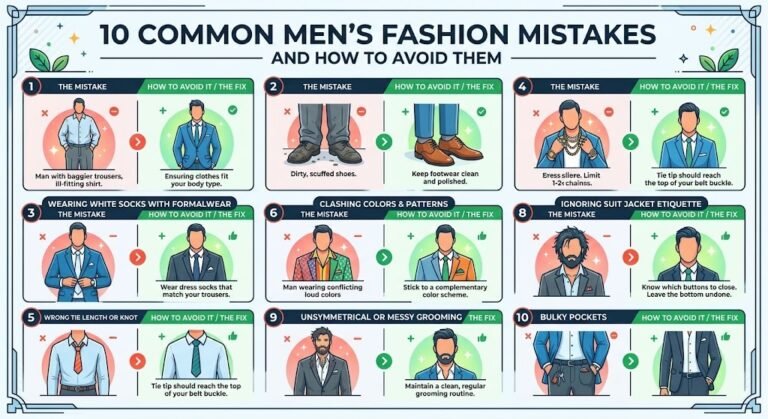
Black leather Oxfords or Derby shoes look best with suits and formal trousers. Black loafers, boots, and sneakers can work with more relaxed clothing.
Avoid pairing highly polished black dress shoes with casual shorts or heavily faded jeans. The difference in formality may feel too strong.
How to Wear Dark Brown Shoes
Dark brown is one of the most flexible shoe colors for men. It feels polished but slightly less formal than black.
Dark brown shoes pair well with:
Navy trousers
Blue suits
Gray trousers
Beige chinos
Olive chinos
Dark jeans
Brown trousers
Cream trousers
A pair of dark brown Derby shoes can handle office outfits, weddings, dates, and dinners. Dark brown loafers are also easy to wear with chinos and tailored trousers.
Dark brown may not be the best choice for a highly formal black suit. Black footwear is usually safer in that situation.
How to Wear Tan Shoes
Tan shoes create more contrast and feel more casual than dark brown footwear. They work particularly well during the day and in warmer seasons.
Wear tan shoes with:
Navy chinos
Light blue trousers
Beige trousers
Olive chinos
White or cream pants
Medium-wash jeans
Light gray trousers
Tan loafers and brogues can add personality to a simple outfit. Keep the rest of your colors controlled so the footwear does not compete with several other bright elements.
Avoid pairing very light tan shoes with a dark formal suit at a conservative event. The strong contrast can make the outfit feel less formal.
How to Wear Burgundy Shoes
Burgundy, oxblood, and dark red footwear can replace brown when you want more character. These colors remain subtle enough for many smart-casual and business outfits.
Burgundy shoes work with:
Navy
Charcoal
Medium gray
Brown
Beige
Olive
Dark denim
Try burgundy loafers with gray trousers and a light blue shirt. You can also wear burgundy Derby shoes with a navy suit for a less traditional business look.
Keep your belt dark brown or burgundy. It does not need to match the footwear perfectly.
How to Wear White Sneakers
White sneakers are among the most versatile casual shoes for men. They work with jeans, chinos, shorts, casual suits, and some tailored trousers.
Wear white sneakers with:
Blue jeans
Black jeans
Beige chinos
Navy chinos
Olive trousers
Gray trousers
Tailored shorts
Casual suits
Choose a simple design with limited branding if you want maximum flexibility. Clean laces and soles are also essential because dirt is highly visible on white footwear.
White sneakers are not suitable for every formal or professional setting. When you are unsure, switch to loafers or Derby shoes.
How to Wear Navy Shoes
Navy footwear is less common than black or brown, but it can fit naturally into casual wardrobes. Navy sneakers, loafers, and suede shoes work particularly well.
Pair navy shoes with:
Beige chinos
Light gray trousers
White jeans
Olive chinos
Medium-wash denim
Stone shorts
Brown trousers
Be careful when wearing navy shoes with navy trousers. If the shades are almost identical but not quite the same, the combination may look accidental.
A clear contrast is usually easier. Navy loafers with beige trousers are a dependable example.
How to Wear Gray Shoes
Gray sneakers and suede shoes provide a soft alternative to black. They pair naturally with cool and neutral clothing.
Gray footwear works with:
Black jeans
Navy chinos
Blue denim
Charcoal trousers
Olive trousers
Beige chinos
White or cream trousers
Light gray sneakers are useful for casual outfits. Dark charcoal shoes can create a sharper look without the strong contrast of black.
How to Match Shoes With Jeans
Jeans are casual, but their wash and condition affect which shoes look best. Dark denim can be dressed up, while distressed or heavily faded jeans usually require casual footwear.
Dark Blue Jeans
Dark blue jeans work with:
White sneakers
Brown leather sneakers
Suede loafers
Derby shoes
Chelsea boots
Chukka boots
Work boots
For a casual outfit, combine dark jeans with a T-shirt and white sneakers. For smart casual clothing, add an Oxford shirt and brown loafers.
Make sure the jeans have a clean hem. Excess fabric gathering around your shoes can weaken the outfit.
Light Blue Jeans
Light denim has a relaxed appearance. It looks most natural with casual footwear.
Good choices include:
White sneakers
Off-white sneakers
Gray sneakers
Tan boots
Brown suede shoes
Canvas sneakers
Avoid highly polished formal shoes with very faded jeans. Suede or matte leather usually creates a smoother transition.
Black Jeans
Black jeans can support casual, smart-casual, and evening outfits. The right shoes depend on the shirt and jacket you choose.
Wear black jeans with:
Black sneakers
White sneakers
Black Chelsea boots
Dark brown boots
Burgundy Derby shoes
Gray sneakers
A black T-shirt, black jeans, and black Chelsea boots create a sharp evening outfit. White sneakers will make the same jeans feel more relaxed.
Ripped or Distressed Jeans
Distressed denim is highly casual. Pair it with sneakers, casual boots, or simple canvas shoes.
Avoid wearing ripped jeans with polished Oxfords. The two pieces communicate very different levels of formality.
How to Match Shoes With Chinos
Chinos are flexible because they sit between jeans and formal trousers. You can wear them with sneakers, loafers, Derby shoes, boots, and other casual footwear.
Beige Chinos
Beige chinos work with almost every neutral shoe color.
Try:
White sneakers for a clean casual outfit
Dark brown loafers for smart casual style
Tan brogues for a daytime event
Navy sneakers for soft contrast
Burgundy shoes for added color
Brown boots in cooler weather
Avoid footwear that is almost the exact same beige as your trousers. A little contrast will separate the pieces.
Navy Chinos
Navy chinos create a darker foundation and work well with:
White sneakers
Dark brown loafers
Tan Derby shoes
Burgundy shoes
Gray sneakers
Brown boots
Black shoes can also work, especially for evening or business outfits. Brown usually creates a warmer and more relaxed combination.
Olive Chinos
Olive trousers pair naturally with earthy and neutral footwear.
Choose:
Dark brown boots
Tan suede shoes
White sneakers
Black sneakers
Burgundy loafers
Beige canvas shoes
An olive and brown combination feels rugged and natural. White sneakers can make the outfit appear lighter and more modern.
Gray Chinos
Gray chinos are easy to wear with both warm and cool shoe colors.
Try:
Black loafers
Dark brown Derby shoes
Burgundy shoes
White sneakers
Gray sneakers
Black Chelsea boots
Use your shirt and jacket to guide the final choice. A navy blazer may work well with brown shoes, while a black overshirt may look better with black footwear.
How to Match Shoes With Tailored Trousers
Tailored trousers do not always require formal shoes. They can be worn with loafers, Derby shoes, minimal sneakers, or boots depending on the occasion.
Gray Tailored Trousers
Gray trousers work well with:
Black leather shoes
Dark brown shoes
Burgundy loafers
White leather sneakers
Black Chelsea boots
Black shoes create a traditional business look. Brown or burgundy footwear adds warmth and works well with navy jackets.
Minimal sneakers can make gray trousers feel more relaxed. Keep the sneakers clean and pair them with a polo, T-shirt, or casual blazer.
Navy Tailored Trousers
Wear navy trousers with:
Dark brown loafers
Black Derby shoes
Burgundy shoes
Tan suede loafers
White sneakers
Dark brown is one of the safest choices. It provides enough contrast without drawing too much attention.
Black Tailored Trousers
Black trousers look best with shoes that support their sharp appearance.
Good options include:
Black loafers
Black Derby shoes
Black Chelsea boots
White sneakers
Burgundy shoes
Dark gray sneakers
Black shoes create a continuous, lengthening line. White sneakers provide strong contrast and make the outfit casual.
Be cautious with light brown footwear. The contrast can look disconnected unless the outfit includes other warm colors.
Brown Tailored Trousers
Brown trousers work naturally with:
Dark brown shoes
Burgundy loafers
Beige suede shoes
White or cream sneakers
Black shoes in darker outfits
Choose a shoe shade that is clearly lighter or darker than your trousers. Wearing nearly identical browns can look like a failed attempt at matching.
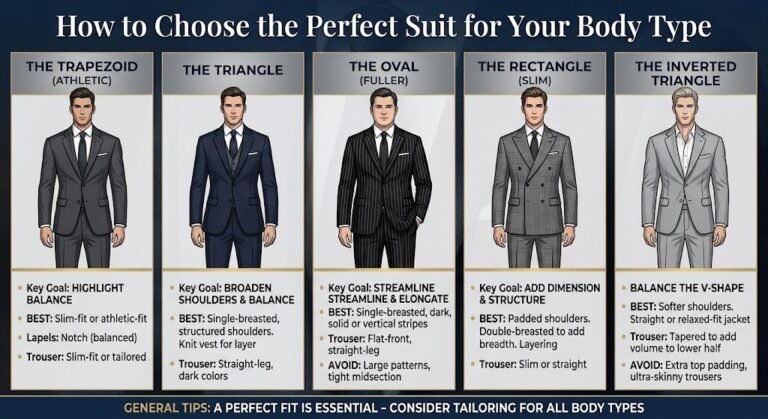
How to Match Shoes With a Suit
Suit shoes should reflect the formality of the event. Business meetings, interviews, weddings, and evening events may each require a slightly different choice.
Navy Suit
A navy suit works with:
Black Oxford shoes
Dark brown Derby shoes
Burgundy leather shoes
Dark brown loafers
Minimal white sneakers for relaxed events
Black creates the most formal appearance. Dark brown offers a versatile business look, while burgundy adds controlled personality.
Only wear sneakers with a suit when the event is clearly casual or modern. Choose a clean, low-profile pair and skip the tie.
Charcoal Suit
A charcoal suit looks strongest with darker footwear.
Choose:
Black Oxford shoes
Black Derby shoes
Dark burgundy shoes
Very dark brown shoes
Black is the safest option for interviews, formal business settings, and evening events. Light tan shoes create too much contrast for many charcoal suits.
Gray Suit
Medium and light gray suits allow more flexibility.
Wear them with:
Black shoes
Dark brown shoes
Tan shoes
Burgundy shoes
White sneakers for casual settings
Use darker shoes for evening events and lighter brown shoes for daytime occasions.
Black Suit
A black suit usually looks best with black leather shoes. This combination is clean, traditional, and suitable for formal events.
Dark burgundy may work in less conservative settings, but black remains safer. Avoid tan shoes because the contrast can feel too casual.
Brown or Beige Suit
Warm-weather and casual suits can work with:
Dark brown loafers
Tan suede shoes
Burgundy shoes
White leather sneakers
Espadrilles for very relaxed settings
Match the shoe material to the suit’s character. Suede and unpolished leather suit relaxed fabrics, while smooth leather looks sharper.
How to Match Shoes With Shorts
Shorts require casual footwear. Formal Oxfords or polished Derby shoes are usually too dressy.
Good shoes for shorts include:
White sneakers
Canvas sneakers
Loafers
Boat shoes
Espadrilles
Clean leather sandals
Casual slip-ons
Tailored shorts with loafers can create a polished summer outfit. Athletic shorts should stay with running shoes, trainers, or sporty sandals.
Avoid wearing visible long dress socks with shorts. Use low socks or invisible liners when appropriate, but make sure your footwear remains comfortable and hygienic.
How to Match Shoes With a T-Shirt Outfit
A T-shirt creates a casual base, so your shoes should usually stay casual or smart casual. The trousers and jacket will determine how dressy you can go.
T-Shirt and Jeans
Wear this combination with:
White sneakers
Canvas shoes
Casual boots
Chelsea boots
Suede loafers
Minimal leather sneakers
A plain T-shirt supports smarter footwear more easily than a large graphic shirt.
T-Shirt and Chinos
Try:
Minimal sneakers
Suede loafers
Chukka boots
Casual Derby shoes
Slip-on sneakers
Adding an overshirt or casual blazer can make loafers and Derby shoes feel more connected to the outfit.
T-Shirt and Tailored Trousers
Choose:
White leather sneakers
Black minimal sneakers
Suede loafers
Clean Chelsea boots
A medium-weight T-shirt with a clean neckline works best. Avoid combining thin undershirts with formal trousers.
How to Match Shoes With a Button-Down Shirt
A button-down shirt can work with almost every common men’s shoe style. The trousers and whether you tuck in the shirt will guide the choice.
An Oxford shirt with jeans works well with sneakers, boots, or suede shoes. The same shirt tucked into tailored trousers looks better with loafers or Derby shoes.
Use these combinations:
Oxford shirt, dark jeans, and brown boots
White shirt, gray trousers, and black Derby shoes
Light blue shirt, beige chinos, and brown loafers
Striped shirt, navy chinos, and white sneakers
Denim shirt, olive chinos, and tan boots
If you roll your sleeves and leave the shirt untucked, casual shoes will usually feel more natural.
How to Match Shoes With a Polo Shirt
Polo shirts sit between T-shirts and button-down shirts. They work well with sneakers, loafers, suede shoes, and some boots.
Try these outfit formulas:
Navy polo, beige chinos, and white sneakers
White polo, navy trousers, and brown loafers
Olive polo, gray chinos, and dark brown Derby shoes
Knitted polo, tailored trousers, and suede loafers
Black polo, black jeans, and Chelsea boots
Pay attention to the polo’s fabric. A knitted polo usually supports smarter shoes, while a sporty performance polo pairs better with casual sneakers.
How to Match Shoes With a Blazer
A blazer raises the formality of an outfit, but it does not always require dress shoes. The shirt and trousers will determine your footwear.
Blazer With Jeans
Choose:
Brown loafers
Suede Derby shoes
Chelsea boots
Minimal sneakers
Chukka boots
Avoid highly polished Oxfords with distressed jeans. A matte or textured shoe creates a smoother balance.
Blazer With Chinos
Wear:
Loafers
Derby shoes
Brogues
Minimal leather sneakers
Chelsea boots
This combination is flexible enough for dates, casual offices, and dinner events.
Blazer With Tailored Trousers
Choose loafers, Derby shoes, or Oxfords for a polished look. Minimal sneakers can work when the blazer has a relaxed shape and the event is casual.
How to Wear Different Types of Men’s Shoes
Each shoe style has its own level of formality. Understanding that level will help you pair it with the right clothing.
Oxford Shoes
Oxfords are among the most formal men’s shoes. Their clean construction works best with suits and tailored business clothing.
Wear Oxfords with:
Navy suit
Charcoal suit
Black suit
Formal gray trousers
Dress shirt and blazer
Avoid wearing polished Oxfords with shorts, joggers, or distressed denim. They usually appear too formal for those clothes.
Derby Shoes
Derby shoes are slightly more flexible than Oxfords. They can work with suits, tailored trousers, chinos, and dark jeans.
Brown or suede Derby shoes are particularly useful for smart casual outfits. Black leather versions are better for formal and business clothing.
Loafers
Loafers can move between casual and smart outfits. The material and design affect how formal they appear.
Wear loafers with:
Chinos
Tailored trousers
Dark jeans
Casual suits
Polos
Oxford shirts
Tailored shorts
Smooth black leather looks sharper, while brown suede feels more relaxed. Avoid wearing thin formal socks with shorts.
Brogues
Brogues are shoes with decorative perforations. More decoration usually makes the shoe feel less formal.
Wear them with:
Chinos
Tailored trousers
Tweed or textured suits
Dark denim
Corduroy trousers
Brown brogues are especially useful for autumn and smart casual outfits. Highly decorated versions may be too casual for formal evening events.
Chelsea Boots
Chelsea boots have a clean shape and can work with jeans, trousers, and suits. Black leather feels sharp, while brown suede feels more relaxed.
Wear Chelsea boots with:
Black jeans
Dark blue denim
Tailored trousers
Chinos
Casual suits
Overcoats
Make sure your trousers fall over the top of the boot without heavy gathering.
Chukka Boots
Chukka boots are casual ankle boots that often come in suede or soft leather. They pair naturally with jeans and chinos.
Good combinations include:
Dark jeans and brown suede chukkas
Beige chinos and dark brown chukkas
Olive trousers and tan chukkas
Gray chinos and burgundy chukkas
Chukka boots are usually too relaxed for highly formal suits. They work best in casual and smart-casual settings.
Work Boots
Work boots have a rugged shape and heavier construction. They look best with denim, corduroy, cargo trousers, and workwear-inspired clothing.
Pair them with:
Straight-leg jeans
Flannel shirts
Chore jackets
Heavy overshirts
Casual knitwear
Avoid combining bulky work boots with formal trousers or slim suit pants.
Minimal Sneakers
Minimal sneakers have a simple shape and limited branding. They are among the easiest shoes to wear with modern casual outfits.
Use them with:
Jeans
Chinos
Tailored trousers
Casual suits
Shorts
Overshirts
Polos
Keep them clean if you want to wear them in smart-casual settings.
Athletic Sneakers
Running and training shoes are designed for movement. They work best with gym clothing, joggers, sweatshirts, technical jackets, and very casual outfits.
Some retro athletic sneakers can work with jeans or relaxed trousers. Balance them with clothing that shares a similarly casual or sporty character.
Avoid wearing technical running shoes with business trousers or formal suits unless the setting clearly supports experimental styling.
Sandals
Simple leather sandals can work with warm-weather casual outfits. Wear them with linen trousers, tailored shorts, camp-collar shirts, and lightweight T-shirts.
Avoid plastic flip-flops outside beaches, pools, and highly casual environments. Keep your feet clean and well-groomed when wearing open footwear.
Should Your Belt Match Your Shoes?
Your belt and shoes should usually belong to the same general color family in formal and business outfits. Black shoes work with a black belt, while brown shoes call for a brown belt.
They do not need to be an exact color match. A dark brown belt can work with medium brown shoes if the difference is not distracting.
Casual outfits allow more flexibility. Canvas belts, woven belts, and sneakers do not require precise matching.
If you wear white sneakers, match your belt to your trousers or another leather item. You do not need a white belt.
How Should Trousers Sit on Different Shoes?
Trouser length can change how your shoes look. The hem should complement the height and shape of your footwear.
With Dress Shoes
A slight break or clean no-break hem usually works well. Avoid excessive fabric covering the shoe.
With Sneakers
Straight trousers can rest lightly on the shoe. Cropped or ankle-length trousers may also work when the shorter length appears deliberate.
With Boots
The trouser opening should sit over the boot or meet it cleanly. Avoid forcing narrow trousers over bulky boot shafts.
With Loafers
A clean, shorter hem can display the shoe’s shape. Your socks should still cover your legs when you sit unless you are intentionally using invisible liners.
Common Shoe-Matching Mistakes
Wearing Formal Shoes With Very Casual Clothes
Polished Oxfords rarely look natural with ripped jeans, graphic T-shirts, or shorts. Choose sneakers, loafers, or casual boots instead.
Wearing Running Shoes Everywhere
Athletic shoes are comfortable, but they can make smart outfits feel unfinished. Keep a pair of minimal sneakers or loafers for restaurants, dates, and social events.
Matching Colors Too Closely
Your shoes do not need to be the exact shade of your trousers. Clear contrast often looks better than two colors that almost match.
Ignoring Shoe Condition
Dirty sneakers and cracked leather can weaken even a well-planned outfit. Clean your shoes regularly and repair small problems early.
Choosing the Wrong Shoe Shape
Bulky shoes under narrow trousers can look unbalanced. Slim shoes may disappear beneath very wide trousers.
Consider the width and shape of both pieces.
Forgetting About Comfort
Painful shoes can affect your posture and confidence. Choose the correct size and test new footwear indoors before wearing it to a long event.
A Simple Men’s Shoe Wardrobe
You do not need dozens of pairs. A small, carefully chosen collection can handle most situations.
Start with:
Clean white or neutral sneakers
Dark brown loafers or Derby shoes
Black formal shoes
Brown casual boots
Athletic shoes for exercise
Weather-appropriate footwear
If your lifestyle is very casual, buy the sneakers first. If you wear suits regularly, prioritize black or dark brown leather shoes.
Frequently Asked Questions
What color shoes go with most men’s outfits?
Dark brown shoes are among the most versatile because they work with navy, blue, gray, beige, olive, and denim. White sneakers are equally flexible for casual clothing.
Black shoes are essential for black, charcoal, and formal outfits.
Can men wear brown shoes with black trousers?
Dark brown or burgundy shoes may work with black trousers in some smart-casual outfits, but black shoes are easier and more dependable. Light tan shoes usually create too much contrast.
If you choose brown, include another warm brown element such as a belt, jacket, or watch strap.
What shoes should men wear with blue jeans?
Blue jeans work well with white sneakers, brown boots, suede loafers, Derby shoes, Chelsea boots, and canvas shoes. Dark denim can support smarter footwear than heavily faded denim.
Choose the shoe according to your shirt, jacket, and destination.
Should shoes be darker than trousers?
Shoes do not always need to be darker, but darker footwear often creates a polished appearance. Light sneakers and tan shoes can provide useful contrast with darker trousers.
The formality and color balance of the full outfit matter more than this single rule.
Can men wear black shoes with navy trousers?
Yes. Black shoes can work with navy trousers and navy suits, especially in business or evening settings.
Dark brown shoes create a warmer appearance, while black footwear looks more formal.
Do white sneakers go with black jeans?
Yes. White sneakers create a clean contrast with black jeans and work well with white, gray, black, navy, or colored shirts.
Make sure the sneakers are clean because the strong contrast draws attention to them.
What shoes should men wear with chinos?
Chinos work with loafers, Derby shoes, brogues, Chelsea boots, chukka boots, and minimal sneakers. Your choice should reflect the occasion.
Wear sneakers for casual plans, loafers for smart-casual events, and Derby shoes for professional settings.
Can you wear sneakers with a suit?
Minimal sneakers can work with a casual or softly tailored suit at relaxed events. Choose a clean, low-profile design and wear the suit without a tie.
For interviews, traditional offices, weddings, and formal events, leather dress shoes are safer.
Does a man’s belt have to match his shoes?
For formal and business outfits, the belt and shoes should belong to the same color family. Black shoes call for a black belt, while brown shoes work with a brown belt.
Casual clothing allows more flexibility, especially when wearing sneakers.
How many pairs of shoes does a man need?
Most men can cover their basic needs with four to six pairs. A practical collection includes casual sneakers, athletic shoes, brown smart shoes, black formal shoes, and weather-appropriate boots.
Choose the exact number according to your workplace, climate, and daily activities.