Smart Casual Dress Code for Men: A Complete Guide
Smart casual sounds simple until an invitation asks you to dress that way. Is a T-shirt acceptable? Do you need a blazer? Can you wear jeans or sneakers?
The answer depends on the occasion, but the basic idea is straightforward. Smart casual combines the comfort of casual clothing with the clean, polished appearance of formal clothing.
This complete guide to the smart casual dress code for men will show you what to wear, what to avoid, and how to build reliable outfits without overcomplicating your style.
Key Takeaways
Smart casual sits between everyday casual clothing and business casual attire.
Proper fit, clean shoes, and neat grooming are more important than expensive brands.
Oxford shirts, polos, chinos, tailored trousers, and unstructured blazers are dependable choices.
Dark, clean jeans may work when the event is on the casual side.
Minimal sneakers can be acceptable, but athletic running shoes usually look too relaxed.
Neutral colors make smart casual outfits easier to coordinate.
Your outfit should match the venue, time, weather, and purpose of the event.
It is usually safer to dress slightly smarter when the dress code is unclear.
You do not need a tie unless the event or workplace specifically calls for one.
Avoid distressed clothing, large logos, wrinkled shirts, and heavily worn footwear.
What Is the Smart Casual Dress Code for Men?
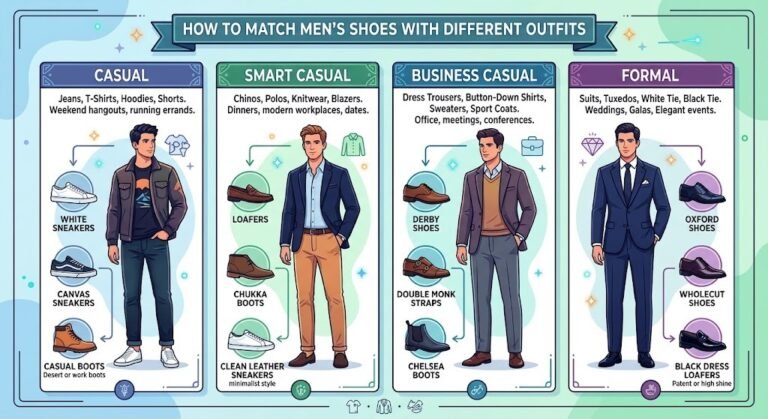
Smart casual is a flexible dress code that combines polished clothes with relaxed pieces. It allows you to look prepared without appearing as formal as you would in a full suit and tie.
A typical smart casual outfit might include an Oxford shirt, chinos, and loafers. You could add an unstructured blazer for a dinner or replace the shirt with a clean polo for a more relaxed event.
The balance matters more than any single item. If one part of your outfit is casual, another part should usually bring structure or polish.
For example:
A T-shirt looks smarter with tailored trousers and a blazer.
Dark jeans look more polished with an Oxford shirt and loafers.
Sneakers look neater with chinos and a collared shirt.
A blazer feels more relaxed with a polo instead of a dress shirt.
Think of smart casual as looking neat, comfortable, and appropriate rather than formal.
What Is the Difference Between Casual and Smart Casual?
Casual clothing prioritizes comfort and usually requires very little structure. T-shirts, hoodies, shorts, athletic shoes, and distressed jeans can all fit into a casual wardrobe.
Smart casual keeps some of that comfort but raises the overall level. Clothes should fit properly, shoes should be clean, and the outfit should look intentionally coordinated.
A casual outfit could be:
Graphic T-shirt
Faded jeans
Running shoes
Baseball cap
A smart casual version could be:
Plain polo or Oxford shirt
Dark jeans or chinos
Loafers or minimal sneakers
Lightweight jacket
The difference is not always dramatic. Small changes in fit, fabric, footwear, and grooming can move an outfit from casual to smart casual.
Smart Casual vs. Business Casual
Smart casual and business casual overlap, but they are not always identical. Business casual is designed mainly for professional environments, while smart casual can work for offices, dinners, dates, parties, and social events.
Business casual often includes:
Collared shirts
Tailored trousers or chinos
Leather shoes
Sweaters or blazers
Limited patterns
Conservative colors
Smart casual allows more flexibility:
Clean dark jeans may be acceptable.
Plain T-shirts can work under a blazer.
Minimal sneakers may replace leather shoes.
Textured polos and casual overshirts can be included.
Colors and patterns can feel more personal.
If you are dressing for work, follow your workplace rules first. A creative agency may accept sneakers and dark denim, while a law office may expect shirts, tailored trousers, and leather shoes.
Smart Casual vs. Semi-Formal
Semi-formal is dressier than smart casual. It usually calls for a suit or a tailored jacket and trousers, especially for evening events.
Smart casual rarely requires a matching suit. You can mix separate trousers, shirts, knitwear, and jackets.
For a semi-formal wedding, you may need:
A navy or charcoal suit
A dress shirt
Leather shoes
A tie, depending on the invitation
For a smart casual wedding event, you might wear:
A navy blazer
Light blue Oxford shirt
Beige or gray trousers
Brown loafers
When an invitation says semi-formal, do not treat it as smart casual. It is better to ask the host than to arrive underdressed.
The Main Rules of Smart Casual Style
Smart casual is flexible, but it is not random. A few practical rules will help you make better decisions.
Prioritize Fit
Your clothes should follow your body without squeezing or hanging excessively. A clean fit can make affordable clothing look polished.
Check these areas:
Shoulder seams
Shirt collar
Sleeve length
Trouser waistband
Trouser seat and thighs
Trouser hem
Jacket length
You should be able to sit, walk, and raise your arms comfortably. Smart casual clothing needs to look neat while allowing natural movement.
Keep Your Clothes in Good Condition
Wrinkles, stains, missing buttons, and loose threads can weaken an otherwise good outfit. Inspect each item before wearing it.
Pay close attention to collars, cuffs, trouser hems, and shoes. These areas often show wear first.
Balance Casual and Smart Pieces
Avoid making every item extremely casual. A hoodie, distressed jeans, and running shoes together will usually fall outside the smart casual dress code.
You can make one relaxed item work by pairing it with sharper pieces. Dark jeans with a button-down shirt and loafers are a good example.
Dress for the Setting
A smart casual outfit for a daytime lunch may be too relaxed for an evening company event. The venue, time, and purpose should guide your decisions.
When uncertain, ask:
Is the event professional or social?
Is it indoors or outdoors?
Is it during the day or evening?
Is the venue casual, expensive, or traditional?
Will senior colleagues or clients attend?
Are photos likely to be taken?
Evening and professional settings usually call for darker colors and more structured clothing.
Essential Smart Casual Shirts for Men
Your shirt often determines whether your outfit looks polished or too relaxed. Start with a few simple options that work with different trousers and jackets.
Oxford Button-Down Shirt
The Oxford shirt is one of the safest choices for smart casual outfits. It has enough structure to look neat but feels less formal than a traditional dress shirt.
Useful colors include:
White
Light blue
Pale gray
Soft pink
Blue and white stripe
Navy
Wear it tucked into tailored trousers for a sharper appearance. Leave it untucked with chinos or dark jeans when the hem is short enough.
Plain Dress Shirt
A white or light blue dress shirt works well for events on the smarter side. Choose a simple design without a shiny finish or an extreme collar.
A dress shirt looks best tucked in. Pair it with tailored trousers, a leather belt, and loafers or Derby shoes.
You can add a blazer if the event feels more formal. Leave the tie at home unless the occasion requires it.
Polo Shirt
A well-fitting polo is a useful warm-weather option. It looks cleaner than a T-shirt but remains comfortable and relaxed.
Choose a polo with:
A collar that sits flat
Sleeves that gently follow your arms
A body that does not cling
Minimal branding
A hem that works tucked or untucked
Navy, white, dark green, burgundy, cream, and light blue are easy to style. Pair your polo with chinos, tailored trousers, or clean dark jeans.
Knitted Polo
A knitted polo adds texture and often looks slightly dressier than a standard cotton polo. It works particularly well for dates, dinners, and warm-weather events.
Wear it with tailored trousers and loafers for a polished outfit. You can also combine it with chinos and minimal sneakers.
Check the fabric under bright light because some knitted shirts can be slightly transparent. A comfortable fit is also important because thin material may highlight pulling.
Plain T-Shirt
A T-shirt can work in smart casual outfits, but it needs the right supporting pieces. Choose a plain, medium-weight shirt with a clean neckline and no large graphic.
White, navy, black, gray, and cream are dependable options. Avoid stretched collars, transparent fabric, and oversized logos.
Wear a T-shirt with:
Tailored trousers and loafers
Chinos and a casual blazer
Dark jeans and an overshirt
A lightweight suit with minimal sneakers
If the event is professional or traditional, choose a collared shirt instead.
Best Smart Casual Trousers for Men
Your trousers create the foundation of the outfit. They should fit comfortably at the waist and fall cleanly over your shoes.
Chinos
Chinos are one of the most versatile choices for the smart casual dress code for men. They sit between casual jeans and formal trousers.
Start with:
Beige
Navy
Olive
Charcoal
Stone
Medium gray
A straight or gently tapered fit works for many body types. Avoid trousers that grip your thighs and calves or gather heavily around your ankles.
Tailored Trousers
Tailored trousers make casual shirts, polos, and T-shirts look more polished. Navy, charcoal, medium gray, and brown are flexible colors.
They do not have to be part of a suit. Separate trousers are often easier to combine with casual jackets, knitwear, and sneakers.
Choose a pair with a comfortable rise and a clean front. The pockets should lie flat rather than opening outward.
Dark Jeans
Dark jeans can work when the event is on the relaxed side of smart casual. Choose a clean pair without rips, heavy fading, large logos, or decorative stitching.
Dark indigo, black, and deep gray are the safest washes. A straight or slim-straight fit usually looks cleaner than an extremely loose or tight shape.
Pair your jeans with smarter pieces such as:
Oxford shirt
Knitted polo
Unstructured blazer
Leather loafers
Suede Derby shoes
Minimal leather sneakers
Avoid jeans for conservative workplaces, formal dinners, or events where the invitation suggests tailored clothing.
Corduroy Trousers
Corduroy can add texture to autumn and winter outfits. Dark brown, olive, navy, and burgundy are useful seasonal colors.
Pair corduroy trousers with an Oxford shirt, crew-neck sweater, or casual blazer. Suede shoes and leather boots work especially well.
Choose a fine or medium cord for a cleaner look. Very wide cords can feel more rugged and casual.
Smart Casual Jackets and Layers
Layers can make a basic outfit feel complete. They also allow you to adjust your outfit for changing temperatures.
Unstructured Blazer
An unstructured blazer has a softer shape and less padding than a formal suit jacket. This makes it easier to wear with chinos, jeans, polos, and T-shirts.
Navy is the most versatile first choice. Charcoal, brown, olive, and light gray can also work depending on your wardrobe.
Make sure the shoulders fit properly. The jacket should button without creating pulling lines across your chest.
Crew-Neck Sweater
A lightweight crew-neck sweater can be worn over a T-shirt or Oxford shirt. It works well in offices, restaurants, and cooler social settings.
Choose navy, gray, cream, dark green, or brown. These colors pair easily with chinos and tailored trousers.
If you wear a shirt underneath, arrange the collar neatly. Avoid pulling the shirt collar far outside the sweater.
Cardigan
A cardigan offers a softer alternative to a blazer. It can look smart when the fit is clean and the fabric is in good condition.
Wear it over an Oxford shirt, polo, or plain T-shirt. Pair it with chinos or tailored trousers.
Avoid cardigans that are stretched, heavily pilled, or excessively long. A simple midweight design is the easiest to style.
Overshirt
An overshirt is suitable for more relaxed smart casual events. It adds structure without feeling as formal as a blazer.
Olive, navy, beige, charcoal, and brown are practical choices. Wear it open over a T-shirt or button it over tailored chinos.
Choose a clean design with limited pockets if you want a smarter appearance. Rugged workwear styles may feel too casual for some offices.
Harrington or Bomber Jacket
A simple Harrington or clean bomber jacket can work for dates, dinners, and relaxed workplaces. Avoid versions with large patches, shiny fabric, or excessive detailing.
Navy, olive, tan, and charcoal are easy colors to coordinate. Pair the jacket with a polo, Oxford shirt, chinos, or dark jeans.
Keep the rest of the outfit polished. Clean footwear is especially important when wearing a casual jacket.
Best Shoes for a Smart Casual Dress Code
Shoes can move your outfit toward either the smart or casual end of the dress code. When your clothes are relaxed, smarter shoes can restore balance.
Loafers
Loafers are one of the best smart casual shoes for men. They work with chinos, tailored trousers, dark jeans, polos, and button-down shirts.
Brown suede feels relaxed and stylish. Smooth dark brown or black leather creates a sharper appearance.
Make sure your trousers are the correct length. Heavy fabric bunching can hide the clean shape of the shoes.
Derby Shoes
Derby shoes are practical when you need something smarter than sneakers but less formal than highly polished Oxfords. Brown leather or suede versions are particularly flexible.
Wear them with tailored trousers, chinos, or dark jeans. A matching or closely coordinated belt can complete the outfit.
Minimal Sneakers
Simple sneakers can be smart casual when they are clean and free from excessive branding. White, off-white, brown, navy, gray, and black are versatile colors.
Leather and suede designs often look more polished than technical running shoes. Choose a low-profile shape for easy pairing with trousers.
Avoid wearing dirty sneakers or gym shoes to a smart casual event. If the occasion is professional, loafers or Derby shoes may be safer.
Chelsea Boots
Chelsea boots work well during cooler months. Brown suede creates a relaxed look, while black leather feels sharper.
Pair them with dark jeans, chinos, or tailored trousers. Make sure the trouser opening sits cleanly over the top of the boots.
Clean Leather Boots
Simple lace-up leather boots can suit autumn and winter smart casual outfits. Choose a streamlined pair rather than heavy hiking or work boots.
Wear them with corduroy, dark denim, chinos, or wool trousers. Keep the leather clean and condition it when needed.
Can You Wear Sneakers for Smart Casual?
Yes, sneakers can be acceptable for smart casual clothing, but not every pair works. The safest choice is a clean, minimal design in a neutral color.
Suitable sneakers usually have:
Limited branding
A simple shape
Clean laces
Neutral colors
Little visible wear
No bright athletic details
Running shoes, basketball shoes, and heavily worn trainers usually appear too casual. Save those for exercise and informal activities.
If the event involves clients, senior colleagues, an expensive restaurant, or a traditional venue, leather shoes are a more dependable choice.
Can You Wear Jeans for Smart Casual?
Dark, clean jeans can fit the smart casual dress code in many social and creative settings. They should have a consistent wash and a clean fit.
Avoid:
Rips
Large distressed areas
Heavy fading
Paint effects
Oversized logos
Extremely low rises
Excessive fabric at the ankles
Balance jeans with a collared shirt, blazer, knitwear, or smart shoes. A graphic T-shirt and running shoes will make the same jeans feel much more casual.
When the invitation is unclear, chinos or tailored trousers carry less risk.
Do You Need a Blazer for Smart Casual?
A blazer is not always required. You can create a smart casual outfit with an Oxford shirt, chinos, and loafers.
A blazer is useful when:
The event takes place in the evening.
You are meeting clients.
The restaurant is upscale.
The invitation feels slightly formal.
You want to dress up a T-shirt or polo.
You are unsure what others will wear.
Choose an unstructured blazer when possible. It will combine more naturally with casual shirts, chinos, jeans, and sneakers.
Do You Need to Tuck in Your Shirt?
The answer depends on the shirt, trousers, and occasion. Tucking your shirt creates a sharper and more professional appearance.
You should usually tuck in:
Traditional dress shirts
Long shirts with curved hems
Shirts worn with a formal blazer
Shirts worn for business events
Shirts paired with tailored trousers for evening occasions
You can often leave untucked:
Short Oxford shirts
Casual button-down shirts
Polos
Knitted polos
Plain T-shirts
An untucked shirt should not hang too far below your hips. If it covers most of your trouser pockets, it may be too long.
Best Smart Casual Colors for Men
Neutral colors make it easier to build coordinated outfits. They also allow you to repeat clothing without making every combination look identical.
A practical smart casual palette includes:
Navy
Charcoal
Medium gray
White
Light blue
Beige
Olive
Brown
Cream
Black
You can add personality with burgundy, forest green, rust, dusty blue, or muted pink.
Easy Color Combinations
Try these reliable combinations:
Navy and beige
Light blue and gray
White and olive
Cream and brown
Charcoal and burgundy
Navy and white
Black and medium gray
Olive and stone
Brown and light blue
Gray and dark green
Use two or three main colors in one outfit. This keeps the look coordinated without requiring complicated styling.
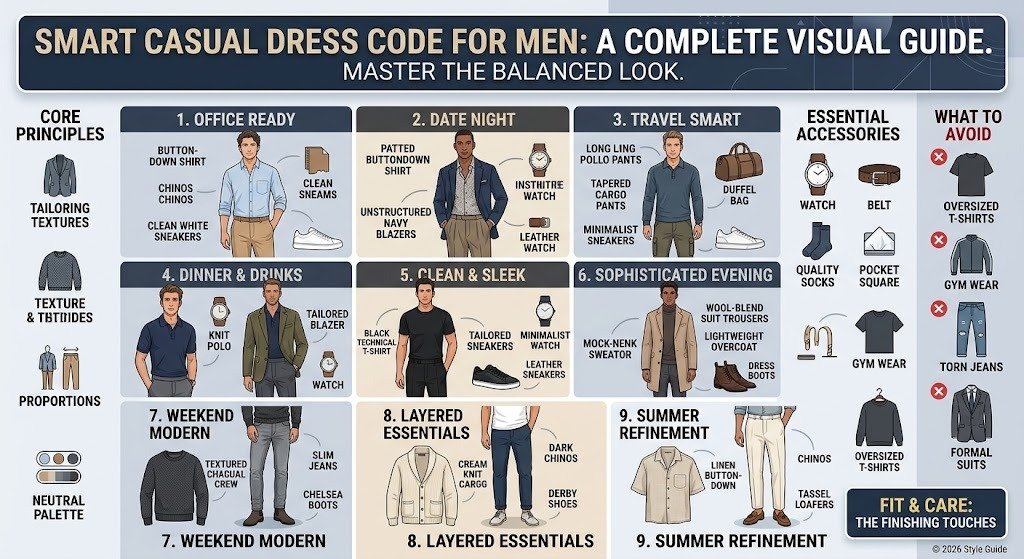
Smart Casual Outfit Ideas for Men
The following formulas can help you dress quickly for common occasions.
Smart Casual Office Outfit
Wear:
Light blue Oxford shirt
Navy or beige chinos
Brown Derby shoes
Matching leather belt
Navy crew-neck sweater
This combination looks professional without requiring a suit. Add a blazer when meeting clients or attending a presentation.
Smart Casual Date Outfit
Wear:
Knitted polo
Charcoal tailored trousers
Brown suede loafers
Simple watch
Choose a polo in navy, cream, olive, or burgundy. Add a lightweight jacket for cooler weather.
Smart Casual Dinner Outfit
Wear:
White Oxford shirt
Dark navy trousers
Brown loafers
Unstructured blazer
You can leave the top shirt button open. Keep the shirt tucked in for a polished evening appearance.
Smart Casual Party Outfit
Wear:
Plain black or navy T-shirt
Gray tailored trousers
Casual blazer
Minimal leather sneakers
Make sure the T-shirt is thick enough to hold its shape. This outfit works best for modern venues and relaxed social events.
Smart Casual Weekend Outfit
Wear:
Polo shirt
Beige or olive chinos
White sneakers
Lightweight overshirt
This is comfortable enough for daytime plans while remaining polished enough for lunch or a casual gathering.
Smart Casual Outfit With Jeans
Wear:
Light blue Oxford shirt
Dark indigo jeans
Brown suede Derby shoes
Navy blazer
Keep the jeans clean and simple. This formula works well for dates, dinners, and creative workplaces.
Summer Smart Casual Outfit
Wear:
Knitted polo or linen-blend shirt
Lightweight tailored trousers
Suede loafers
Simple leather belt
Choose breathable clothing in cream, beige, light blue, navy, or olive. Avoid flip-flops unless the event is specifically beach-based.
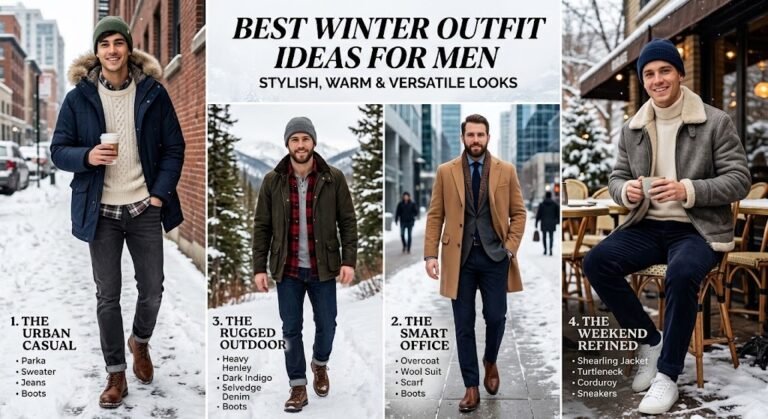
Winter Smart Casual Outfit
Wear:
Oxford shirt
Crew-neck sweater
Wool trousers or dark chinos
Chelsea boots
Wool coat
Use darker seasonal colors such as charcoal, navy, dark green, burgundy, and brown.
Smart Casual Dress Code for a Wedding
Read the invitation carefully before choosing your outfit. Smart casual may be acceptable for a small daytime wedding, rehearsal dinner, or relaxed outdoor celebration.
A safe wedding outfit could include:
Navy blazer
White or light blue shirt
Beige or gray tailored trousers
Brown loafers or Derby shoes
Leather belt
Optional pocket square
Avoid jeans unless the couple specifically says they are acceptable. You should also avoid wearing white trousers with a white jacket if the outfit could compete with the wedding party.
For an evening wedding, choose darker trousers and leather shoes. When uncertain, ask the host or wear a suit without a tie.
Smart Casual Dress Code for Work
Workplace smart casual should usually stay closer to business casual. A professional setting leaves less room for distressed denim, graphic shirts, and fashion-focused sneakers.
Reliable office choices include:
Oxford shirts
Plain polos
Lightweight knitwear
Chinos
Tailored trousers
Unstructured blazers
Loafers
Derby shoes
Minimal leather sneakers, if permitted
Pay attention to what respected colleagues wear. Use that as a guide while keeping your own outfit neat and comfortable.
On your first day or during an important meeting, dress slightly smarter. You can adjust after understanding the workplace culture.
Smart Casual Dress Code for Restaurants
The type of restaurant matters. A neighborhood café and an upscale evening restaurant may both use the words “smart casual,” but they can expect different clothing.
For a casual restaurant, try:
Polo shirt
Chinos
Clean sneakers
Overshirt
For an upscale restaurant, choose:
Oxford shirt or knitted polo
Tailored trousers
Loafers
Unstructured blazer
Avoid shorts, flip-flops, athletic wear, and baseball caps unless the venue clearly welcomes them. Some restaurants may also have specific footwear or jacket rules.
Smart Casual Accessories for Men
Accessories should support the outfit without demanding all the attention. You only need a few practical pieces.
Consider:
A simple watch
A dark brown or black leather belt
Neutral dress socks
A subtle pocket square
A leather or canvas bag
Sunglasses
A lightweight scarf
One understated bracelet
Match your belt and shoes by general color family. They do not need to be the exact same shade.
Avoid wearing a sports watch with an otherwise polished evening outfit if you have a simpler option. A clean leather or metal watch is easier to combine.
Smart Casual Grooming Tips
Your grooming affects how people read your outfit. Clean, well-fitted clothing can still look careless if basic grooming is ignored.
Before leaving, check:
Hair is neat.
Facial hair is trimmed or cleanly shaved.
Nails are clean.
Shoes are wiped.
Clothes are free from lint.
Shirt collars sit correctly.
Fragrance is applied lightly.
Pockets are not overfilled.
You do not need a complicated routine. Consistency and cleanliness matter most.
Common Smart Casual Mistakes Men Should Avoid
Wearing a Full Formal Suit Without Adjusting It
A traditional business suit with a tie may look too formal for a relaxed smart casual event. If you wear a suit, consider removing the tie and using a more casual shirt.
A lightweight or softly structured suit is easier to dress down. Loafers or minimal sneakers can also reduce the formality when appropriate.
Wearing Athletic Clothing
Gym shorts, running shoes, performance shirts, and tracksuits usually do not meet the smart casual dress code. They are designed for activity rather than polished social settings.
Choose chinos, a polo, and clean sneakers when comfort is important.
Choosing Distressed Jeans
Ripped or heavily faded jeans pull the outfit toward casual streetwear. Dark, clean denim is much easier to dress up.
If there is any doubt, wear chinos instead.
Ignoring Shoe Condition
Scuffed, dirty, or heavily worn shoes can weaken the entire outfit. Clean your footwear before the event and replace damaged laces.
Shoe care is often more important than the original price of the footwear.
Wearing Too Many Patterns
A patterned shirt, check blazer, bold trousers, and colorful socks can compete with one another. Choose one main pattern and keep the other pieces simple.
Subtle texture can add interest without making the outfit feel busy.
Using Too Many Formal Pieces
A dress shirt, tie, waistcoat, polished Oxfords, and structured blazer may push your outfit beyond smart casual. Remove one or two formal elements to restore balance.
For example, replace the tie with an open collar or exchange the dress shoes for suede loafers.
Wearing Clothes That Do Not Fit
An oversized blazer or extremely tight trousers will look uncomfortable regardless of the brand. Pay attention to shoulders, waist, seat, sleeves, and trouser length.
Use a tailor for small adjustments when needed.
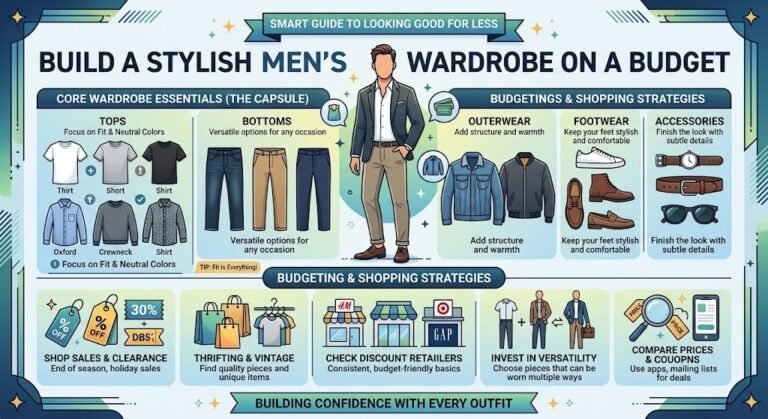
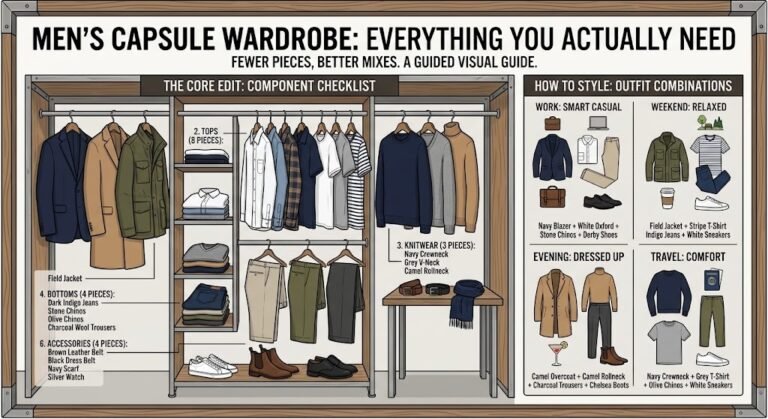
How to Build a Smart Casual Wardrobe on a Budget
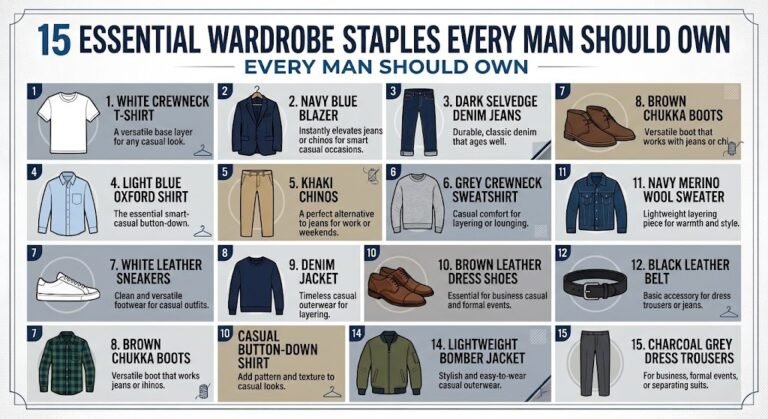
You do not need a separate wardrobe for every event. A small set of coordinated pieces can produce many smart casual outfits.
Start with:
Two Oxford shirts
Two plain polos
Three pairs of chinos or tailored trousers
One dark pair of jeans
One neutral sweater
One unstructured navy blazer
One casual overshirt
One pair of loafers or Derby shoes
One pair of minimal sneakers
One matching belt
Choose neutral colors so each item works with several others. Apply the three-outfit rule before buying anything new.
A navy blazer, for example, should work with gray trousers, beige chinos, and dark jeans. If an item only matches one outfit, it may not be the best use of a limited budget.
Frequently Asked Questions
What does smart casual mean for a man?
Smart casual means combining polished clothing with relaxed pieces. A typical outfit may include an Oxford shirt, chinos, and loafers or clean sneakers.
The goal is to look neat and prepared without wearing a full formal suit.
Can men wear jeans for smart casual?
Yes, dark and clean jeans can work in many smart casual settings. Choose a pair without rips, heavy fading, or excessive detailing.
Pair the jeans with a collared shirt, blazer, knitwear, or smart shoes. Wear chinos or tailored trousers when the event is more conservative.
Can I wear a T-shirt for smart casual?
A plain, well-fitting T-shirt can work under an unstructured blazer, overshirt, or lightweight jacket. Pair it with chinos or tailored trousers and polished footwear.
Avoid graphic T-shirts for professional, traditional, or dressier events.
Are sneakers acceptable for smart casual?
Minimal sneakers can be acceptable if they are clean and simple. Neutral leather or suede styles are easier to dress up than athletic running shoes.
Choose loafers or Derby shoes when the event involves clients, senior colleagues, or an upscale venue.
Does smart casual require a blazer?
No, a blazer is not always necessary. An Oxford shirt, chinos, and loafers can create a complete smart casual outfit.
A blazer is useful for evening events, important meetings, dates, and occasions where you want extra polish.
Should a smart casual shirt be tucked in?
Tuck your shirt in for professional or dressier occasions. Dress shirts and shirts with long curved hems usually look better tucked.
Polos, short Oxford shirts, and casual button-down shirts can often be left untucked if the length is appropriate.
Do I need to wear a tie with smart casual clothing?
A tie is usually not required. An open-collar shirt is standard for most smart casual events.
If the invitation or workplace specifically requests a tie, the dress code may be closer to business casual or semi-formal.
Can men wear shorts for smart casual?
Tailored shorts may work for warm-weather daytime events, holiday settings, or outdoor venues. Pair them with a polo or lightweight button-up shirt and loafers or clean sneakers.
Shorts are usually unsuitable for offices, evening events, formal restaurants, and weddings unless the invitation allows them.
What colors work best for smart casual outfits?
Navy, gray, white, beige, olive, brown, light blue, cream, and black are dependable choices. These colors are easy to coordinate and suit many occasions.
Use burgundy, forest green, rust, or muted pink as accent colors when you want more personality.
What should I wear if the smart casual dress code is unclear?
Choose a light blue or white Oxford shirt, navy or gray trousers, brown leather shoes, and an optional blazer. This outfit is polished without feeling overly formal.
It is usually easier to remove a blazer or roll your sleeves than to fix an outfit that is too casual.