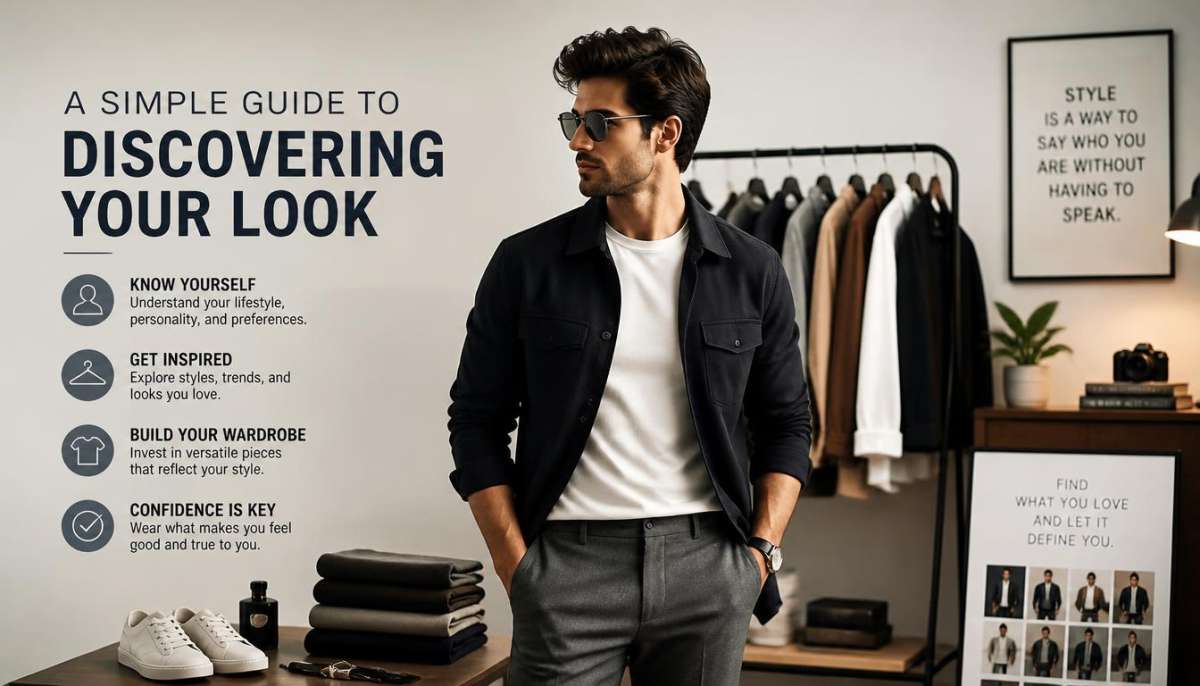
How to Find Your Style Fashion: A Simple Guide to Discovering Your Look
Finding your personal style can feel harder than it should. You might have a closet full of clothes but still feel like you have nothing to wear.
The problem is often not a lack of clothes. It is that your wardrobe does not clearly reflect what you actually like, how you live, or how you want to feel in your clothes.
Learning how to find your style fashion starts with paying attention to what already works for you. From there, you can explore new looks, test different combinations, and slowly build a wardrobe that feels more like you.
What Does Personal Style Really Mean?
Personal style is the way you naturally put clothes, colors, shoes, accessories, and silhouettes together. It does not have to fit perfectly into a label such as classic, casual, boho, streetwear, or minimalist.
Your style can also change. The clothes you love in your twenties might not be the clothes you want to wear later, and that is completely normal.
Think of personal style as a collection of choices that make you feel comfortable and confident rather than a strict fashion category you have to follow.
Audit Your Current Closet

Before buying anything new, take a proper look at what you already own.
Pull out the clothes you reach for most often. Notice the colors you repeatedly choose, the fits that feel comfortable, and the types of outfits you naturally put together.
Then look at the other side of your wardrobe. Which pieces rarely leave the hanger? Are they uncomfortable, difficult to match, too formal, too casual, or simply not your taste anymore?
Your existing wardrobe can reveal more about your style than a random fashion trend can.
Identify the Clothes You Feel Best Wearing
Your favorite outfit does not always have to be your most fashionable outfit. Sometimes it is simply the one that makes you feel relaxed, confident, and like yourself.
Think about the clothes you would happily wear again tomorrow. Maybe you love loose trousers, simple tops, structured jackets, sneakers, dresses, neutral colors, or bold accessories.
Look for these repeated choices. They can help you understand what your personal style is already becoming.
Define Your Lifestyle and Clothing Needs
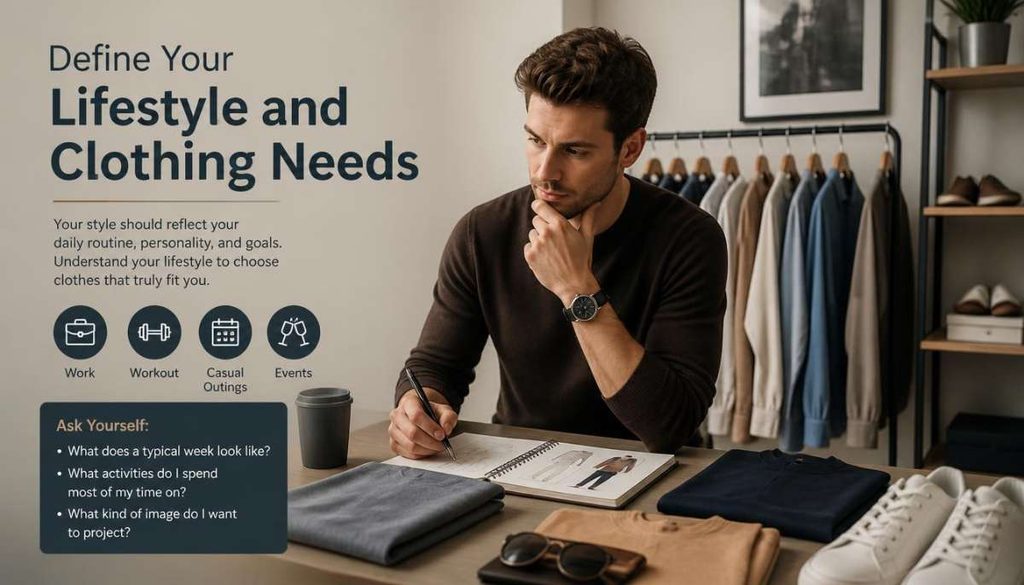
Your style needs to work with your actual life.
Think about where you spend most of your time. Your wardrobe might need to handle an office, university, travel, outdoor activities, social events, casual weekends, or a combination of several things.
There is no point building a wardrobe around outfits that look great in pictures but do not fit into your daily routine.
A useful question is: What do I actually need my clothes to help me do?
Once you answer that, choosing clothes becomes much easier.
Choose Your Personal Style Words
Try describing your ideal style using three simple words.
They could be words such as relaxed, polished, feminine, practical, modern, classic, colorful, minimal, edgy, or comfortable.
These words are not rules. They are simply a direction.
When you are considering a new item, ask whether it fits at least one or two of those ideas. This can help you avoid buying something just because it looks good on someone else.
Gather Fashion Inspiration
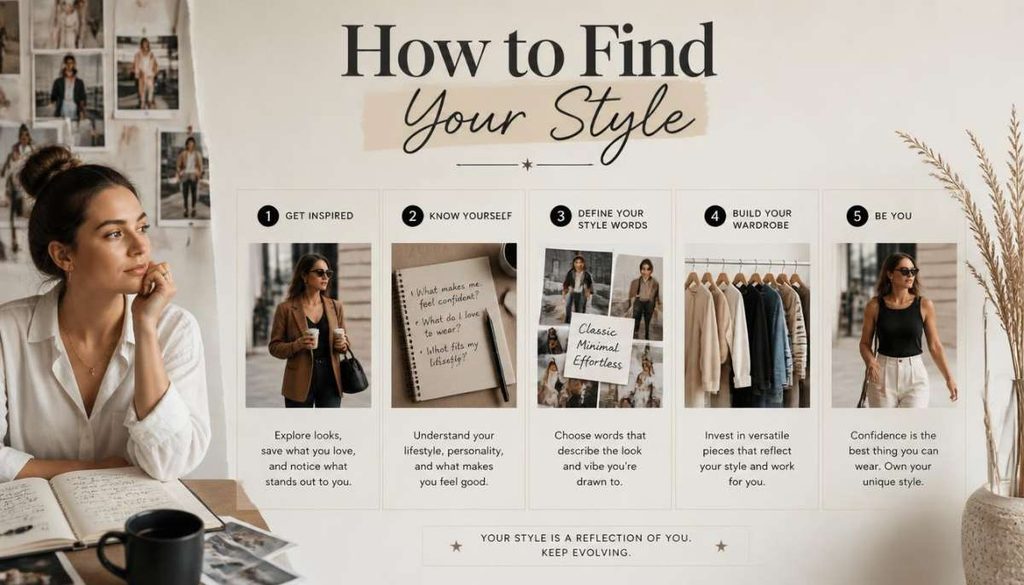
Once you understand your current wardrobe, start collecting outfits that genuinely catch your attention.
You can save pictures from Pinterest, Instagram, fashion websites, or even screenshots from outfits you notice during everyday life.
Do not worry about choosing outfits that all look the same. Save anything that makes you stop and think, “I would actually wear that.”
After collecting enough inspiration, step back and look at the bigger picture.
Look for Patterns in Your Fashion Inspiration
Your saved outfits can show you patterns that you might not notice individually.
Maybe you keep saving outfits with wide-leg trousers. Perhaps you repeatedly choose soft neutral colors, oversized layers, simple jewelry, leather bags, or particular shoe styles.
Pay attention to repeated details.
The goal is not to copy the outfits exactly. Instead, use those patterns to understand what your eyes are naturally drawn toward.
Experiment With Different Styles
You do not have to figure out your style in one afternoon.
Try combining pieces in ways you have never worn before. Wear a different color combination, change your usual shoe choice, add a jacket, try a new silhouette, or style an old item differently.
Take pictures of outfits you try if that helps you compare them later.
Some experiments will look great. Others will make you realize what you do not like. Both results are useful because finding your style is partly about discovering what feels right and what does not.
Learn What Fits Your Body and Feels Comfortable
Good style is not only about appearance. Your clothes also need to feel right when you move around in them.
Pay attention to how different cuts and proportions feel on you. A piece can look interesting on a hanger but feel completely wrong once you wear it.
Instead of following strict rules about what you should or should not wear, focus on fit, movement, comfort, and the overall shape you personally enjoy.
When you feel comfortable in an outfit, it is usually easier to carry it with confidence.
Build a Wardrobe Around Your Personal Style
Once you start noticing your preferences, make your wardrobe work together.
Choose pieces that can create several outfits instead of buying individual items that only work with one look.
For example, if you prefer a simple and polished style, you might focus on versatile trousers, well-fitting tops, a jacket you love, comfortable shoes, and a few accessories that bring outfits together.
You do not need to replace your entire wardrobe. Start with the pieces you already wear and gradually fill the gaps.
Common Mistakes When Finding Your Personal Style
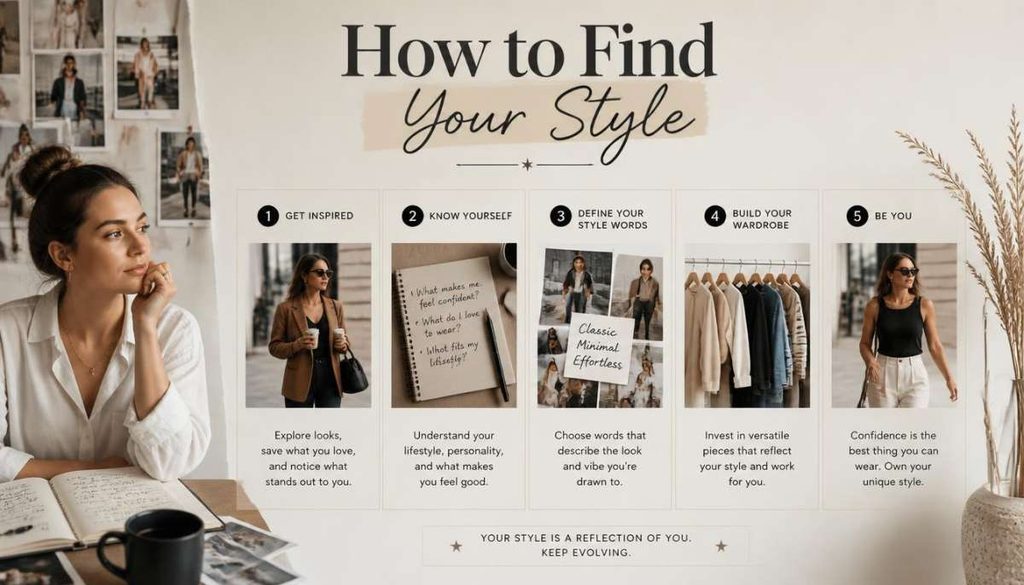
One common mistake is trying to copy another person’s entire wardrobe. You can take inspiration from someone without turning their style into your own.
Another mistake is buying every trend that catches your attention. Trends can be fun, but they should not control your entire wardrobe.
It is also easy to ignore comfort because an outfit looks good in a picture. If you never feel comfortable wearing something, it probably will not become a useful part of your everyday style.
Finally, do not worry if your style changes. Experimenting is part of the process.
How to Know When You Have Found Your Style
You probably will not suddenly wake up one morning with a perfect definition of your personal style.
Instead, you will start noticing that getting dressed becomes easier. You will understand which colors, fits, and combinations you enjoy, and you will spend less time buying things that never get worn.
Your wardrobe starts to feel connected rather than random.
That is a good sign that you are developing a personal style that actually belongs to you.
FAQs About How to Find Your Style Fashion
How do I find my personal fashion style?
Start by looking at your favorite clothes and identifying repeated colors, fits, fabrics, and outfit combinations. Then consider your lifestyle, collect fashion inspiration, and experiment with different looks.
How many style words should I choose?
Three style words are enough to give you a clear starting point. Choose words that describe how you want your clothes to look and feel rather than choosing labels simply because they are fashionable.
Should I follow fashion trends when finding my style?
You can use trends as inspiration, but you do not need to follow every trend. Choose the trends that work with your existing preferences and lifestyle.
What if I like several different fashion styles?
That is completely fine. Personal style does not need to fit into one category. You can combine different influences and create a look that feels natural to you.
Do I need to buy new clothes to find my style?
No. Your existing wardrobe is one of the best places to start. Styling your current clothes differently can help you discover your preferences before spending money on new pieces.
How long does it take to find your personal style?
There is no fixed timeline. Your style develops through observation, experimentation, and everyday experience. The more you pay attention to what you enjoy wearing, the easier it becomes to recognize your personal preferences.